The Night of Shiva: A Guide to Maha Shivratri
Maha Shivratri, the “Great Night of Shiva,” is one of the most significant festivals in the Hindu calendar. Unlike many festivals that are celebrated with outward displays of color and feast, Maha Shivratri is an inward journey—a night of deep meditation, fasting, and spiritual awakening. It falls on the 14th day of the dark fortnight (Krishna Paksha) in the month of Phalguna.
Spiritually, it marks the day Shiva performed the Tandava (the cosmic dance of creation, preservation, and destruction) and the night he married Goddess Parvati, representing the union of Purusha (consciousness) and Prakriti (nature).
What to Do: The Pillars of Observance
To truly experience the energy of Maha Shivratri, the day is traditionally divided into four key practices: Vrat (fasting), Dhyana (meditation), Japa (chanting), and Abhishek (ritual bathing of the Shiva Lingam).
1. The Vrat (Fasting)
Fasting is not merely about abstaining from food; it is a way to detoxify the body and discipline the mind. By withdrawing energy from the digestive process, you redirect it toward spiritual contemplation.
- Complete Fast: Many devotees observe a Nirjala fast (without water) for 24 hours.
- Partial Fast: If a full fast isn’t possible, you can consume fruits, milk, and water.
- Sattvic Diet: Avoid grains, beans, garlic, onions, and non-vegetarian food. The goal is to keep the body light so the mind remains alert for the nighttime vigil.
2. The Jagran (Night Vigil)
Staying awake all night is a core tradition. It is believed that on this night, the planetary positions are such that there is a natural upsurge of energy in the human system. Keeping the spine erect and staying awake helps you “ride” this wave of cosmic energy.
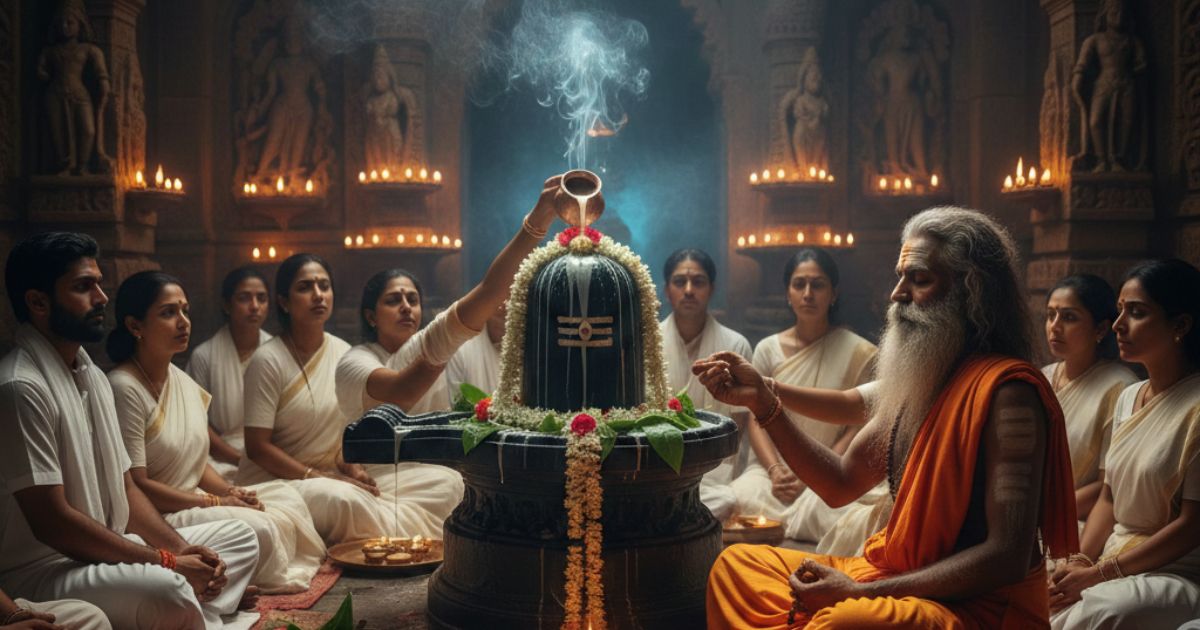
3. Shiva Abhishek (The Ritual Bath)
The Shiva Lingam represents the formless aspect of the Divine. Performing an Abhishek is a symbolic act of purifying one’s own soul. Each substance used has a specific significance:
- Water/Ganga Jal: For purity and peace.
- Milk: For purity and a long life.
- Honey: For sweet speech and kindness.
- Curd: For prosperity and progeny.
- Ghee: For victory over obstacles.
- Bel Patra (Wood Apple leaves): These trifoliate leaves represent the three Gunas (Sattva, Rajas, and Tamas). Offering them symbolizes surrendering your ego to the Lord.
When to Pray: Understanding the Prahars
While prayers happen throughout the day, the Maha Shivratri Puja is traditionally performed four times during the night. These periods are called Prahars. Dividing the night into four quarters allows a devotee to engage in continuous worship.
The Four Prahars of the Night:
- First Prahar (Evening): Focuses on the offering of milk. It is a time for initial cleansing and setting intentions.
- Second Prahar (Midnight): Focuses on the offering of curd. This is often when the energy begins to peak.
- Third Prahar (After Midnight): Focuses on the offering of ghee. This represents the burning of desires.
- Fourth Prahar (Pre-dawn): Focuses on the offering of honey. This is the time of “sweetness” and the realization of the self.
The Nishita Kaal (The Most Potent Time)
The most critical time for prayer is the Nishita Kaal, or the precise moment of midnight. It is believed that during this short window, Lord Shiva appeared on Earth in the form of a Lingam.
Tip: If you cannot stay up all night, aim to be in deep meditation or prayer specifically during the 45-minute window of Nishita Kaal. This is when the veil between the physical and spiritual worlds is said to be thinnest.
How to Pray: Mantras and Meditation
The beauty of worshipping Shiva is his simplicity (Bholenath). He does not require elaborate rituals; he requires sincerity.
1. Chanting the Panchakshari Mantra
The mantra “Om Namah Shivaya” is the most powerful tool for this night.
- Om: The sound of the universe.
- Na: Earth.
- Mah: Water.
- Shi: Fire.
- Va: Air.
- Ya: Ether.By chanting this, you are harmonizing the five elements within your body.
2. Reading the Shiva Purana
Listening to or reading stories of Shiva’s exploits helps keep the mind engaged and prevents it from wandering during the night vigil.
3. Deep Silence (Mauna)
If you are in a group, it’s easy to get distracted by socializing. Many practitioners observe Mauna (silence) to ensure the energy generated through chanting stays internal.
The Symbolic Meaning of Offerings
| Offering | Symbolic Meaning |
| Vibhuti (Sacred Ash) | The ultimate reality that all physical things end in ash; detachment. |
| Rudraksha | “Tears of Shiva”; used for protection and focus. |
| Dhatura Fruit | Symbolizes the removal of toxins (ego, jealousy, and hatred) from the mind. |
| Lamp (Diya) | The light of knowledge that dispels the darkness of ignorance (Agyana). |
Summary Checklist for your Maha Shivratri
- Morning: Take a bath, wear clean (preferably white) clothes, and take a Sankalpa (vow) to observe the fast and vigil.
- Daytime: Visit a temple, chant “Om Namah Shivaya,” and consume only light fruits or milk if needed.
- Evening: Begin the first Prahar puja. Keep the spine straight.
- Midnight: Perform your most intense meditation during the Nishita Kaal.
- Next Morning: Break your fast (Parana) after the sunrise and after performing a final brief prayer.
Maha Shivratri is not just a religious ritual; it is a biological and spiritual opportunity. Whether you are looking for peace, seeking to overcome bad habits, or searching for the ultimate truth, this night offers the perfect “quiet” to hear your soul’s voice.
Om Namah Shivaya!
MUST READ
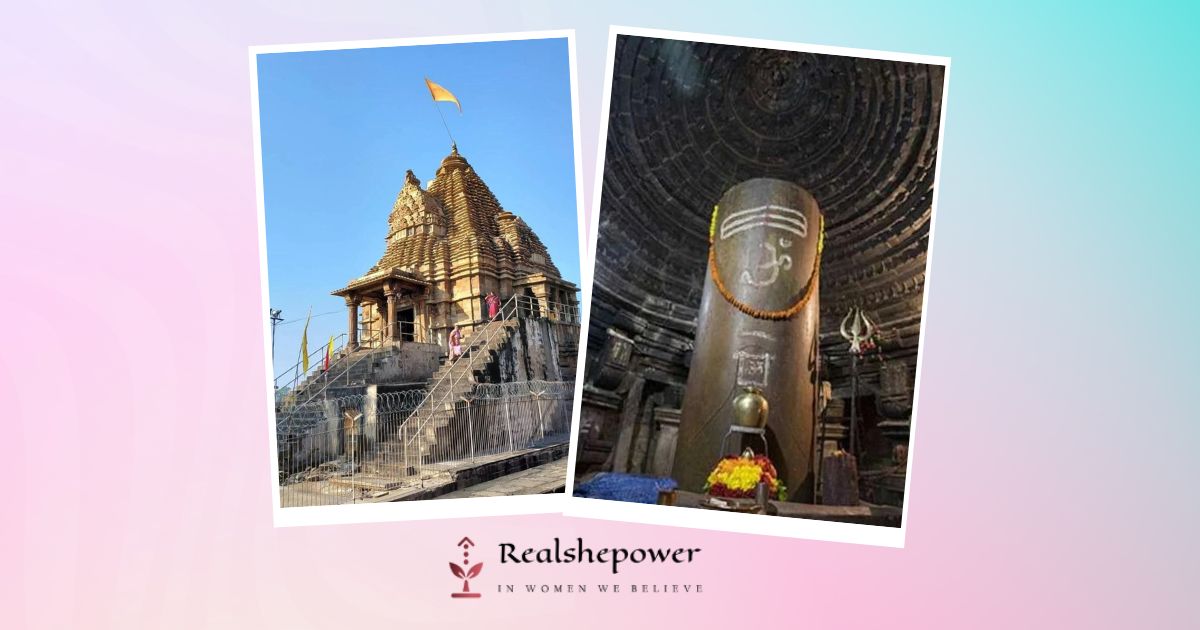
Growing Shivalinga — Matangeshwar Mahadev Temple
Discover the fascinating legend and sacred phenomenon of the ever-growing Shivalinga at Matangeshwar Mahadev Temple — a story of devotion, mystery, and spiritual wonder.
Read Full Article →