Bad Bunny’s Super Bowl Halftime SHOCKER: Trump Blasts It as ‘One of the Worst EVER’ – ‘Slap in the Face’ to America in Epic Meltdown!
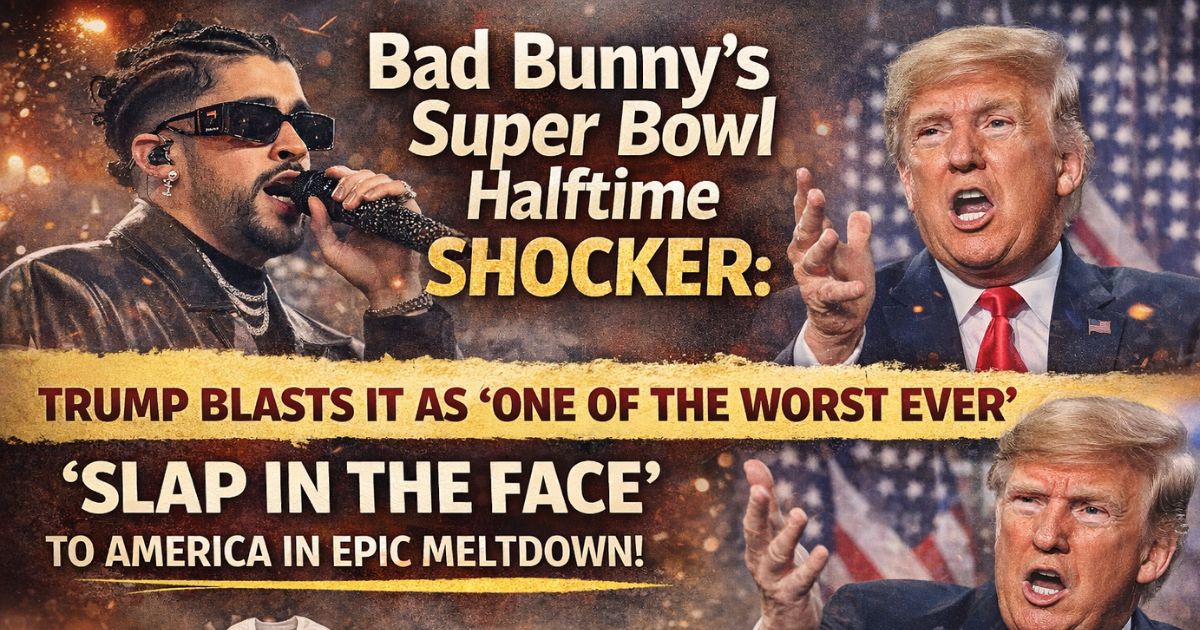
The Bad Bunny halftime show at Super Bowl LX wasn’t just a performance, it was a cultural lightning rod that exposed the fault lines in America’s ongoing debates over identity, language, inclusion, and what it means to be “American” on one of the nation’s biggest stages.
Puerto Rican superstar Bad Bunny delivered a vibrant, high-energy 13-minute set filled with reggaeton and Latin trap hits, largely in Spanish, celebrating Boricua pride and themes of unity. The production dazzled with elaborate staging, including a surprise appearance by Lady Gaga reimagining her hit “Die With a Smile” in a salsa-infused style alongside Los Sobrinos, a Puerto Rican band. Ricky Martin joined for moments of crossover energy, and celebrities like Pedro Pascal, Jessica Alba, and influencer Alix Earle appeared on a recreated “La Casita” porch.
The most talked-about element: a genuine, legally binding wedding ceremony for a real couple who had originally invited Bad Bunny to their nuptials—he flipped the script and brought their wedding to Levi’s Stadium, complete with vows, a kiss, and dancers celebrating around them. Many viewers hailed it as joyful, inclusive, and a powerful showcase of Latino excellence, with fans and athletes alike praising the choreography, production, and messages of togetherness. Social media lit up with excitement from those who saw it as a historic moment for representation, making millions feel seen in a way traditional Super Bowl spectacles rarely do.
Yet the backlash was swift and fierce. Critics, including President Trump on Truth Social, branded it “absolutely terrible,” “one of the worst EVER,” and a “slap in the face” to American greatness, decrying the predominance of Spanish lyrics as incomprehensible to much of the audience and implying it disrespected national standards of creativity and excellence. Conservative commentators and supporters echoed this, framing the show as overly “woke,” politically charged (despite Bad Bunny’s pre-show assurances of fun over agenda), and disconnected from mainstream American values. The pre-existing controversy over Bad Bunny’s past criticisms of Trump-era policies particularly on immigration and Puerto Rico fueled accusations that the NFL had chosen division over unity.
In direct response, Turning Point USA streamed its “All-American Halftime Show” opposite the official broadcast, featuring Kid Rock, Brantley Gilbert, Gabby Barrett, and Lee Brice in a lineup emphasizing faith, family, and freedom. The alternative drew millions of concurrent viewers on YouTube, with participants and fans calling it a patriotic counterpoint free of perceived agendas. This parallel event underscored a deeper cultural split: one side embracing a multilingual, multicultural vision of America, the other insisting on a more singular, English-dominant expression of national pride.
The polarization isn’t new Super Bowl halftime shows have long sparked culture-war debates, from Janet Jackson’s wardrobe malfunction to Colin Kaepernick-inspired protests but Bad Bunny’s performance amplified it in real time. In an increasingly diverse nation where Latinos are the largest minority group and Spanish is the second-most spoken language, a halftime show leaning heavily into Puerto Rican and Latin identity challenges narrow definitions of who gets to represent “America.” Trump’s sharp condemnation and the Turning Point alternative highlight how language and cultural expression can be weaponized as proxies for broader anxieties about demographic change and belonging.
Ultimately, the show succeeded on its own terms: it energized a massive global audience, broke barriers for Latin artists on the biggest platform, and delivered moments of genuine joy like that real wedding that transcended politics. But its divisiveness reminds us that even entertainment on this scale can’t escape the currents of our national conversation. In celebrating unity through diversity, Bad Bunny forced millions to confront whether America is ready to dance to a rhythm that includes more voices or if some will always hear discord where others hear harmony. The reactions flooding social media and news prove one thing: the halftime show didn’t just entertain; it mirrored the country watching it.