Can India Still Save Its Wetlands? What the Science Says

Can India Still Save Its Wetlands?
India is running out of time to save its wetlands but it has not yet run out of options.
From Sambhar Lake in Rajasthan to Pallikaranai marsh in Chennai, from East Kolkata Wetlands to the floodplains of the Yamuna, India’s wetlands are shrinking, choking, or quietly vanishing. These ecosystems, once treated as wastelands ripe for “development,” are now revealing themselves to be among the country’s most critical climate assets.
The question policymakers must confront is no longer whether wetlands matter, but whether India can still reverse the damage. Science offers a clear, if uncomfortable, answer: yes but only with immediate, systemic action.
What the Science Is Telling Us—Clearly and Repeatedly
Wetlands occupy just about 3–5% of India’s land area, yet they perform outsized functions:
- They act as natural flood buffers
- Recharge groundwater aquifers
- Filter pollutants from water
- Moderate local temperatures
- Store large amounts of carbon
- Support biodiversity and livelihoods
According to global ecological studies and Indian assessments, wetlands can store up to 50 times more carbon than forests of the same size. In a warming world, destroying them is not just environmentally reckless, it is economically irrational.
Scientific monitoring over the last two decades shows:
- More than one-third of India’s wetlands have been lost or degraded
- Urban wetlands are disappearing at the fastest rate
- Salinity, water depth, and biodiversity thresholds are being crossed in multiple regions
- Migratory birds are altering routes—an early indicator of ecosystem stress
These are not abstract projections. They are real-time warnings.

Why Wetlands Are Collapsing Despite Legal Protection
India does not lack laws. It lacks implementation.
Wetlands are protected under environmental regulations and are recognised in climate frameworks. Yet on the ground, they are systematically undermined by:
- unregulated construction
- encroachment masked as “infrastructure”
- mining and industrial discharge
- untreated sewage inflow
- fragmented governance across departments
Most wetlands fall into a bureaucratic no-man’s land—classified neither as forests nor rivers, and therefore rarely defended with urgency.
Scientific studies are clear: once a wetland’s hydrology is disrupted, restoration becomes exponentially harder and costlier. Prevention is not just better than cure—it is often the only viable option.
Is Restoration Still Possible? Science Says Yes—With Conditions
The good news is that wetland ecosystems are remarkably resilient—if given a chance.
Global and Indian restoration projects show that:
- Reconnecting natural water flows can revive biodiversity within years
- Controlling pollution can restore microbial and algal balance
- Native vegetation reintroduction stabilises soil and water chemistry
- Community-led protection reduces encroachment far more effectively than policing
But science also sets firm limits.
Restoration works only if:
- Hydrology is prioritised over beautification
Cosmetic “lake development” projects that replace wetlands with concrete promenades often worsen ecological damage. - Human pressure is regulated, not romanticised
Tourism without ecological limits accelerates collapse. - Monitoring is continuous, not seasonal
Wetlands cannot be “checked on” once a year. - Local communities are partners, not obstacles
Conservation that ignores livelihoods inevitably fails.
Must Read
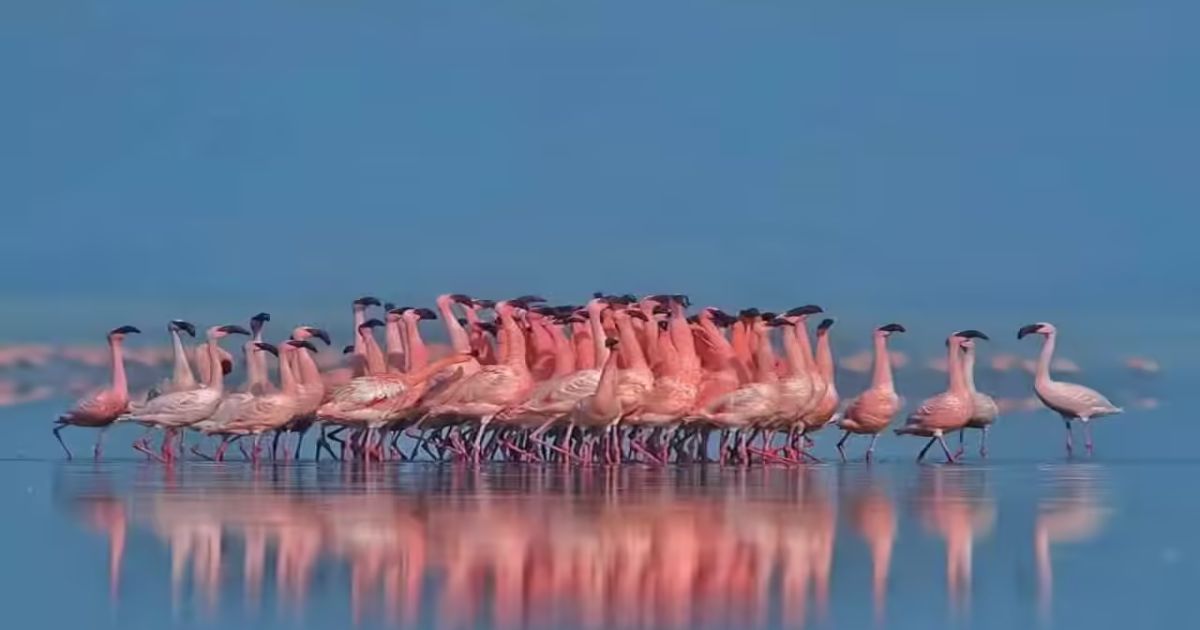
Flamingos at Sambhar Lake & Climate Change
Explore how climate change is altering flamingo habitats and what it means for conservation.
→ ReaClimate Change Has Raised the Stakes
Climate models show that India will experience:
- more intense rainfall events
- longer dry spells
- higher urban flooding risk
- increased heat stress
Wetlands are uniquely suited to absorb these shocks. Destroying them forces governments to rely on costly, less effective engineered solutions.
In simple terms:
Every wetland lost today becomes a flood, drought, or water crisis tomorrow.
Science does not frame wetlands as optional environmental concerns. It frames them as non-negotiable climate infrastructure.
The Missing Link: Political Will
Scientific consensus is no longer the problem. Policy inertia is.
Wetlands rarely deliver immediate electoral gains. They require long-term thinking, inter-state coordination, and resistance to powerful commercial interests.
Yet evidence shows that:
- wetland protection is cheaper than disaster response
- restoration generates local employment
- biodiversity protection supports agriculture and fisheries
- climate resilience improves economic stability
In other words, the science aligns with economic sense. What is missing is urgency.
So, Can India Still Save Its Wetlands?
Yes but the window is narrowing.
Science makes three things clear:
- Delay will turn reversible damage into permanent loss.
- Partial measures will not work.
- Action taken in the next decade will determine outcomes for generations.
Wetlands do not demand speeches or slogans.
They demand protection, space, water, and restraint.
If India listens to the science and acts on it wetlands can recover.
If it continues to ignore the warnings, flamingos, floods, and failures will keep returning with increasing frequency.
Nature has already delivered its report.
The question is whether the state is prepared to read it and respond.
Must Read
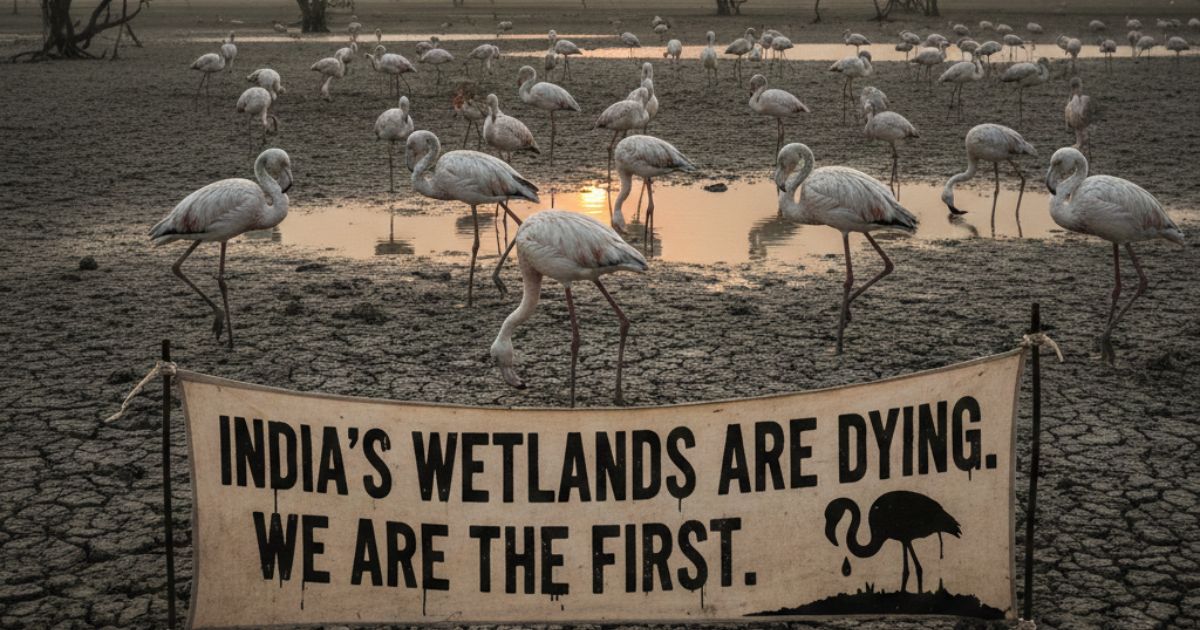
India’s Wetlands Are Dying — Flamingos’ Warning
Why India’s disappearing wetlands are sounding an urgent alert for ecosystems and people alike.
→ Read Full Article