Christmas Gastronomy: The Global Impact of Indian Spices and the Evolution of the Indian Fusion Feast
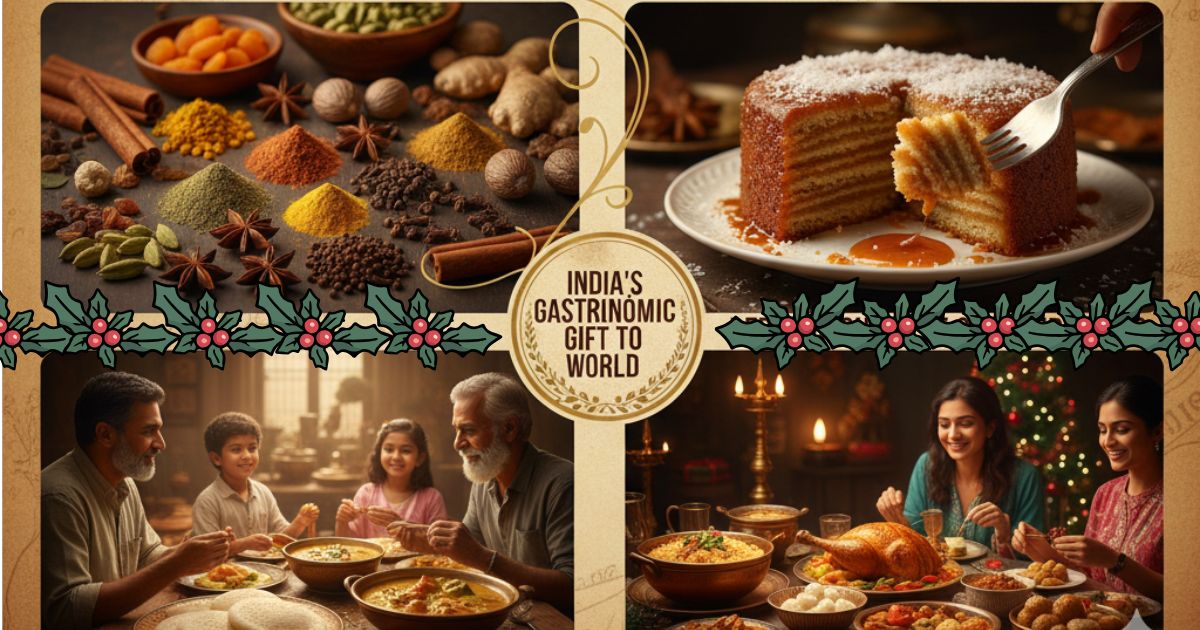
When one imagines the quintessential Christmas feast, the mind immediately drifts to the aromatic scent of cinnamon, the sharp bite of cloves, and the rich, dark density of a plum cake. For centuries, these flavors have defined the holiday season across the globe. However, there is a profound historical irony at play: the very “essence” of a traditional Western Christmas is almost entirely rooted in the soil of the Indian subcontinent.
From the ancient spice routes of the Malabar Coast to a historic bakery in a small Kerala town in 1883, the story of Christmas gastronomy is a tale of trade, colonial fusion, and the indomitable spirit of Indian culinary creativity. This article explores how India didn’t just adopt Christmas; it flavored it for the entire world.
The Invisible Backbone: How Indian Spices Conquered the Global Christmas Table
Long before Christmas was a commercial phenomenon, it was a season of preservation. In Medieval Europe, as winter set in, spices were essential for preserving meat and masking the flavor of stored food. But spices were more than just preservatives; they were the “gold” of the era, and the source of this gold was almost exclusively the Malabar Coast of India.
The Scents of the Orient
Traditional global Christmas treats like Gingerbread, Mulled Wine, and Minced Pies rely heavily on a trio of Indian spices: Black Pepper, Cinnamon, and Cloves.
- Black Pepper: Known as “Black Gold,” it was so valuable in Europe that it was often used as currency to pay rent or taxes.
- Cinnamon and Cloves: These spices provided the warmth associated with the “Winter Wonderland” aesthetic. Their journey from the tropical spice gardens of Kerala and Karnataka to the royal courts of Europe turned them into the signature scents of the Nativity.
Without the maritime trade routes that connected the Indian ports of Muziris and Calicut to the West, the global Christmas palate would be unrecognizable today.
The Legend of 1883: India’s First Christmas Cake in Thalassery
While India exported the ingredients for Christmas for millennia, the birth of the “Indian Christmas Cake” is a specific, documented event that took place in a small coastal town called Thalassery in North Malabar.
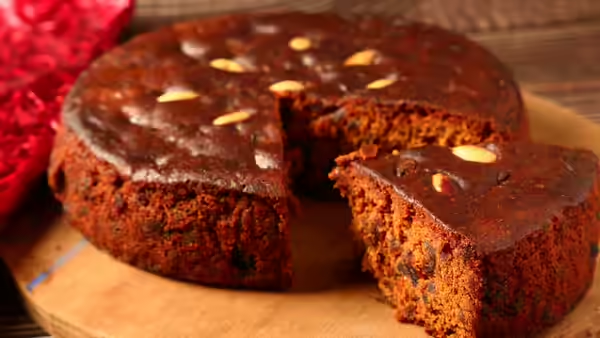
Mampally Bapu and the Great Experiment
In December 1883, a British cinnamon planter named Mr. Murdoch Brown walked into the Royal Biscuit Factory, owned by a local man named Mampally Bapu. Brown handed Bapu a rich plum cake he had brought from England and asked if he could replicate it.
Bapu, a master baker, faced significant hurdles. He didn’t have a modern oven, nor did he have access to the French brandy traditionally used to soak the fruits. Undeterred, he innovated:
- The Local Spirit: Instead of brandy, Bapu used a local brew made from cashew apples and coconut toddy.
- The Spice Blend: He didn’t just use spices; he used the freshest harvest from the surrounding hills, creating a flavor profile that surpassed the original British sample.
- The Desi Oven: He baked the cake in a makeshift furnace using local clay and wood fire.
When Murdoch Brown tasted the result, he declared it better than the British original. This single moment gave birth to the Indian Plum Cake tradition. Today, Thalassery is recognized as the “Cradle of Indian Baking,” and the Mampally legacy continues to dominate the holiday season in Kerala.
Goan Bebinca: The Seven-Layered Queen of the Konkan
Across the coast in Goa, the Portuguese influence gave rise to a dessert that is considered a masterpiece of Indo-European fusion: the Bebinca.
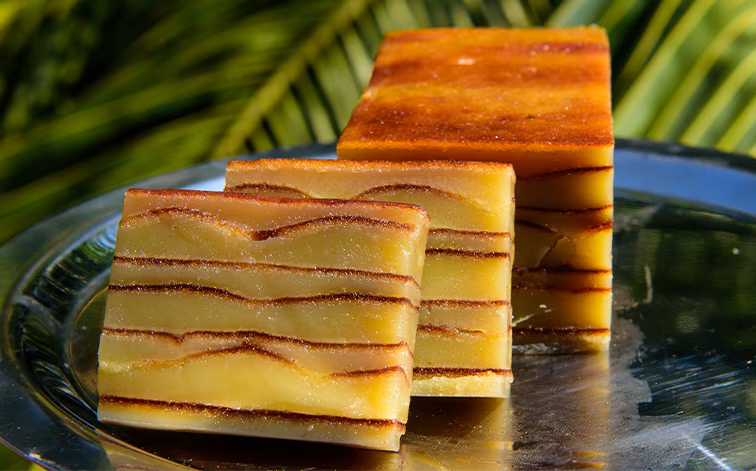
The Legend of Sister Bibi
Tradition dictates that Bebinca was invented by a nun named Sister Bibi at the Convent of Santa Monica in Old Goa. To solve the problem of using up leftover egg yolks (the whites were used to starch clothes), she created a multi-layered cake.
The Fusion Elements
Bebinca is a marvel of patience. It consists of seven to sixteen layers, each baked individually.
- The Indian Soul: While the technique is European, the ingredients are purely Indian—thick coconut milk, jaggery (unrefined sugar), and nutmeg.
- The Earthy Aroma: Traditionally, it is baked in an earthenware pot with hot coals placed on the lid, giving it a smokiness that no modern oven can replicate.
Bebinca has moved beyond the Christian community to become a symbol of Goan identity, celebrated by everyone regardless of faith.
The Evolution of the Feast: Regional Indian Christmas Gastronomy
The “Indian Tadka” (tempering) of Christmas varies beautifully across the country’s diverse geography.
Kerala: Appam and Ishtu
For the Syrian Christians of Kerala, Christmas morning doesn’t start with pancakes; it starts with Appam (fermented rice hoppers) and Ishtu (a fragrant stew). The “Ishtu” is a direct descendant of the British stew but transformed by the addition of fresh coconut milk, green chilies, and curry leaves.
Must Read
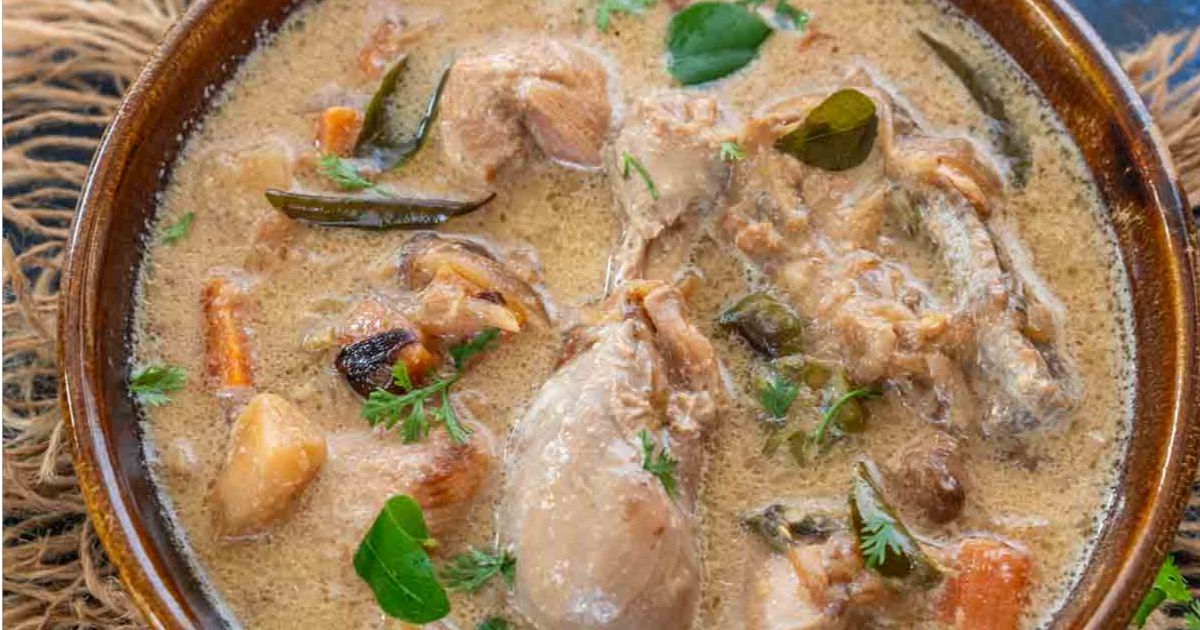
Christmas Dish: Kerala Style Chicken Stew & Appam
Try this festive Kerala classic — rich chicken stew paired with soft, fluffy appam — a heartwarming dish perfect for Christmas celebrations.
→ Read Full ArticleThe North Indian ‘Bada Din’ Feast
In North India, where the festival is called “Bada Din,” the gastronomy takes on a Mughlai-inspired twist. It is not uncommon to find Mutton Biryani or Shami Kababs served alongside the Christmas cake. The integration of traditional Indian “Mithai” techniques with Western baking has created unique sweets like Kulkuls (deep-fried dough curls) and Rose Cookies, which are staples in East Indian and Anglo-Indian homes.
Global Gastronomy in the 21st Century: The Full Circle
Today, the world is seeing a “Reverse Fusion.” Renowned global chefs are now looking back to India to find authentic ways to enhance their holiday menus. The use of Cardamom in Nordic baking or Turmeric in holiday lattes is a testament to the enduring power of Indian flavors.
As we approach Christmas 2025, the culinary world is more connected than ever. The story of the Thalassery cake or the Goan Bebinca isn’t just a footnote in history; it is a living tradition that proves how food can bridge the gap between colonial pasts and a multicultural future.
A Toast to the Indian Spirit
Christmas gastronomy is a celebration of the human journey. It is the story of how a small island in Europe sought the flavors of a tropical subcontinent, and how that subcontinent took those foreign traditions and infused them with its own soul.
When you bite into a piece of Plum Cake this season, remember that you are tasting 2,000 years of spice trade, the ingenuity of a baker in 1883, and the rich, multi-layered history of an India that has always known how to add the perfect tadka to every global celebration.
Must Read

7 Truly Bizarre Christmas Traditions
Explore seven of the strangest and most unexpected Christmas traditions from around the world — bizarre rituals you probably didn’t know.
→ Read Full Article