Flamingos in Sambhar Lake: What This Migratory Marvel Tells Us About Climate Change — And Why Women Ecologists Care
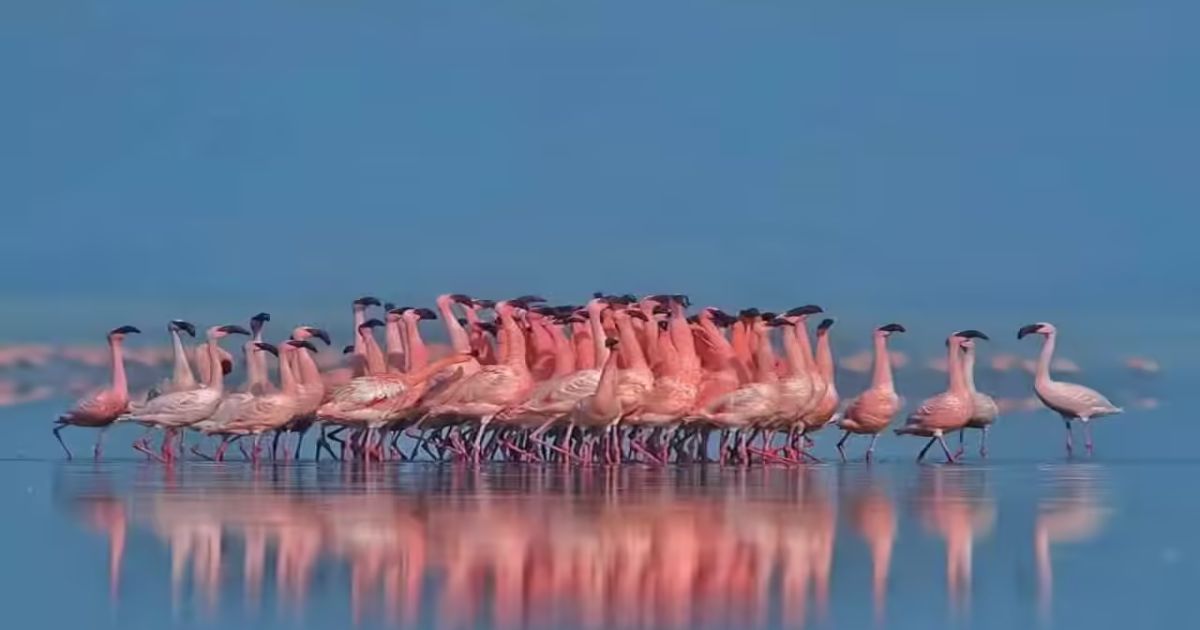
Every winter, parts of India turn pink.
Not because of festivals.
Not because of sunsets.
But because tens of thousands of flamingos descend onto some of India’s last surviving wetlands.
This year, the sight at Sambhar Lake in Rajasthan stunned visitors and conservationists alike:
A massive, sweeping blush of rosy pink flamingos carpeting the shoreline — a spectacle so vivid it almost looked unreal.
But behind this breathtaking beauty lies a deeper truth:
Flamingos are not just visitors. They are messengers.
Their movement patterns, feeding behaviour, and population shifts reveal critical signals about climate change, wetland health, salinity swings, and human ecological impact.
And increasingly, it is women ecologists who are decoding these signals with scientific precision and a frontline understanding of India’s fragile ecosystems.
This is the story of Sambhar Lake, the flamingos who return year after year, and the women scientists fighting to protect what these birds are trying to tell us.
Table of Contents
Sambhar Lake: India’s Largest Saltwater Lake — And a Migratory Beacon
Located 80 km from Jaipur, Sambhar Lake is:
- India’s largest inland saltwater lake
- a designated Ramsar wetland
- a critical habitat for migratory birds on the Central Asian Flyway
Every winter, flamingos travel from:
- Iran
- Afghanistan
- Mongolia
- Kazakhstan
…covering thousands of kilometres to reach Sambhar’s shallow saline waters.
Why Sambhar?
Because it offers the perfect combination of:
- warm shallow water
- high salinity
- abundant algae (the main flamingo diet)
- flat, undisturbed landscape
In good ecological years, Sambhar can host 50,000–100,000 flamingos at peak season.
The Pink Alert: Why Flamingos Are Climate Indicators
Migratory birds are extremely sensitive to environmental change.
When flamingos alter their migration patterns, it signals:
A. Changing Water Salinity
Flamingos only thrive in very specific salinity ranges.
Too much salt?
Algae dies.
Too little?
Competing species overwhelm them.
Salinity change often reflects:
- unregulated salt mining
- shrinking water levels
- rising temperatures
- erratic monsoons
B. Climate-Induced Habitat Shifts
When flamingos arrive earlier or stay longer, it often means:
- delayed winter,
- warmer wetlands,
- disrupted seasonal cycles.
C. Food Chain Disruptions
Flamingos feed on red algae Dunaliella salina, which thrives only under stable conditions.
When these algae bloom or decline irregularly, it reveals a climate imbalance.
D. Toxicity & Pollution Levels
A sudden drop in flamingo numbers or mass deaths (as seen in 2019 at Sambhar) warns of:
- water contamination
- industrial waste
- rising ammonia levels
- chemical imbalance
In short: nature sends flamingos as early-warning climate alarms.
Sambhar’s spectacular pink arrival is both a celebration and a caution.
The 2019 Tragedy That Still Haunts Sambhar
In 2019, over 20,000 migratory birds died around Sambhar Lake — one of India’s worst ecological disasters.
Investigations found:
- high salinity fluctuations
- increased pollution
- botulism caused by stagnant water
- fish die-offs
- encroachment into the wetland zone
Flamingos were among the victims.
This tragedy pushed ecologists many of them women researchers to intensify monitoring and revive Sambhar’s ecological balance.
Why Women Ecologists Are Leading the Fight
Across India’s wetlands and bird sanctuaries, women scientists have become the backbone of biodiversity research.
Why?
Because conservation demands:
- patience
- meticulous fieldwork
- community engagement
- long-term observation
- interdisciplinary understanding
And women ecologists are excelling at all of this.
Leading reasons women are at the forefront:
1. Women handle community conflict more effectively.
Wetland conservation often involves negotiating with salt workers, herders, villagers, and local authorities.
Women scientists are repeatedly found to build trust faster.
2. Women researchers are producing groundbreaking climate data.
Across India, young women are leading studies on:
- bird migration
- water salinity patterns
- biodiversity decline
- anthropogenic pressure
- GIS mapping of wetlands
3. Women ecologists prioritize inclusive conservation models.
They work with:
- schoolchildren
- women’s self-help groups
- rural communities
- local tourism networks
This ensures conservation becomes a shared, bottom-up movement.
4. Women bring emotional intelligence to climate science.
Conservation is not just measurements —
it’s empathy, persistence, and connection with the landscape.
Women bring all three in abundance.
What Flamingos Reveal About India’s Climate Future
Sambhar’s flamingos are telling us:
A. Wetlands Are Drying Faster
Lower rainfall
Hotter winters
Reduced groundwater recharge
Salt mining expansion
B. Monsoon Patterns Are Becoming Erratic
Flamingo arrival times have shifted by up to 2–4 weeks in some years.
C. India’s Flyway Network Is Under Stress
Migratory birds depend on a chain of wetlands.
If one collapses, the entire migration pattern collapses.
D. Food Chains Are Becoming Fragile
Algae blooms are fluctuating wildly due to:
- heat
- evaporation
- water scarcity
This affects not just flamingos but all 20+ migratory bird species.
E. Biodiversity Loss Will Accelerate Without Intervention
A damaged Sambhar =
a damaged flyway =
a damaged ecosystem.
Flamingos are just the most visible species.
The invisible losses are far more worrying.
What Needs to Change (Policy + People + Science)
1. Regulate Salt Mining Strictly
Unregulated salt pans disturb water flow and kill algae.
2. Create Community-Driven Conservation Zones
Involve local women, farmers, and herders in wetland protection.
3. Boost Wetland Restoration Funding
India spends a fraction of what global conservation programs allocate.
4. Continuous Monitoring via Women-Led Field Teams
Data must be collected year-round, not just during migration season.
5. Promote Eco-Tourism Carefully
More visitation = more awareness.
But it needs strict safeguards to prevent disruption.
6. Climate Prediction Modelling
Use AI and satellite data to monitor early signs of algal collapse or water stress.
Why This Matters Beyond Flamingos
Saving Sambhar isn’t about flamingos alone.
It’s about:
- India’s freshwater security
- rural livelihoods
- biodiversity resilience
- climate stability
- ecological identity
- women leadership in science
Flamingos are simply the face of a deeper environmental message.
When they thrive, we thrive.
Conclusion: A Pink Warning and a Pink Hope
Sambhar Lake turning pink every winter is magical.
But it is also a message:
Nature is still functioning.
Barely.
But beautifully.
If we listen to what flamingos are telling us—
about rising temperatures, shifting seasons, collapsing wetlands—
we might still have time to restore the ecosystems our children will inherit.
And leading this fight are women ecologists, carrying notebooks, satellite images, soil samples, and an unshakeable commitment to understanding the climate through the eyes of the species who cannot speak for themselves.
Flamingos do not have a voice.
But they do have a message.
And women scientists are making sure the world hears it.