
India’s BrahMos Missiles and Tri-Service Coordination in Operation Sindoor: A Blueprint for Modern Warfare
Introduction: Redefining Modern Warfare with Operation Sindoor
On May 7, 2025, India executed Operation Sindoor, a landmark retaliatory strike that obliterated 11 Pakistani air bases and nine terror camps in response to Pakistan’s aggressive missile and drone attacks. Central to this operation’s success were India’s BrahMos supersonic cruise missiles and seamless tri-service coordination between the Army, Air Force, and Navy. Under the leadership of Director General of Military Operations (DGMO) Lieutenant General Rajiv Ghai, India showcased a masterclass in precision, technology, and strategic synergy, offering profound insights into the evolution of modern warfare.
This article analyzes India’s use of BrahMos missiles and tri-service coordination in Operation Sindoor, highlighting their role in redefining military strategies. From technological prowess to operational excellence, here’s why this operation will be studied by military strategists for decades.
Table of Contents
The BrahMos Missile: India’s Game-Changer in Precision Warfare

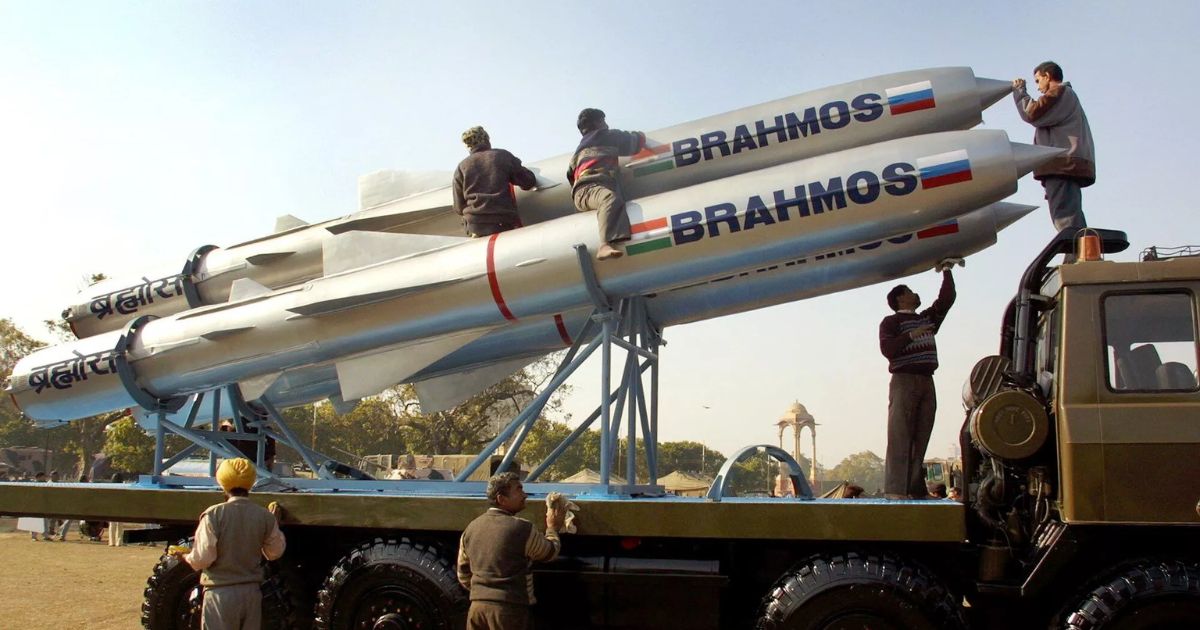
The BrahMos missile, a joint India-Russia venture, is the world’s fastest supersonic cruise missile, capable of traveling at Mach 2.8–3.5 (approximately 3,400–4,200 km/h). Its deployment in Operation Sindoor underscored its transformative impact on modern warfare. Here’s a detailed analysis of its role:
1. Unmatched Speed and Precision
The BrahMos missile’s hypersonic speed and pinpoint accuracy were critical in neutralizing high-value targets during Operation Sindoor. Air-launched variants, deployed by Indian Air Force (IAF) Sukhoi Su-30 MKI jets, struck Pakistani air bases like Nur Khan, Rafiqui, Murid, and Chaklala with devastating precision. The missile’s 300-km range (extendable to 500 km in newer variants) allowed India to hit deep into Pakistani territory, including radar sites in Pasrur and terror hubs in Muridke.
The missile’s ability to evade air defenses, combined with its low-altitude flight path, rendered Pakistan’s interception attempts futile. DGMO Rajiv Ghai noted that BrahMos strikes caused “extensive damage” to Pakistan’s military infrastructure, crippling its air force capabilities within 90 minutes.
2. Versatility Across Platforms
BrahMos’s multi-platform capability—deployable from land, air, sea, and submarines—made it a versatile weapon in Operation Sindoor. The IAF used air-launched BrahMos missiles, while the Navy contributed precision munitions, showcasing the missile’s adaptability. This versatility allowed India to execute simultaneous strikes across multiple targets, overwhelming Pakistan’s defenses.
3. Strategic Messaging
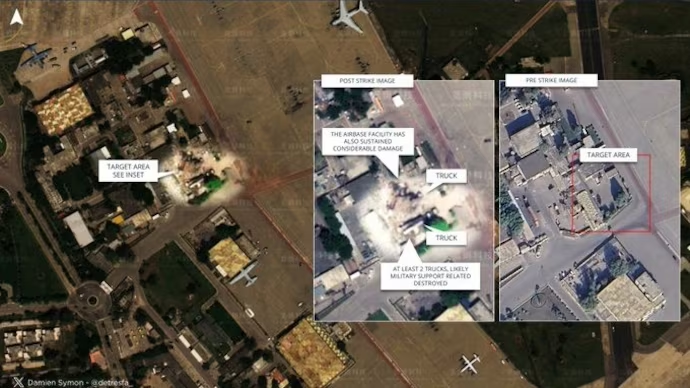
The BrahMos’s deployment near Pakistan’s nuclear command authority at Nur Khan Air Base sent a clear strategic message: India possesses the capability to strike deep and decisively. Its 200–300 kg warhead ensured maximum destruction of radar sites, command centers, and weapon storage facilities, while avoiding civilian areas, aligning with India’s policy of restraint.
4. Technological Edge
The BrahMos missile incorporates advanced guidance systems, including inertial navigation, GPS, and active radar homing, ensuring accuracy within meters. Its stealth features and ability to perform mid-flight maneuvers made it nearly undetectable by Pakistan’s outdated air defense systems. This technological superiority will shape future missile development, with India already testing BrahMos-ER (Extended Range) and hypersonic variants.
Tri-Service Coordination: A Model of Operational Synergy

Operation Sindoor was a triumph of tri-service coordination, with the Indian Army, Air Force, and Navy working in lockstep under DGMO Rajiv Ghai’s oversight. This seamless integration offers critical lessons for modern warfare:
1. Unified Command and Control
Lieutenant General Rajiv Ghai, alongside Air Marshal AK Bharti (Director General Air Operations) and Vice Admiral AN Pramod (Director General Naval Operations), orchestrated a unified command structure. The operation was planned at the Integrated Defence Staff headquarters, with real-time intelligence shared across services. This ensured that all combat objectives—neutralizing air bases, terror camps, and Pakistani drones—were met efficiently.
2. Role of Each Service
- Indian Air Force: The IAF led the strikes, deploying BrahMos missiles and precision-guided munitions from Su-30 MKI and Rafale jets. It targeted air bases and terror camps, downing Pakistani drones and aircraft. The IAF’s AWACS (Airborne Warning and Control System) provided real-time situational awareness, enhancing strike accuracy.
- Indian Army: The Army secured the Line of Control (LoC), neutralizing 35–40 Pakistani personnel in retaliatory firing. It provided ground intelligence on terror camps in PoJK, enabling precise IAF strikes.
- Indian Navy: The Navy contributed precision munitions and maintained maritime surveillance, ensuring no Pakistani naval assets interfered. Its role in securing India’s western coastline allowed the IAF to focus on offensive operations.
This division of roles maximized operational efficiency, with each service leveraging its strengths to achieve a common goal.
3. Real-Time Intelligence and Communication
Tri-service coordination relied on India’s advanced intelligence network, including satellite imagery, SIGINT (Signals Intelligence), and HUMINT (Human Intelligence). The IAF’s Netra AEW&C (Airborne Early Warning and Control) systems and the Army’s drone surveillance provided real-time data, enabling dynamic target allocation. Secure communication channels ensured that Ghai and his team could adjust strategies mid-operation, a hallmark of modern warfare.
4. Preemptive and Reactive Capabilities
The operation showcased India’s ability to preempt and react. Intelligence on terror camps like Muridke and Bahawalpur allowed preemptive strikes, while the IAF’s rapid response to Pakistani drone intrusions demonstrated reactive prowess. This dual capability, enabled by tri-service synergy, overwhelmed Pakistan’s fragmented defenses.
Insights into Modern Warfare from Operation Sindoor
India’s use of BrahMos missiles and tri-service coordination in Operation Sindoor offers profound lessons for military strategists and policymakers:
1. Precision Over Mass
The BrahMos missile’s success highlights the shift from mass bombardment to precision strikes. Modern warfare prioritizes high-value targets with minimal collateral damage, as seen in India’s avoidance of civilian areas. This approach reduces escalation risks in nuclear-armed conflicts, a critical consideration in India-Pakistan dynamics.
2. Integration of Advanced Technology
The operation underscored the importance of integrating advanced weaponry (BrahMos), real-time intelligence (AWACS, satellites), and secure communication systems. Future conflicts will rely on such technologies to achieve rapid, decisive outcomes, as demonstrated by India’s 90-minute strike window.
3. Tri-Service Synergy as a Force Multiplier
Operation Sindoor proved that tri-service coordination amplifies military effectiveness. By leveraging the unique capabilities of the Army, Air Force, and Navy, India achieved a force multiplier effect, overwhelming Pakistan’s defenses. This model will influence joint operations in militaries worldwide.
4. Strategic Restraint in High-Stakes Conflicts
India’s calibrated response—destroying military and terror targets while avoiding civilian casualties—offers a blueprint for managing escalation in nuclear environments. DGMO Rajiv Ghai’s emphasis on restraint, backed by precise strikes, earned global praise and strengthened India’s diplomatic position.
5. Psychological Warfare
The operation’s psychological impact on Pakistan, from downed aircraft to vacated terror camps, highlights the role of decisive strikes in undermining enemy morale. The BrahMos’s deep strikes and tri-service dominance forced Pakistan to seek a ceasefire, demonstrating the power of psychological operations.
Global Implications and Future Trends

Operation Sindoor has reshaped military and geopolitical landscapes:
- India’s Strategic Ascendancy: The operation solidified India’s status as a technological and military powerhouse, capable of executing complex operations against nuclear-armed adversaries.
- Deterrence Effect: The BrahMos’s reach and tri-service coordination deter future Pakistani aggression, exposing its vulnerabilities.
- Influence on Global Militaries: Nations like the U.S., China, and Russia will study India’s model, particularly its integration of supersonic missiles and joint operations.
- Advancement of Missile Technology: The BrahMos’s success will accelerate global investment in hypersonic and precision-guided munitions, with India leading the charge through BrahMos-ER and BrahMos-II.
Conclusion: A New Era of Warfare
India’s use of BrahMos missiles and tri-service coordination in Operation Sindoor marks a turning point in modern warfare. The operation’s precision, technological superiority, and operational synergy, led by DGMO Lieutenant General Rajiv Ghai, delivered a decisive blow to Pakistan’s military infrastructure while setting a global standard for strategic restraint. As militaries worldwide analyze this operation, India’s blueprint—combining advanced weaponry with joint operations—will shape the future of conflict.
For military enthusiasts, policymakers, and global citizens, Operation Sindoor is a testament to India’s emergence as a formidable force, redefining how wars are fought and won.
Share your thoughts on India’s military strategy in the comments. Subscribe for more analyses of modern warfare and global conflicts.