Mandala Murders: A Brutally Honest Review of Netflix’s Misguided Thriller
Mandala Murders, Netflix’s latest Hindi-language thriller, is a masterclass in squandered potential, a show that collapses under the weight of its own ambitions and leaves a sour taste with its troubling undercurrents. Billed as a mythological-crime thriller set in the fictional town of Charandaspur, it promises a heady mix of ritualistic murders, secret societies, and ancient prophecies. What it delivers instead is a disjointed, infuriatingly obtuse narrative that’s as engaging as a tax audit and as nuanced as a sledgehammer. Let’s not mince words: this series is a mess, and its handling of cultural and religious dynamics is both lazy and insidious.
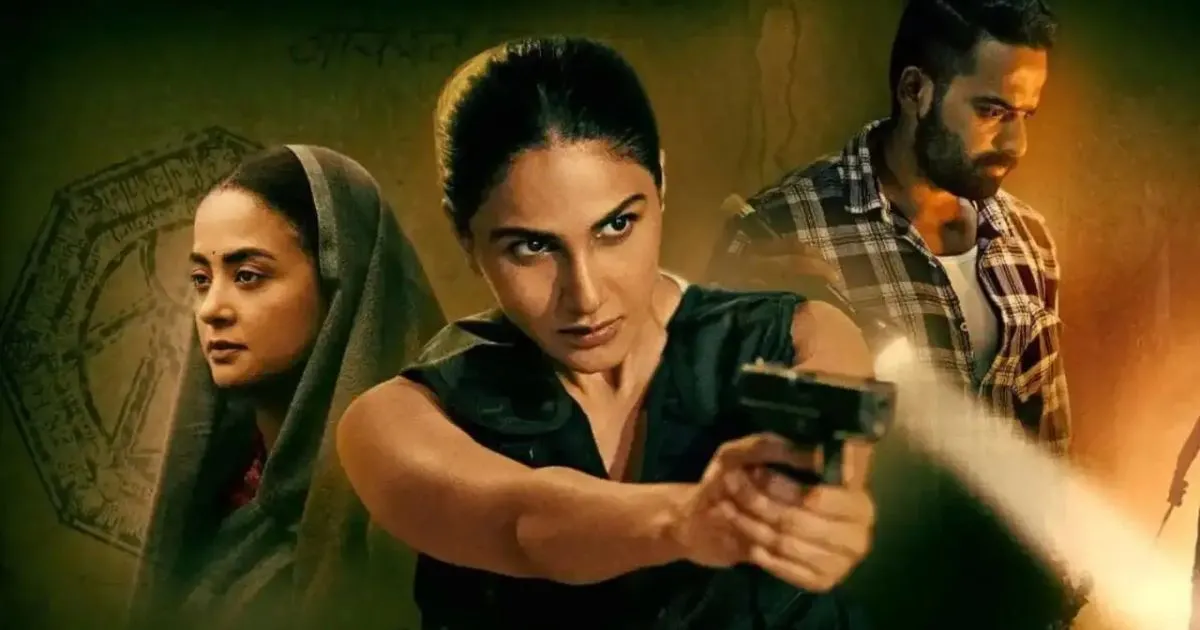
The plot follows detectives Rea Thomas (Vaani Kapoor) and Vikram Singh (Vaibhav Raj Gupta) as they unravel a series of ritualistic killings tied to a cult called the Aayastis, who worship a deity named Yast. The show tries to weave Indian mythology, horror, and crime into a True Detective-esque tapestry, but it’s more like a threadbare rug unraveling at every tug. The narrative is a labyrinth of confusion, with pacing so sluggish it feels like wading through molasses. It takes four episodes—four—to even grasp the central arc, and by then, any goodwill is long gone. The writing, credited to a team of six, is a chaotic pile-up of exposition dumps, lazy flashbacks, and dialogue that feels like it was scraped from a rejected soap opera script. The show’s obsession with cryptic symbols and vague world-building overshadows any emotional or thematic depth, leaving you with a hollow shell of a story that’s neither scary nor suspenseful.
You May Also Like

The performances are a mixed bag, though not for lack of trying. Vaani Kapoor’s Rea Thomas is intense and physically committed, but her character is so thinly written that her OTT debut feels like a missed opportunity. Vaibhav Raj Gupta, breaking from his Gullak mold, brings a tormented edge to Vikram, but the script saddles him with clichés that stifle any real growth. Surveen Chawla and Shriya Pilgaonkar fare better, with Chawla’s steely politician and Pilgaonkar’s eerie cult leader stealing scenes from the leads. But even their efforts can’t salvage a story that’s dead on arrival.
Now, let’s address the elephant in the room: the show’s handling of religious and cultural identities, which is where Mandala Murders goes from merely bad to actively problematic. The series sets up a fictionalized Varanasi-like town where Hindus, Muslims, and Christians coexist, but its portrayal of these communities is anything but even-handed. The Hindu elements—particularly the Aayasti cult—are depicted as sinister, backward, and tied to gruesome rituals like thumb-chopping and human sacrifice, hidden away in some mystical jungle like a caricature of “exotic” villainy. Meanwhile, the Muslim and Christian characters, including leads like Rea (implied Christian) and others in the ensemble, are positioned as the moral compasses, the saviors untangling the mess. This dichotomy isn’t overt enough to be blatant propaganda, but it’s insidious in its subtlety—a textbook case of soft media bias that paints one community as inherently malevolent while elevating others as inherently virtuous. It’s not just lazy stereotyping; it’s a narrative choice that feels manipulative and divisive, especially in a socio-political climate where such portrayals carry weight.
You May Also Like

The show’s attempt to tackle themes like environmentalism, misogyny, and greed through a sci-fi horror lens is admirable in theory but collapses in execution. It borrows heavily from Frankenstein but misses the emotional core of that story, focusing instead on convoluted lore that never lands. The mandala symbolism and talk of “destiny” and “evil” are thrown around like intellectual confetti, but there’s no substance to anchor them. Visually, the series has moments of atmospheric brilliance—foggy forests, shadowy rituals—but even Shaz Mohammed’s cinematography can’t mask the narrative rot. The score by Sanchit and Ankit Balhara tries to inject tension, but it’s like putting a Band-Aid on a broken leg.
To its credit, Mandala Murders dares to venture into India’s horror-thriller space, a genre that’s been underserved since the days of Aahat or Betaal. But courage alone doesn’t make a show watchable. It’s a tedious slog that insults your intelligence and patience, with plot holes you could drive a truck through and characters you barely care about. The cult’s “heinous” price for boons and the time-jumping 1950s subplot feel like gimmicks to distract from the lack of a cohesive story. By the time the final episode limps to its climax, you’re not invested—you’re just relieved it’s over.
In short, Mandala Murders is a baffling, boring, and borderline offensive misfire. It’s not just that it lacks depth or nuance; it’s that it actively undermines its own potential with shoddy storytelling and a troubling subtext that caricatures Hindu sects as evil while lionizing others. If you’re a die-hard thriller fan, you might muscle through for the visuals or Pilgaonkar’s chilling presence, but even then, it’s a one-time watch at best. Netflix India’s 2025 slate is off to a dismal start, and this show might just be its nadir. Save your eight hours for something that respects your time and doesn’t play cheap narrative tricks with cultural identities.