The Eternal Quest of Rama: A Tale of Duty and Devotion
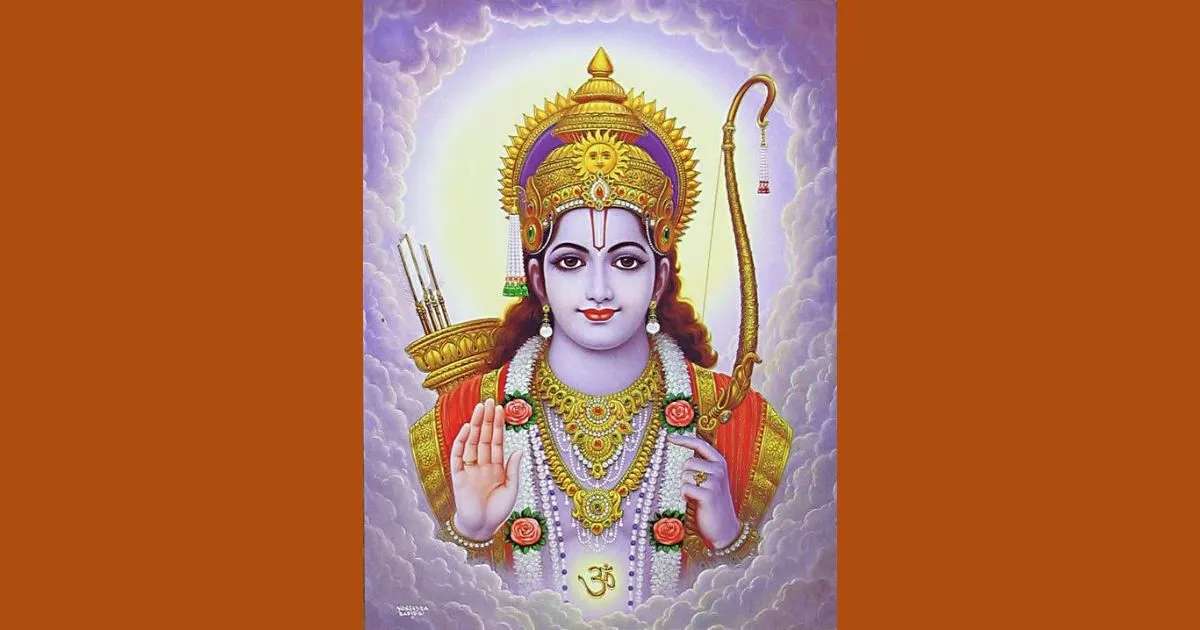
In the ancient kingdom of Ayodhya, under the radiant sun of the Treta Yuga, a prince was born whose name would echo through the ages—Rama, the seventh incarnation of Lord Vishnu. Born to King Dasharatha and Queen Kausalya, Rama was no ordinary mortal. His divine purpose was to restore dharma, the cosmic order, by vanquishing the demon king Ravana, whose tyranny threatened the world. The Valmiki Ramayana, the timeless epic, narrates Rama’s journey—a saga of duty, sacrifice, and unwavering devotion that continues to inspire millions.
Rama grew up in Ayodhya, a city of splendor, alongside his brothers Lakshmana, Bharata, and Shatrughna. Trained in archery and Vedic wisdom by sage Vishwamitra, Rama’s valor shone early when he slew the demoness Tadaka and protected the sage’s yajna. His destiny took a pivotal turn when he accompanied Vishwamitra to Mithila, where King Janaka sought a suitor for his daughter, Sita. Janaka’s challenge was formidable: string the mighty bow of Shiva, a task that had defeated countless princes. With effortless grace, Rama not only strung the bow but snapped it in two, winning Sita’s hand and her heart. Their union was a divine bond, for Sita, an incarnation of Goddess Lakshmi, was Rama’s eternal consort.
Yet, the path of dharma is rarely smooth. On the eve of Rama’s coronation as Ayodhya’s heir, Queen Kaikeyi, swayed by her maid Manthara, invoked a boon from Dasharatha, demanding Rama’s exile for fourteen years and the throne for her son, Bharata. Bound by his word, Dasharatha, heartbroken, complied. Rama, the epitome of filial duty, accepted exile without a trace of resentment, declaring, “A father’s promise is my command.” Sita and Lakshmana, unwilling to part from him, joined Rama in the forest, their love a testament to loyalty.
The trio’s exile led them to the Dandaka forest, where they lived as ascetics, facing trials with grace. The turning point came when Surpanakha, Ravana’s sister, enamored by Rama, attacked Sita in a fit of jealousy. Lakshmana severed Surpanakha’s nose, sparking Ravana’s wrath. The demon king, ruler of Lanka, devised a sinister plan. Disguised as a golden deer, his ally Maricha lured Rama away, while Ravana abducted Sita, spiriting her to Lanka in his aerial chariot. Rama’s anguished cry, “Sita! Sita!” echoed through the forest, a moment of divine vulnerability.
Guided by fate, Rama forged alliances with Sugriva, the monkey king, and Hanuman, the devoted son of Vayu. Hanuman’s leap across the ocean to Lanka, where he found Sita imprisoned in Ravana’s Ashoka grove, became a beacon of hope. With an army of vanaras, Rama built a bridge—the Rama Setu—to Lanka, a marvel of devotion and ingenuity. The ensuing battle was cosmic in scale. Ravana, armed with boons and dark magic, was a formidable foe, but Rama, wielding the Brahmastra, struck him down, fulfilling his divine purpose. Sita, tested by fire to prove her purity, emerged unscathed, her chastity a symbol of her divine essence.
Rama’s return to Ayodhya, after fourteen years, marked the triumph of dharma. Crowned king, he ruled with justice, ushering in Ram Rajya, an era of harmony. Yet, his story is not merely one of victory but of sacrifice—Rama, the Maryada Purushottama, the ideal man, bore personal pain to uphold duty, even when it meant separation from Sita due to societal whispers. His life remains a guiding light, illuminating the path of righteousness.
Understanding Rama’s Story: The Timeless Legacy of the Ramayana
The story of Lord Rama, as told in Valmiki’s Ramayana, is more than an epic—it is a spiritual and cultural cornerstone that has shaped India’s moral and philosophical landscape for millennia. Written in Sanskrit around the 5th century BCE, the Ramayana’s 24,000 verses offer a profound exploration of dharma (duty), love, and the human condition. For readers of this magazine, Rama’s tale is not just a myth but a living narrative, its lessons resonating in modern lives, from personal ethics to societal harmony.
The Core of Rama’s Story
Rama’s journey, as depicted in the Valmiki Ramayana, centers on his role as Vishnu’s avatar, tasked with defeating Ravana, a symbol of adharma (unrighteousness). Unlike later devotional retellings, such as Tulsidas’s Ramcharitmanas, Valmiki portrays Rama as both divine and deeply human—a prince who feels joy, sorrow, and moral dilemmas. His acceptance of exile, despite being heir to Ayodhya’s throne, underscores his commitment to truth and duty, a principle rooted in the Vedic concept of satya. His relationship with Sita, a partnership of mutual respect, reflects the ideal of love as a spiritual bond, while his alliances with Sugriva and Hanuman highlight the power of unity and loyalty.
Cultural and Spiritual Significance
Rama’s story transcends its ancient origins, offering timeless lessons. His adherence to dharma, even at personal cost, challenges us to prioritize integrity over convenience. When he accepts exile to honor his father’s word, or when he faces the pain of Sita’s abduction, Rama embodies resilience and sacrifice. The Ramayana also explores complex moral questions: Was Rama’s insistence on Sita’s fire ordeal just? Valmiki’s text suggests it was a divine act to affirm Sita’s purity for the world, yet it sparks debate about gender and justice, inviting modern readers to reflect on evolving values.
The epic’s characters are archetypes of human virtues and flaws. Sita represents unwavering fidelity and strength, Lakshmana embodies selfless loyalty, and Ravana, though a villain, is a complex figure—a scholar and devotee of Shiva undone by ego and desire. Hanuman, with his boundless devotion, remains a beloved symbol of service, his worship widespread in India, from Hanuman Chalisa recitations to temples like the one in Hampi, Karnataka.
Historical and Archaeological Context
While the Ramayana is a spiritual text, archaeological findings lend it historical intrigue. The Rama Setu, or Adam’s Bridge, a chain of limestone shoals between India and Sri Lanka, is referenced in ancient texts and visible in satellite imagery, fueling debates about its man-made origins. Sites like Ayodhya, identified as Rama’s birthplace, and Chitrakoot, where he spent part of his exile, are pilgrimage centers today, their antiquity supported by excavations revealing ancient settlements. These connections bridge myth and history, grounding Rama’s story in India’s cultural memory.
Modern Relevance
In 2025, Rama’s story remains vibrant. The consecration of the Ram Mandir in Ayodhya in January 2024 has rekindled devotion, with millions visiting to honor Rama. Festivals like Diwali, celebrating Rama’s return, unite communities worldwide. The Ramayana’s themes—duty, loyalty, and the battle against inner and outer demons—resonate in a world grappling with ethical challenges. Rama’s ideal of Ram Rajya, a just society, inspires leaders and individuals to prioritize collective welfare.
For devotees, Rama is not a distant deity but a living presence, invoked through mantras like “Jai Shri Ram” and rituals at temples like the Ramanathaswamy Temple in Rameswaram. His story, performed in Ramlila enactments and studied in texts, teaches that true strength lies in aligning personal will with universal dharma.
Sources:
- Valmiki Ramayana (critical edition, Gita Press)
- Archaeological Survey of India reports on Ayodhya and Rama Setu
- Shakta and Vaishnava traditions, oral histories, and temple records