Beauty Bias: How Looks Still Decide How Seriously a Woman Is Heard
The RealShePower Survey: What Appearance Still Costs Women in 2025
She enters a meeting with ideas that could change the project but the first comment she hears is about her beauty, her lipstick. She posts an opinion online and the first reaction is not to her argument, but to her outfit. She goes for an interview and is told she looks “too young” for leadership.
It’s 2025, and the RealShePower survey reveals that half of young Indian women (50.5%) believe their appearance their clothes, hair, or makeup affects how seriously people take their opinions.
That single statistic captures an uncomfortable truth: in India’s supposedly progressive society, a woman’s credibility still comes wrapped in her appearance.
Table of Contents
The Appearance Paradox
Indian women have fought hard for the right to choose their careers, partners, and identities. But one right still comes with invisible terms and conditions: the right to be seen without being judged.
From classrooms to boardrooms, from family dinners to Instagram feeds, a woman’s appearance remains a public matter. She may control her clothes, but not the commentary that follows them.
It’s a double-edged sword:
Dress traditionally, and you’re “conservative.”
Dress boldly, and you’re “asking for attention.”
Wear makeup, you’re “vain.”
Don’t wear it, you’re “careless.”
The result? A lifetime of micro-adjustments just to be taken seriously.
“If I wear something bright, I’m not seen as serious. If I dress simply, I’m invisible,” said one respondent from our survey.
This is beauty bias subtle, pervasive, and deeply cultural. It’s not just about attraction. It’s about perception, power, and prejudice.
Where It Begins
The policing of women’s looks starts long before adulthood.
From childhood, girls are complimented for being “pretty” far more often than for being “clever.”
A boy’s mischief is laughed off as confidence. A girl’s confidence is critiqued as attitude.
Schools still send circulars about dress codes aimed at “maintaining decorum” often directed more toward girls than boys.
Families still remind daughters to “look presentable,” because “you never know who might see you.”
Before she learns her worth, she learns her appearance has consequences.
By the time she enters college or work, she already knows: her face will enter the room before her voice does.
The Workplace: Where Presentation Outweighs Potential
The RealShePower survey shows how appearance bias translates directly into professional life.
Many young women shared experiences of not being taken seriously in meetings or interviews because of how they looked not what they said.
In offices across India:
- A woman wearing makeup is seen as less competent.
- A woman not wearing makeup is seen as unprofessional.
- A woman dressed fashionably is “distracting.”
- A woman dressed simply is “not ambitious enough.”
Men are assessed on results. Women are assessed on presentation.
A female employee who speaks assertively might be called “aggressive.”
A man doing the same is “a natural leader.”
This visual gatekeeping does not just hurt women’s confidence it slows their progress. Every time a woman has to overthink her outfit for credibility, she loses energy that could have gone into innovation or growth.
Media, Culture, and the Beauty Trap
Popular culture amplifies the bias. Bollywood heroines have always had to look perfect to be seen as worthy of love, strength, or even tragedy. Advertising sells empowerment wrapped in beauty filters.
Even social media “body positivity” spaces are dominated by conventionally attractive faces proof that even rebellion is expected to be photogenic.
The result is an impossible expectation: women must appear effortlessly beautiful but never seem to try.
She must glow without makeup and yet look camera-ready at all times.
As one survey participant put it:
“Even feminism is branded now. You have to look like a confident feminist to be one.”
It’s not vanity that women are battling, it’s visibility.
The Psychological Toll
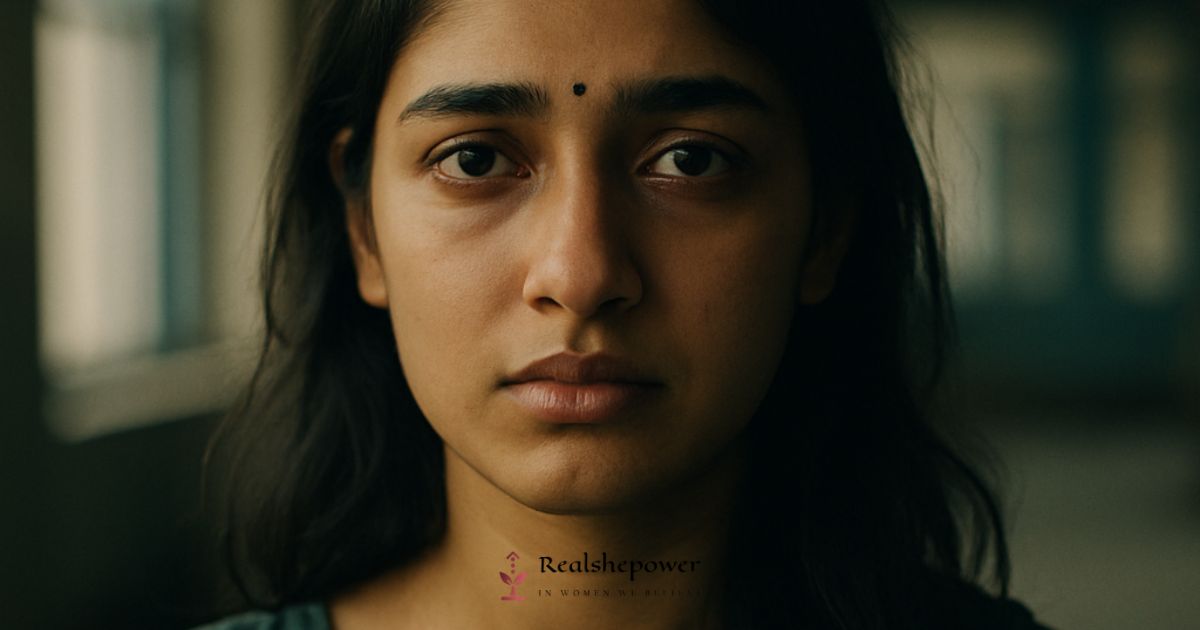
Constant visual evaluation comes with emotional side effects.
Our survey respondents described feeling:
- Pressure to “look the part” of professionalism
- Anxiety before public appearances or work meetings
- Self-consciousness during discussions dominated by men
- Fear of being dismissed as superficial if they enjoy fashion
This is the mental tax of beauty bias, the invisible cost of being constantly watched.
Psychologically, it mirrors what experts call “appearance anxiety” a form of self-surveillance where women internalize the gaze of others, monitoring themselves to avoid judgment.
When this happens daily, self-expression becomes performance.
And the cruel irony? The more energy women invest in managing how they’re seen, the less attention society pays to what they’re saying.
The Politics of Professionalism
Let’s talk about the phrase “look professional.” It sounds neutral but in most contexts, it’s gendered.
“Professional” in India often translates to “neutralizing femininity.” Women are expected to tone down color, jewelry, voice, and sometimes even warmth to appear “serious.”
But professionalism, when defined by men, becomes another form of conformity.
Real equality would mean allowing women to bring their whole selves: intellect, creativity, emotion, and yes, style to their work, without having to erase parts of themselves to fit into a mold.
Freedom, after all, is not fitting in. It’s being respected even when you stand out.
How Women Are Reclaiming the Narrative
Despite the bias, women are quietly rewriting the rules of visibility.
They are using beauty not as compliance, but as expression.
- Wearing red lipstick to boardrooms unapologetically.
- Owning curly hair, brown skin, and body diversity with pride.
- Refusing to hide acne, scars, or stretch marks.
- Dressing in ways that feel authentic, not strategic.
Social media too, for all its flaws, has become a platform for resistance. Campaigns like #UnfilteredIndia, #BrownIsBeautiful, and #RealFacesOfWork are reclaiming visibility from the beauty industry and returning it to authenticity.
These women are saying: “We are not your mirrors. We are our own reflection.”
What Needs to Change
- Education: Teach both genders early that intelligence and empathy have no dress code.
- Workplace Policy: Enforce appearance-neutral evaluation criteria.
- Media Accountability: Challenge visual stereotypes in films and advertising.
- Representation: Feature diverse female bodies and appearances in leadership imagery.
- Language Shift: Replace “She looks…” with “She said…” — start seeing women as speakers, not spectacles.
Conclusion: Listening Beyond the Mirror
The RealShePower survey tells us something fundamental about our society even when women have achieved financial, social, and digital independence, visual independence remains elusive.
The eye still decides before the ear does. And that needs to change!
A woman’s appearance should not determine her authority, intelligence, or worth. Until that bias ends, even the most powerful woman will still have to spend energy managing how she’s seen before she’s heard.
Freedom will be real only when a woman can walk into a room and her ideas arrive before her image.
Acknowledgment & Copyright Notice
This article is based on the RealShePower on-field survey, 2025. All findings, data points, and narratives are original research conducted by RealShePower. No part of this survey or analysis may be reproduced, quoted, or published without clear attribution to RealShePower.