How Ela Bhatt and 4,000 Women Built a Bank With Just ₹10 Each
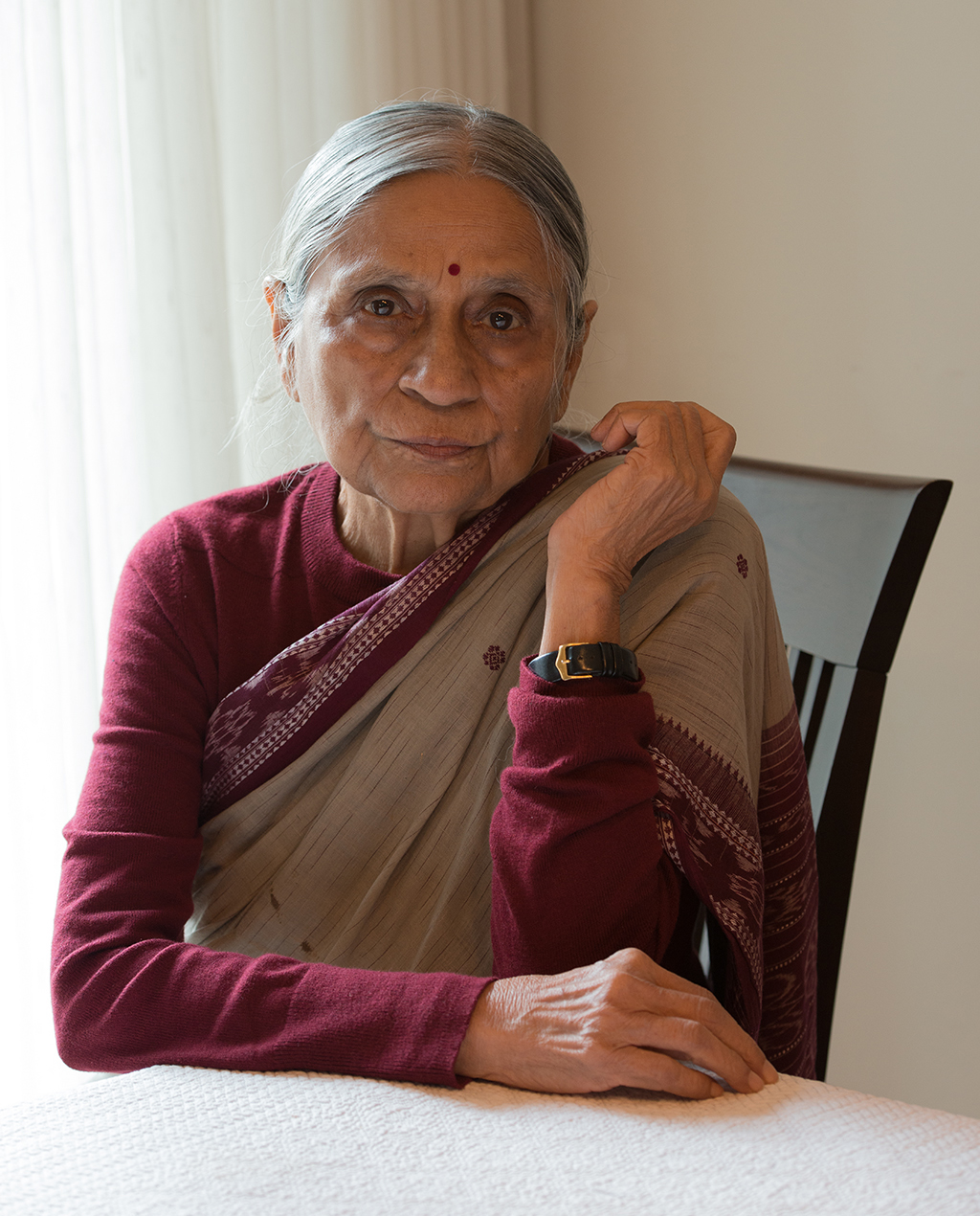
When India’s banking system refused to recognise poor working women as worthy customers, Ela Bhatt helped them build a bank of their own. This is the remarkable story of SEWA Bank and the women who changed the meaning of financial independence.
In the crowded streets of Ahmedabad in the early 1970s, women sold vegetables, carried heavy bundles of cloth, stitched garments, rolled bidis and traded second-hand clothes. They worked long hours, negotiated prices, managed inventories and supported entire households. Yet the institutions that controlled access to money rarely recognised them as legitimate economic participants.
They were living an older, harsher version of what we now describe asthe Competent Woman Trap. Their capacity to work and provide was unquestioned, but their entitlement to financial security, institutional support and economic power was another matter entirely.
Among those paying attention was a young lawyer named Ela Bhatt.
She would eventually become one of India’s most influential social reformers. But her revolution did not begin in Parliament, a corporate boardroom or an international conference.
It began with women who needed somewhere safe to keep their money.
The Women Nobody Considered Creditworthy
To understand what Ela Bhatt accomplished, it is important to understand the economics of being a poor working woman in Ahmedabad half a century ago.
Consider the circumstances of a vegetable seller. She needed money to purchase produce before she could begin selling it. Without sufficient savings, she might have to borrow from a local moneylender. By the time she had repaid the loan and its interest, little could remain for her household, let alone for expanding her business.
The following morning, she would have to begin again.
A woman engaged in home-based garment work faced a similar problem. She might possess considerable skill but lack the money to purchase materials, improve her equipment or negotiate independently with merchants.
These women were not economically inactive. They were entrepreneurs operating without the financial infrastructure that made entrepreneurship sustainable.
Their poverty was not necessarily the result of an inability to earn. It was compounded by the conditions under which they earned.
Conventional banking offered few accessible alternatives. Small transactions, irregular incomes, limited literacy and the absence of conventional collateral made many informal workers unattractive customers to financial institutions.
The women needed capital, but the institutions possessing capital did not adequately recognise the value of their work.
Ela Bhatt understood that this was not merely a banking problem. It was a question of power.
The Lawyer Who Started Listening
Born in 1933, Ela Ramesh Bhatt trained as a lawyer before joining Ahmedabad’s Textile Labour Association in 1955, an organisation shaped by Gandhian principles of collective action and social justice.
Her work brought her into contact with communities whose livelihoods existed beyond the protections of formal employment.
Unlike factory workers with identifiable employers, many self-employed women had no single employer against whom they could negotiate wages or working conditions. They worked in markets, homes and streets, often performing essential economic activities without the security or recognition associated with organised employment.
In 1968, Bhatt became head of the association’s women’s wing. Her encounters with informal workers increasingly exposed the inadequacy of existing labour and financial institutions in addressing their circumstances.
An important part of her approach was listening to the women themselves. They understood the everyday mechanics of their businesses, the pressures imposed by merchants and moneylenders, and the practical obstacles that prevented them from earning more.
What they lacked was not intelligence. It was institutional bargaining power.
In 1972, Bhatt helped establish theSelf-Employed Women’s Association, better known as SEWA, a trade union representing women in the informal economy.
It was a significant departure from conventional ideas about organised labour. Women selling goods from roadside stalls, carrying loads or producing handicrafts from their homes could now organise around their shared economic interests.
But collective organisation soon revealed another problem.
What good was the ability to negotiate if a woman remained financially dependent on an exploitative lender?
The Question That Changed Everything
During discussions among SEWA members, the difficulties of accessing banking services repeatedly surfaced.
The women needed affordable credit to maintain their businesses. They wanted a safe place to deposit savings. They wanted to purchase equipment and build assets without constantly surrendering a portion of their earnings to moneylenders.
Established banks had proved reluctant to accommodate them.
Then came a question that would change the direction of the movement.
“Why can’t we have our own bank?”
The question is documented in accounts of SEWA’s early cooperative movement, including anInternational Labour Organization publication.
What made the proposal extraordinary was who made it. These were women with limited financial resources, many of whom had been excluded from mainstream banking.
They were proposing to enter the very industry that had judged them unsuitable as customers.
Instead of continuing to ask established institutions for permission to participate, they would attempt to establish an institution that belonged to them.
The idea was ambitious, but it had a foundation that conventional bankers had overlooked: thousands of economically active women sharing similar needs.
Individually, their savings appeared insignificant. Collectively, those savings could become capital.
Four Thousand Women, Ten Rupees Each
The women began contributing money.
Vegetable sellers, home-based workers, small traders and labourers became part of an extraordinary collective undertaking.
According to theofficial history of SEWA Bank, approximately 4,000 self-employed women contributed ₹10 each towards establishing their cooperative bank.
Their individual contributions were modest. Together, they amounted to roughly ₹40,000 in founding share capital.
There was something quietly radical about this arrangement. These women were not donating money to an organisation that would subsequently help them. They were purchasing a stake in an institution that would belong to its members.
They were becoming shareholders.
The woman who had struggled to convince a conventional bank that her earnings mattered could now participate in the ownership of a financial institution.
The woman who sold goods on the street could become part of a banking enterprise.
The woman whose economic contributions were frequently overlooked could acquire a formal financial identity.
For many of these women, ₹10 represented money that could have been used for immediate household necessities. Committing it to a collective institution was an investment in a future whose success was far from guaranteed.
But establishing a bank would require more than accumulating capital. The women still had to convince the authorities that they were capable of running one.
The Night Eleven Women Learned to Sign Their Names
Among the most moving episodes in the history of SEWA Bank concerns the women responsible for its registration.
A historical account available through theEducation Resources Information Centerdescribes the resistance encountered during the bank’s formation. Limited literacy among its prospective members and leaders was treated as an argument against its viability.
The eleven members of its executive committee faced a particular obstacle: they needed to sign the registration documents.
According to that account, the women spent the night practising their signatures so that they could complete the paperwork.
It is difficult to imagine a more revealing moment in the history of women’s financial inclusion.
These were women who already understood the practical responsibilities of running small businesses. They knew how to negotiate, calculate costs, manage resources and survive unpredictable incomes.
Yet the formal recognition of their capabilities depended upon a skill that educational inequality had denied many of them.
They practised until they could sign.
Their names would become part of the documentary foundation of an institution built to challenge the very assumptions that had made their signatures necessary.
In May 1974, Shri Mahila SEWA Sahakari Bank was registered as a cooperative bank.
The women had done it.
A Bank Designed Around Women’s Actual Lives
SEWA Bank represented more than a successful campaign for access to financial services. It offered an alternative understanding of how those services could be delivered.
Traditional banking generally works most comfortably with predictable incomes, standardised transactions and customers who possess the documentation and resources required by established procedures.
The lives of informal workers rarely fit neatly into that framework.
A street vendor might earn different amounts every day. A garment worker might experience seasonal fluctuations in income. A household emergency could interrupt an otherwise successful enterprise.
An institution serving such women needed to understand those realities rather than treat them as personal failures.
SEWA Bank developed services addressing women’s everyday financial requirements, including savings, business credit and longer-term financial security.
Small savings mattered. So did access to loans that could help women purchase materials, equipment or inventory.
The cooperative model also meant that its members had a relationship with the institution that extended beyond ordinary banking transactions.
They were participants in its existence.
Over time, the broader SEWA movement developed additional cooperatives supporting workers in economic activities ranging from garment production to agriculture and other forms of self-employment.
The bank was one component of a more comprehensive effort to make women’s livelihoods economically sustainable.
Ela Bhatt understood that providing credit was not enough if the circumstances surrounding a woman’s work remained exploitative. Financial services needed to exist alongside collective organisation, access to markets and opportunities for building security.
The Woman Who Disagreed With the World’s Definition of Poverty
There was a fundamental difference between Ela Bhatt’s approach and many conventional approaches to poverty alleviation.
She did not see poor working women exclusively as recipients of assistance.
She recognised them as people already creating economic value.
A street vendor understood her customers. An artisan possessed specialised knowledge. A home-based worker understood the costs and demands of production. These women had capabilities that could be strengthened through appropriate institutional support.
In a recorded interview preserved byHarvard Business School’s Baker Library, Bhatt reflected on the resistance she encountered while establishing the bank and the importance of trusting women whom existing institutions had excluded.
Her approach challenged the assumption that poverty itself was evidence of financial irresponsibility.
A person could lack capital and still understand money. A woman could have limited formal education and possess considerable commercial judgement.
Perhaps the most instructive aspect of SEWA Bank’s creation is that it required financial institutions to reconsider not just whom they served, but whose knowledge they respected.
Why Having Money Is Different From Having Power Over Money
Decades after SEWA Bank was established, its founding philosophy remains relevant to Indian women across economic and social backgrounds.
Earning money does not automatically guarantee control over it.
A woman may receive a salary but remain dependent on family approval for major purchases. She may contribute substantially to household expenses while having limited personal savings. She may support other people’s ambitions while repeatedly postponing her own.
These circumstances differ considerably from those of SEWA’s founding members, but they raise a related question about the distinction between earning and exercising economic agency.
As we explored inThe Good Daughter Contract, professional and financial achievements do not necessarily eliminate social expectations concerning a woman’s choices, responsibilities and obligations.
Our economic understanding of independence must therefore extend beyond employment.
It must include ownership, access to savings, informed financial decision-making and the ability to direct resources towards one’s own future.
For the women who built SEWA Bank, becoming shareholders was one practical expression of that independence.
Their contribution was more than a financial transaction. It established a relationship with an institution in which their economic participation was formally recognised.
From Ahmedabad to the World
Ela Bhatt’s work did not end with the establishment of SEWA Bank.
Her experience organising informal women workers contributed to international conversations about financial inclusion, labour rights and women’s economic participation.
She became a founding member ofWomen’s World Banking, an international organisation established in 1979 to improve women’s access to appropriate financial services.
She was nominated to the Rajya Sabha and served in public institutions concerned with economic development and the circumstances of self-employed women.
Her contributions earned national and international recognition, including the Ramon Magsaysay Award, the Padma Shri and the Padma Bhushan.
Yet the institution-building that defined her work remained deeply connected to the everyday experiences of working women.
The original question had come from people who knew what it meant to earn a living without adequate financial security.
Through SEWA, their experiences became part of a much larger conversation about economic development.
When Ela Bhatt died on November 2, 2022, she left behind more than a remarkable personal legacy. She left institutions through which women could continue organising, earning, saving and building greater control over their livelihoods.
Fifty Years Later, What Can We Learn From Ela Bhatt?
The story of SEWA Bank offers three enduring lessons.
The first is that financial independence begins with access. Without appropriate banking services, opportunities to save, affordable credit and reliable ways to build assets, individual effort can only accomplish so much.
The second is that collective ownership can change the balance of economic power. Four thousand women with limited individual resources were able to accomplish something that would have been extraordinarily difficult for any one of them to undertake alone.
The third is that meaningful empowerment requires respecting women’s judgement. The workers who established SEWA Bank understood their financial circumstances intimately. The institution they created grew out of that knowledge.
Too often, discussions about women’s empowerment focus on encouraging women to become more confident, more ambitious or more resilient.
Ela Bhatt’s work reminds us that women frequently possess those qualities already. What they need are institutions capable of recognising and supporting them.
The principles behind Ela Bhatt’s work remain relevant to women today. Access to banking, personal savings, financial literacy and asset ownership continue to shape women’s economic freedom. Ourcomplete guide to financial independence for Indian womenexplores how these principles can be translated into practical financial decisions at every stage of life.
The Real SHEE Power Perspective
The most extraordinary thing about Ela Bhatt’s story is not that she helped establish a bank with modest capital. It is that she helped change who could imagine themselves as the owner of a bank.
She worked with women whom conventional institutions had underestimated. Together, they turned their earnings, their knowledge and their collective determination into an enduring financial institution.
There were no wealthy corporate founders behind those original ₹10 contributions. There were women who understood what it meant to work hard and still remain financially vulnerable.
History remembers Ela Bhatt as a gentle revolutionary.
It should also remember the thousands of women who stood beside her, the eleven who practised their signatures, and the workers whose small savings helped create an institution much larger than any individual contribution.
In 1974, they demonstrated that economic power need not begin with wealth. Sometimes, it begins when people who have been denied access decide to build something together.
For 4,000 women in Ahmedabad, that beginning cost just ten rupees each.
Historical note:SEWA Bank, registered in May 1974, was a pioneering women’s cooperative bank established by and for self-employed women in India’s informal economy. It should not be confused with Bharatiya Mahila Bank, which was established in 2013 as a public-sector banking initiative focused on women.