
Breaking Barriers at the Top: Air Vice Marshal Shakti Sharma Scripts History for Women in India’s Armed Forces
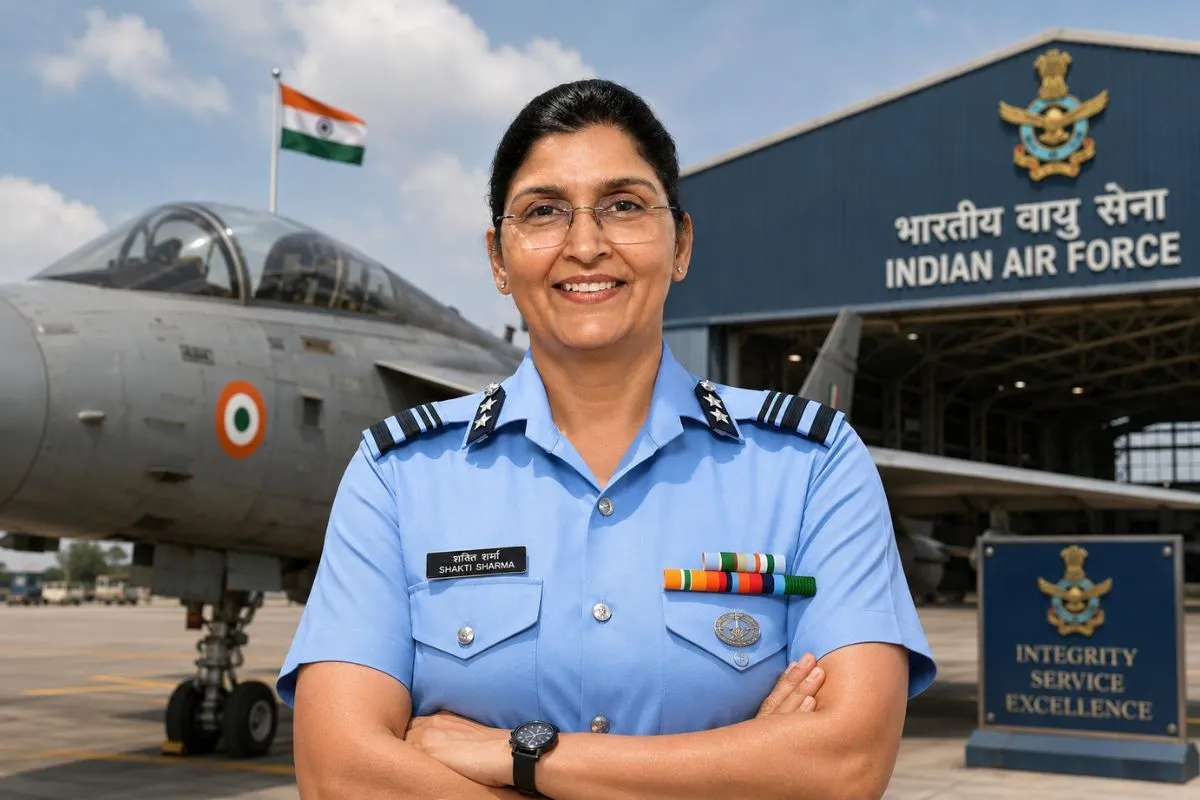
A Historic Elevation: Air Vice Marshal Shakti Sharma has become the highest-ranking woman officer in the non-medical branch across the tri-services of the Indian Armed Forces.
Command Leadership: Taking over as Assistant Chief of the Air Staff (Education) at Air Headquarters, she steps into a strategic two-star general command role traditionally held by male officers.
A Shift in Military Culture: Her promotion highlights the expanding scope of permanent commissions and structural leadership opportunities for women across defense branches.
The Indian Armed Forces have reached a monumental milestone in gender leadership and institutional inclusion. Air Vice Marshal Shakti Sharma has officially scripted history by becoming the highest-ranking woman officer in the non-medical branch across all three services—the Indian Army, Navy, and Air Force. Taking charge as the Assistant Chief of the Air Staff (Education) at Air Headquarters, her promotion to a two-star general rank signals a decisive shift in how strategic leadership positions are accessed within defense institutions.
For decades, female officers in the military were largely concentrated within the Armed Forces Medical Services, where medical officers routinely attained flag ranks. However, as permanent commissions were extended to women across executive, administrative, engineering, and educational arms, structural ceilings began to break down. Air Vice Marshal Sharma’s elevation proves that sustained merit, operational dedication, and leadership longevity are creating clear pathways for women to command core military directorates.
In her new capacity as Assistant Chief of the Air Staff, Air Vice Marshal Sharma oversees critical educational policies, training frameworks, and human capital development across the Indian Air Force. Modern air combat strategy relies heavily on technical literacy, advanced simulator integration, and rapid technological adaptation, making the education directorate a central pillar of force readiness. Managing these systems requires high-level policy formulation and operational vision.
Beyond its immediate administrative importance, Air Vice Marshal Sharma’s historic appointment serves as an inspiring precedent for young women looking toward military careers. As gender barriers continue to give way to merit-based operational roles, her ascent reinforces a fundamental truth: capability, vision, and strategic excellence know no gender boundaries in the service of the nation.








One thought on “Breaking Barriers at the Top: Air Vice Marshal Shakti Sharma Scripts History for Women in India’s Armed Forces”