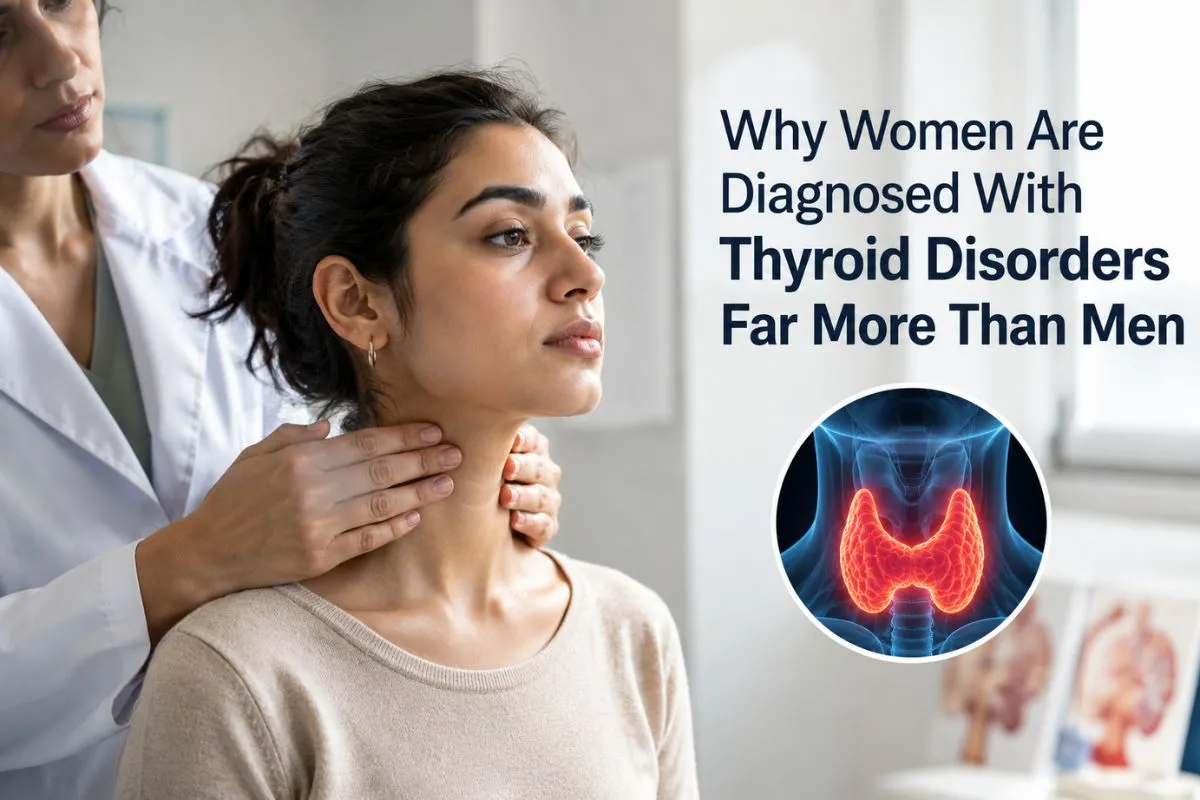
Why Women Are Diagnosed With Thyroid Disorders Far More Than Men
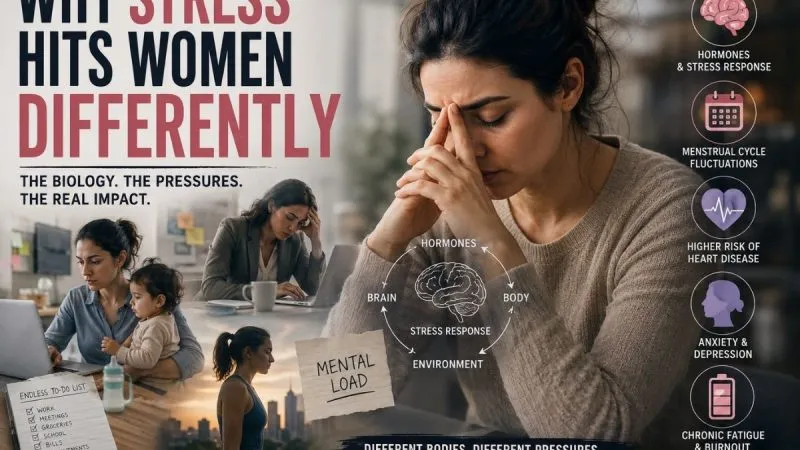
Our piece on why chronic stress feels different in women’s bodies traced one biological gap back to how differently the HPA axis, the body’s stress circuit, behaves by sex. The thyroid tells a strikingly similar story, and the numbers behind it are large enough to be genuinely startling once you see them laid out. And as we noted in our piece on iron deficiency, fatigue, brain fog, and mood changes rarely have a single obvious cause, the thyroid is very often the overlooked variable sitting underneath all three.
The Sex Gap, in Actual Numbers
Hashimoto’s thyroiditis, an autoimmune condition and the most common cause of hypothyroidism in iodine-sufficient parts of the world, is documented as being roughly four times more common in adult women than in men, according to 2026 research published in Frontiers in Endocrinology. Other epidemiological studies place the gap even wider in specific measures, one widely cited analysis found an incidence of 17.5 percent in women compared to 6.0 percent in men, close to a three-fold difference in that particular dataset. A separate hospital-based study found that among patients presenting with thyroid disorders, 86 percent were women and just 14 percent were men, a ratio the researchers noted reflects both a genuinely higher underlying prevalence and the fact that women are more frequently tested for thyroid autoimmunity in clinical practice to begin with.
This isn’t a fringe statistical footnote either. Hashimoto’s thyroiditis is described in the current medical literature as one of the most common autoimmune diseases overall, and research specifically states that sexual dimorphism, meaning fundamental biological differences in immune response between women and men, accounts directly for its higher prevalence in women.
Why the Immune System Treats the Thyroid Differently by Sex
The explanation traces back to the same broader biological theme covered in our facts piece on the female body: X-chromosome mosaicism. Because a large share of immune-regulating genes sit on the X chromosome, and women carry two X chromosomes with one randomly deactivated per cell, female tissue ends up as a genetic mosaic that produces a more varied, more reactive immune response. That same heightened reactivity, which helps women fight off certain infections more effectively, appears to also raise the risk of the immune system mistakenly targeting the body’s own tissue, in this case, the thyroid gland itself.
Research published in Endocrine specifically frames autoimmune thyroid disease as the product of a complex interconnection of factors between females and males, rather than any single genetic switch, pointing to hormonal influence, particularly estrogen, as an additional contributing variable alongside the chromosomal explanation.
Age Matters, and So Does Reproductive Stage
Thyroid autoimmunity doesn’t strike evenly across a woman’s life either. Research indicates incidence rises notably with age, peaking between 45 and 65, an age range that overlaps meaningfully with perimenopause and menopause, life stages already covered in our piece on female hormones. But it isn’t confined to later life. A hospital-based study found the largest concentration of positive thyroid antibody tests occurred in patients aged 20 to 30, indicating that thyroid autoimmunity is very much a concern throughout the entire span of reproductive years, not just as women approach midlife.
The Fertility Connection Few People Are Told About
One of the more clinically significant findings in recent research is the link between Hashimoto’s thyroiditis and fertility. A 2026 clinical study examined 86 women undergoing fertility evaluation and found that those with confirmed thyroid autoimmunity showed subtle but clinically relevant impairments in ovarian reserve and reproductive potential compared to the control group. Interestingly, the same study found that among women with Hashimoto’s who were already being treated with thyroid hormone replacement, oocyte and blastocyst counts trended higher than in untreated patients, suggesting that proper thyroid management may meaningfully support fertility outcomes, even though the difference didn’t reach statistical significance in this particular sample.
Why So Many Cases Go Undiagnosed for Years
Thyroid symptoms are notoriously easy to misattribute, fatigue, weight changes, hair thinning, mood shifts, and irregular cycles overlap heavily with stress, iron deficiency, and ordinary life circumstances, which is precisely why thyroid dysfunction so often gets missed or delayed in diagnosis. Unlike many autoimmune conditions, however, Hashimoto’s has a relatively accessible diagnostic pathway, a blood test measuring thyroid peroxidase and thyroglobulin antibodies alongside standard thyroid hormone levels, which makes the persistence of underdiagnosis less a matter of diagnostic difficulty and more a matter of the symptoms simply not being connected to the thyroid in the first place.
What This Means in Practice
If you’re navigating persistent fatigue, unexplained weight changes, hair thinning, low mood, or fertility difficulty, and previous explanations haven’t fully accounted for what you’re experiencing, thyroid antibody testing is a reasonable, evidence-backed next step to raise with a doctor, not just standard thyroid-stimulating hormone testing alone, which can miss autoimmune thyroid activity in its earlier stages. Given how strongly the research points to women bearing the overwhelming majority of this condition’s burden, and how much overlap exists with other commonly dismissed symptoms, it’s a test worth asking for directly rather than waiting for it to be offered.
The Bottom Line
A nearly four-fold difference in prevalence between women and men isn’t a subtle statistical nuance, it’s one of the clearer examples of how deeply biological sex shapes autoimmune disease risk. Layer in a diagnostic pathway that depends on someone thinking to test for it, and a symptom profile that overlaps with half a dozen other conditions already covered on this blog, and the persistence of underdiagnosed thyroid disease in women starts to look less like bad luck and more like a pattern worth naming clearly, and testing for directly.
Frequently Asked Questions
Is thyroid dysfunction always autoimmune?No. Hashimoto’s thyroiditis, the autoimmune form discussed throughout this article, is the most common cause of hypothyroidism in iodine-sufficient regions, but thyroid dysfunction can also result from iodine deficiency, thyroiditis unrelated to autoimmunity, certain medications, or prior thyroid surgery. A full antibody panel is what distinguishes the autoimmune form from other causes.
What blood tests actually detect Hashimoto’s, and is TSH enough on its own?Standard thyroid-stimulating hormone, or TSH, testing can miss autoimmune thyroid activity in its earlier stages. A more complete picture includes thyroid peroxidase antibodies (TPOAb) and thyroglobulin antibodies (TgAb) alongside TSH and free T4, since antibody positivity can appear before hormone levels shift out of range.
Can thyroid autoimmunity affect fertility even if hormone levels look normal?Yes. Recent research has found that women with confirmed thyroid antibodies showed measurable impairments in ovarian reserve even when broader fertility evaluation was underway, suggesting the autoimmune activity itself, not just resulting hormone imbalance, may affect reproductive outcomes.
Why does thyroid dysfunction get missed or misdiagnosed so often?Its symptoms, fatigue, weight changes, hair thinning, low mood, and irregular cycles, overlap heavily with stress, iron deficiency, and normal life circumstances. Since the condition doesn’t always announce itself with a single unmistakable symptom, it’s frequently attributed to something else entirely unless a doctor specifically thinks to test for it.
At what age should thyroid antibody testing be considered?Research shows meaningful antibody positivity in women as young as their twenties, with incidence rising notably from ages 45 to 65. There isn’t a single universal age to begin testing, it’s more a matter of symptom presentation, family history of autoimmune disease, or reproductive health concerns prompting the conversation with a doctor.
Suggested Reading
- Your Hormones Are Not the Problem. Ignoring Them Is. The Complete Guide to Cycle Syncing for Indian Women
- Why Chronic Stress Feels Different in Women’s Bodies: The Science of the HPA Axis
- 10 Gripping Facts About the Female Body Science Only Recently Confirmed
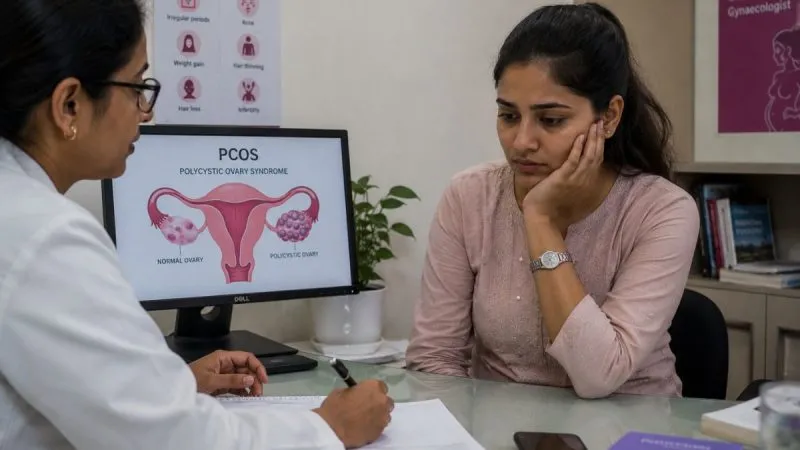
- PCOS: The Hormonal Condition Affecting Up to 1 in 5 Women That’s Still Widely Misunderstood