PCOS: The Hormonal Condition Affecting Up to 1 in 5 Women That’s Still Widely Misunderstood
Our piece on Your Hormones Are Not the Problem. Ignoring Them Is. explained how estrogen and progesterone move through a predictable monthly rhythm, and why learning that rhythm changes how you understand your own body. Polycystic ovary syndrome, or PCOS, is what happens when that rhythm breaks down at a structural level, not just a monthly fluctuation, but a chronic hormonal imbalance that reshapes ovulation, metabolism, and skin all at once. It’s also one of the most common endocrine conditions affecting women worldwide, and one of the most persistently misunderstood, still reduced by many to “irregular periods and a few cysts” despite decades of research showing it’s considerably more complex than that.
If you’ve read The Complete Woman’s Guide to Holistic Health, you already know that hormonal conditions rarely stay contained to a single symptom. PCOS is a clear example of exactly that pattern, touching fertility, mental health, skin, and long-term metabolic health simultaneously.
How Common PCOS Actually Is, According to the Latest Data
The numbers here are genuinely wide-ranging, and that range itself tells an important story. The World Health Organization estimates PCOS affects 10 to 13 percent of people who menstruate worldwide, while a comprehensive 2026 systematic review and meta-analysis published in Human Reproduction Update, pooling data from 92 studies and more than 157,000 participants, found prevalence estimates ranging from 7.9 to 12.7 percent depending on which diagnostic criteria were used. Some broader analyses place the range as high as 5 to 20 percent.
That range exists because PCOS has historically been diagnosed using different criteria in different countries and different eras of research, which makes clean, universal statistics genuinely difficult to pin down. What researchers agree on is the direction of the trend: global data from the Global Burden of Disease study found that PCOS cases rose from roughly 36.7 million in 1990 to about 69.5 million in 2021, with global burden increasing an estimated 28 percent over that same period. Researchers are still untangling how much of that increase reflects a genuine rise in the condition versus growing diagnostic awareness catching cases that would previously have gone unnamed.
PCOS Isn’t Distributed Evenly Around the World
One of the more striking findings in recent research is that PCOS prevalence varies meaningfully by region. The 2026 meta-analysis found prevalence was highest in the Eastern Mediterranean region, at roughly 15.1 percent, and the South-East Asian region, at roughly 14.3 percent, using Rotterdam diagnostic criteria, the most widely used standard. The European region followed at approximately 11.7 percent, with the Americas around 10.5 percent. Notably, researchers found insufficient high-quality data from Africa to produce a reliable regional estimate at all, a genuine and acknowledged gap in the global research picture.
Researchers have also found that PCOS burden correlates with a country’s sociodemographic index, meaning middle and high socio-demographic regions have shown some of the sharpest increases in recent decades, a pattern researchers are still working to fully explain.
What PCOS Actually Involves, Beyond the Basic Definition
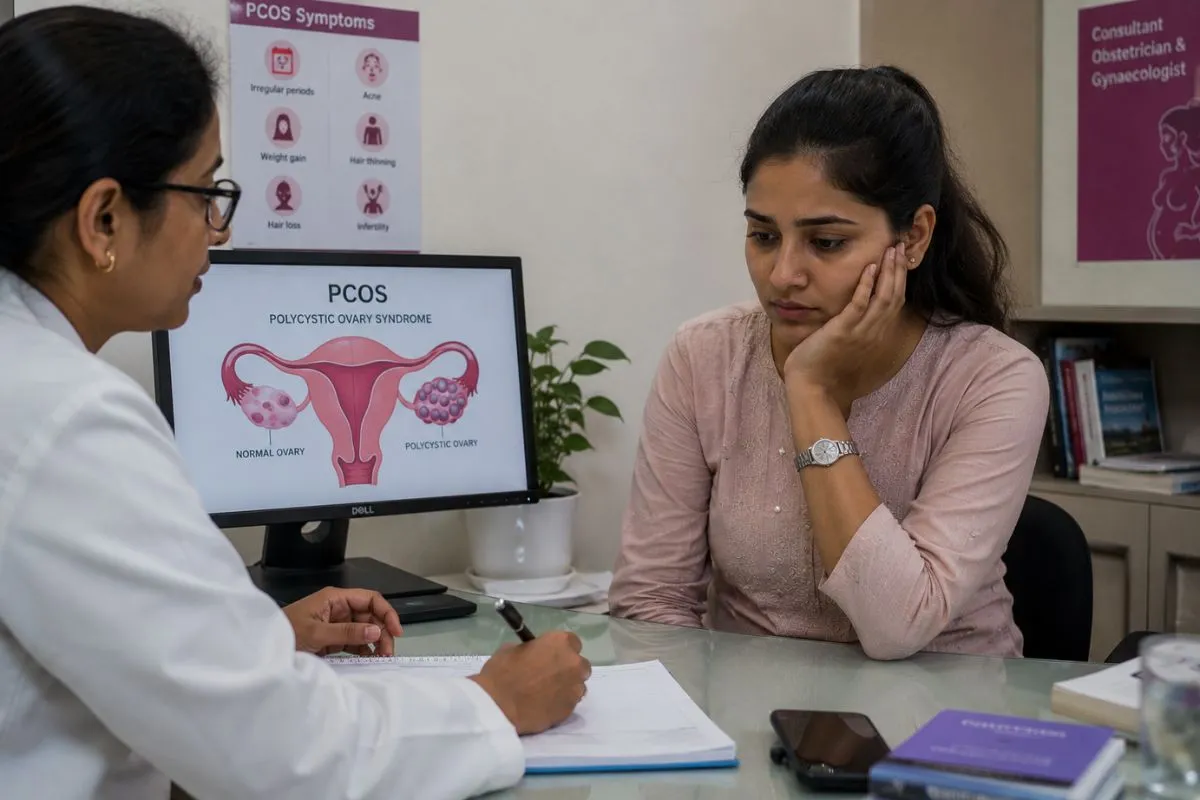
PCOS is formally understood as a complex endocrine disorder involving irregular or absent ovulation, elevated androgen levels, and often, though not always, the presence of multiple small follicles on the ovaries visible on ultrasound, a detail that gives the syndrome its name despite the fact that not everyone with PCOS actually has ovarian cysts in the traditional sense. The condition is now recognized as reaching well beyond reproductive health alone, with documented effects on insulin resistance, cardiovascular risk, and mental health.
Younger age groups are increasingly affected too. Research tracking PCOS trends in adolescents found rising incidence specifically in the 10 to 14 age group between 1990 and 2021, with researchers noting this may reflect either an earlier true onset of the condition or simply earlier, more attentive diagnosis than previous generations received.
Why the Diagnostic Picture Remains So Complicated
Much like the diagnostic delay patterns seen with endometriosis, PCOS suffers from inconsistent criteria and frequent underdiagnosis. The condition can present very differently from person to person, some experience pronounced irregular cycles, others primarily notice skin and hair changes tied to elevated androgens, and still others are only flagged when investigating fertility difficulties. This variability is part of why a single, universally applied diagnostic standard has been so difficult for the medical field to settle on, and why prevalence statistics shift so much depending on which criteria a given study used.
Frequently Asked Questions
Is PCOS the same thing as having ovarian cysts?Not exactly. Despite the name, PCOS is fundamentally a hormonal and metabolic condition, not simply the presence of cysts. Many people with PCOS have multiple small follicles visible on ultrasound, but this finding alone doesn’t define the condition, and some people with PCOS don’t show this feature at all.
Can PCOS develop later in life, or does it always start in adolescence?Symptoms often begin around puberty, but PCOS is frequently not diagnosed until years later, often when someone is investigating irregular cycles or fertility difficulties in their twenties or thirties. Research also shows rising incidence specifically among younger adolescents in recent years, suggesting earlier onset or earlier recognition than in previous generations.
Does having PCOS mean I can’t get pregnant?No. PCOS is a common cause of fertility difficulty because it frequently disrupts regular ovulation, but it does not mean pregnancy is impossible. Many people with PCOS conceive, sometimes with the support of ovulation-focused treatment, and fertility outcomes vary considerably from person to person.
Why does PCOS prevalence vary so much between studies?Primarily because PCOS has been diagnosed using different clinical criteria across different countries and time periods. The most recent global research explicitly separates prevalence figures by diagnostic standard, Rotterdam, NIH, and Androgen Excess-PCOS criteria all produce somewhat different numbers, which is why credible sources report a range rather than a single fixed percentage.
Is PCOS just a reproductive health issue?No. Research consistently links PCOS to broader metabolic effects, including insulin resistance and increased cardiovascular risk, alongside documented impacts on mental health. It’s increasingly understood as a whole-body endocrine condition rather than one confined to the reproductive system, which is why comprehensive management typically looks well beyond cycle regulation alone.
The Bottom Line
PCOS sits in a strange position for a condition this common, well documented enough that global researchers can track its rise across three decades of data, and yet still inconsistently diagnosed, regionally understudied in places like Africa, and frequently reduced in casual conversation to a far simpler picture than the research actually supports. Understanding it properly, as a hormonal, metabolic and reproductive condition all at once, is the first real step toward the kind of care it actually requires.