Chikankari: 7 Best Places to Buy Authentic Lucknowi Embroidery
Elegant, timeless and effortlessly Indian, Chikankari is the kind of embroidery that never needs to shout to make a statement. But if you want genuine handwork rather than machine-made imitations, knowing where to shop makes all the difference.
There is something special about a white Chikankari kurta on a summer morning, a delicately embroidered dupatta draped over a simple outfit, or a pastel suit that looks graceful without trying too hard. Originating in Lucknow, this traditional embroidery has become a favourite for women who love understated elegance. Its beauty lies in the fine stitches, floral patterns and the skill required to create them.
The challenge is finding authentic hand-embroidered Chikankari when machine-made versions are widely available. If you want to invest in pieces that celebrate the craft, Lucknow remains the place to begin. Here are seven places and shopping areas worth exploring, along with practical tips for spotting genuine work.
1. Chowk, Lucknow: For Traditional Chikankari
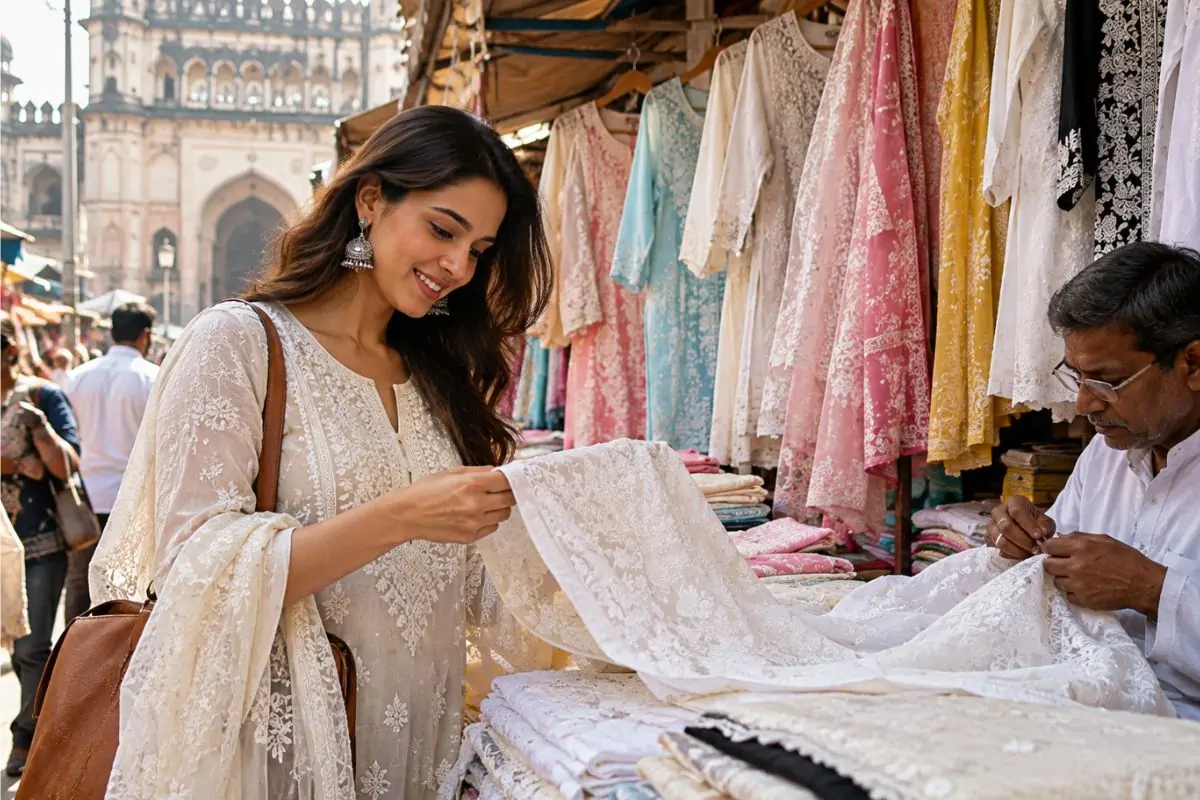
Chowk, in Old Lucknow, is one of the most important areas to explore if you want to shop for Chikankari close to its traditional roots. Its busy lanes contain clothing shops, fabric sellers and established Chikan businesses offering kurtas, dress materials, sarees and dupattas. It is particularly worth exploring if you want variety and enjoy comparing different styles and prices.
Take your time here. Visit several shops before making a purchase, inspect the embroidery closely and ask directly whether the piece is hand-embroidered or machine-made. Prices and quality vary considerably, so do not assume that every garment sold in a traditional market is handmade.
2. Aminabad: For Variety and Budget-Friendly Finds
Aminabad is another well-known Lucknow shopping destination, with a lively market atmosphere and plenty of clothing stores. It is worth considering if you want everyday cotton kurtas, colourful suits, dupattas or several pieces at different price points.
The key is to compare like with like. A lightly embroidered cotton kurta cannot be fairly compared with a densely worked garment made from a more expensive fabric. Check the stitching, fabric quality and finishing before deciding whether a price represents good value. Bargaining may be possible in some shops, but always prioritise the quality of the work over the size of the discount.
3. Hazratganj: For a More Polished Shopping Experience
If you prefer organised stores and a more relaxed shopping environment, explore Hazratganj. This established commercial area has clothing boutiques and shops selling traditional and contemporary Chikankari styles. It can be a convenient choice for gifts, occasion wear or shoppers who prefer browsing displayed collections rather than navigating crowded market lanes.
Prices may be higher than in some traditional bazaars, so compare the garment’s fabric, embroidery and finishing before buying. Ask for details about the handwork, especially if you are paying a premium for craftsmanship.
4. Lucknow Chikan Emporium: For a Dedicated Chikankari Store
Lucknow Chikan Emporium is a specialist retailer with an online store and a physical address at 6, Khun Khun Ji Road, Chowk, Lucknow. Its published collection includes embroidered kurtis, suits, sarees, men’s kurtas and other Chikankari products. You can explore its collection atlucknowchikanemporium.com.
A dedicated Chikankari retailer can be a useful starting point if you want to compare traditional designs across different garments. However, do not rely on a store’s name alone as proof that every item is hand-embroidered. Confirm the details of the specific piece you intend to purchase.
5. Government and Handloom Retailers: For Buyers Who Value Traceability
If authenticity is your priority, look for established handloom retailers and sellers who can provide clear information about the craft and its origin. Government-linked handloom outlets and recognised craft programmes can be useful places to begin your search.
Lucknow Chikan Craft is recognised under India’s Geographical Indications system, which protects the geographical identity of the craft. You can consult theofficial Indian GI registryand theGovernment of India’s overview of Lucknow Chikan Craft.
A GI reference is valuable for understanding the craft’s origin, but it does not automatically certify every product sold under a shop’s name. Ask what documentation, labelling or artisan information is available for the particular item.
6. Established Online Chikankari Retailers: For Shopping From Anywhere
You do not have to travel to Lucknow to explore Chikankari. Specialist retailers sell embroidered garments online, making it easier to compare designs, fabrics and prices from home.
One option isLucknow Chikan Emporium, which lists hand-embroidered products in its online catalogue. Before ordering from any retailer, check the product description carefully, read the exchange and return policy, and look for close-up photographs of the stitching. If a garment is described as hand-embroidered, ask the seller to confirm that claim in writing.
Be cautious of listings that use words such ashandcrafted,traditionalorLucknowi stylewithout clearly explaining how the embroidery was made. Beautiful product photography is not proof of handmade work.
7. Independent Artisan Sellers: For Pieces With a Personal Story
Some of the most meaningful Chikankari purchases come from sellers who can explain the embroidery, the fabric and the people involved in making the garment. Artisan-led businesses and small specialist labels may offer traditional designs alongside contemporary cuts and colours.
Ask who embroidered the piece, how long the work typically takes and whether the seller can share information about the production process. Not every independent seller will have formal documentation, but transparent answers and detailed product information are useful signs when assessing a purchase.
Buying directly from an artisan-led business can also help support the people who keep the craft alive. Just remember that the seller’s story should complement, not replace, your own inspection of the garment.
How to Tell If Chikankari Is Hand-Embroidered
Authentic hand Chikankari is valued for the skill and time involved in creating its delicate patterns. Machine embroidery can imitate the look, but several details may help you distinguish the two.
First, inspect the garment closely. Hand embroidery often has subtle variations in stitch tension and texture, while machine work can appear highly uniform. Turn the fabric over and examine the reverse side, looking at how the threads travel through the cloth. The back can offer useful clues, although construction methods vary and no single visual test is conclusive.
Next, check the fabric. Cotton, mulmul, georgette and other materials can all be used for Chikankari, so fabric alone does not establish authenticity. Ask whether the embroidery is entirely handmade or combines handwork with machine stitching. Finally, compare the price with the amount and complexity of the work. Very low prices for elaborate embroidery deserve closer scrutiny, but a high price is not proof of quality either.
What Should You Buy First?
If you are new to Chikankari, a cotton kurta in white, ivory or a soft pastel is a versatile starting point. It works with jeans, straight trousers and traditional bottoms, making it suitable for everyday wear. A lightly embroidered dupatta is another useful choice because it can refresh outfits you already own.
For special occasions, look at more elaborate suits, sarees or garments featuring denser embroidery and additional embellishment. These pieces require closer inspection because the quality of the fabric, stitching and finishing makes a noticeable difference to the final look.
Choose a garment you genuinely love rather than buying something simply because it is described as rare or exclusive. Chikankari’s appeal is its quiet elegance, and the best piece is one you will enjoy wearing for years.
The Final Word
Chikankari is more than a fashion trend. It is a craft shaped by generations of embroidery skill, regional identity and changing Indian style. Whether you explore Chowk’s traditional markets, browse Aminabad, visit Hazratganj or shop through a specialist retailer, take time to understand what you are buying.
Look closely at the stitching, ask clear questions and compare the quality before spending more for a claim of authenticity. Most importantly, remember that genuine craftsmanship deserves to be valued, not simply discounted.
The most beautiful Chikankari is not necessarily the piece with the heaviest embroidery. It is the one whose details reveal the hands and patience behind the work.