Progesterone Is The Silent Hormone That Could Be Ruining Your Mood Without You Knowing
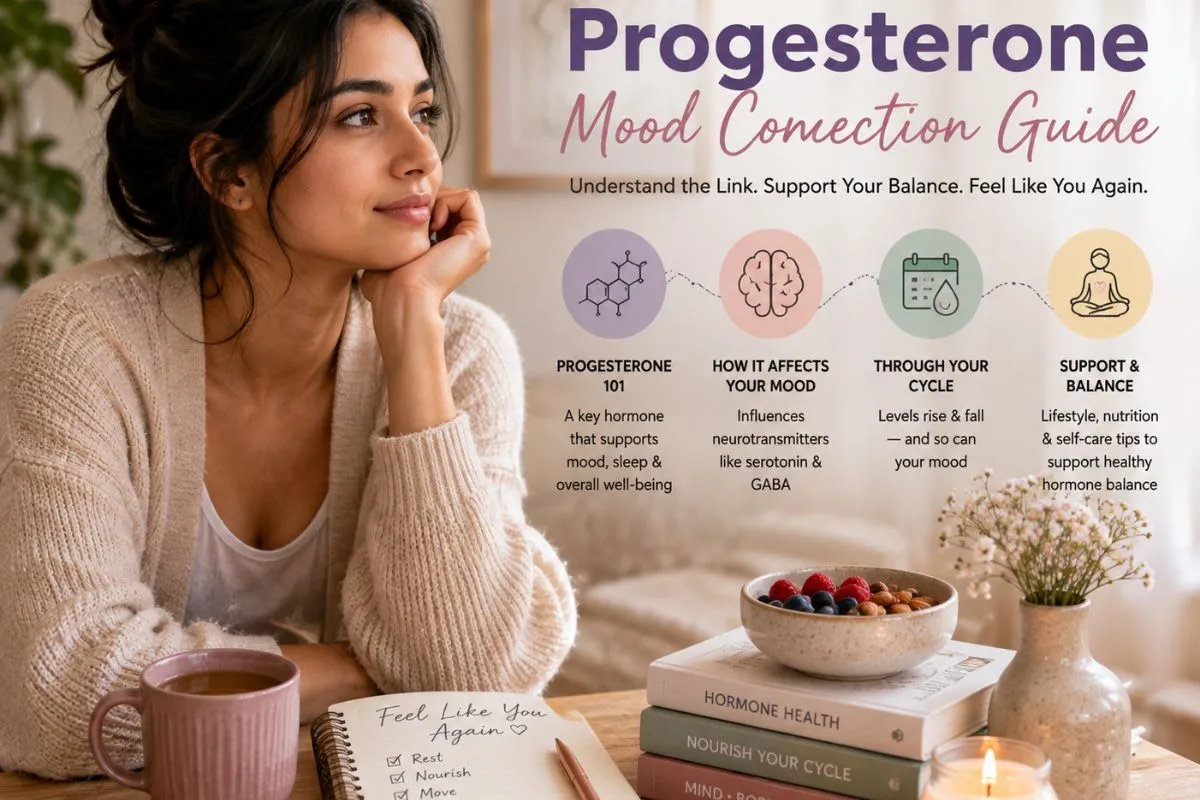
- Progesterone is often called the calming hormone because it supports GABA, the brain’s main relaxation chemical.
- It rises after ovulation, then falls sharply in the week or two before your period, and that drop is a major, underdiscussed driver of anxiety and irritability.
- Chronic stress actively lowers progesterone through a mechanism called cortisol steal, even when a standard lab test says your levels are “normal.”
- This isn’t about willpower or being “too sensitive.” It’s biology, and it’s testable and treatable.
You’ve had the week. Nothing has actually gone wrong. And yet you’re irritated by things that wouldn’t normally register, tearful for no clear reason, or quietly convinced everyone around you is annoyed with you. You chalk it up to stress, or being tired, or just having an off few days. What almost never gets mentioned is the actual biological process running in the background the whole time: a hormone quietly dropping, on a schedule your calendar could have predicted, whether you were tracking it or not.

Meet Progesterone, the Hormone Nobody Talks About Enough
Estrogen gets almost all the cultural attention. Progesterone, meanwhile, does some of the heaviest lifting for mental and emotional stability, and it barely gets mentioned outside of fertility conversations. It’s frequently called the calming hormone for a specific reason: progesterone supports activity at GABA receptors, the same calming neurotransmitter system that anti-anxiety medications are designed to boost. When progesterone is abundant, GABA activity tends to run smoothly, and a baseline sense of calm is easier to access. When progesterone drops, that support drops with it.
🧞♀️ Genie’s Take: I’ve had this conversation with more women than I can count, all convinced there was something wrong with their personality during the same ten days every single month. There wasn’t. There was a hormone doing exactly what hormones do, and nobody had ever explained the mechanism to them in plain language.
Where the Drop Actually Happens
Progesterone isn’t steady across your cycle. After ovulation, the empty follicle that released the egg becomes a temporary structure called the corpus luteum, and it begins producing progesterone in earnest. If no fertilization occurs, that structure breaks down roughly a week before your period, and progesterone falls sharply, often faster than any other hormone shift in the entire cycle.
That drop lands during what’s called the luteal phase, the one to two weeks before menstruation, and it’s precisely the window where anxiety, irritability, low mood, and a shortened emotional fuse cluster for a large share of women. When these symptoms are severe and cyclical, they can cross into Premenstrual Dysphoric Disorder, or PMDD, a distinct, hormonally driven condition that’s different from general PMS and needs its own treatment approach rather than being waved off as “bad PMS.”
The Part That Rarely Gets Explained: Stress Actively Lowers It
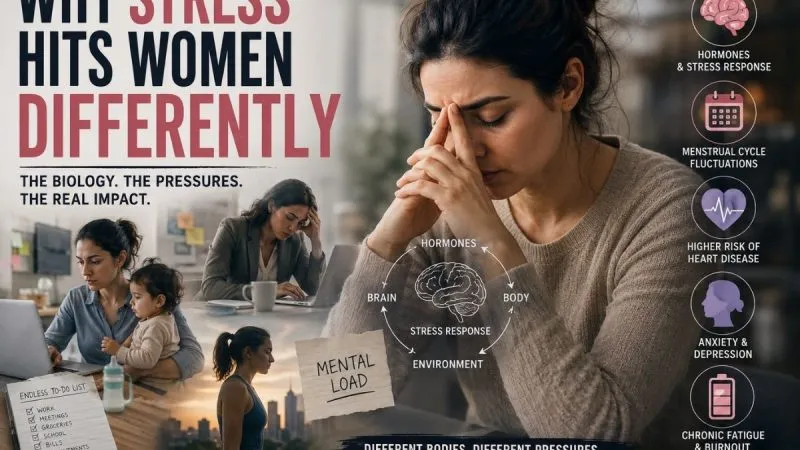
Here’s the mechanism most mood-and-hormone content skips entirely. Chronic stress doesn’t just feel bad emotionally. It physically redirects your hormone production through something called cortisol steal, sometimes referred to as the pregnenolone steal.
Pregnenolone is the master precursor molecule your body uses to build both cortisol and progesterone. Under chronic stress, your body treats cortisol production as the survival priority and preferentially shunts pregnenolone toward making more of it, at progesterone’s expense. The result is a relative progesterone deficiency, and the frustrating part is that this can happen even when a standard lab test comes back “within normal range,” because normal isn’t the same as optimal for how you actually feel.
When progesterone runs low relative to estrogen, the resulting imbalance is known as estrogen dominance, and chronic stress is one of its most common drivers. Beyond mood, it can also show up as worsened PMS, heavier or more painful periods, bloating, fibrocystic breast tenderness, and a harder time losing weight, alongside the anxiety and irritability that so often get blamed on everything except the hormone actually behind them.
What Low Progesterone Can Look Like
None of the following, on its own, confirms a hormone issue, and this isn’t a diagnostic checklist. But if several of these track consistently with the two weeks before your period, it’s worth a real conversation with a doctor rather than another month of assuming it’s just you:
- Anxiety or a racing mind that’s noticeably worse in the days before your period
- Irritability or a short temper that feels disproportionate to what’s actually happening
- Trouble falling or staying asleep in the luteal phase specifically
- Low mood or tearfulness that lifts within a day or two of your period starting
- Heavier, more painful, or less predictable periods than in previous years
What Actually Helps
Get the right test, on the right day. Progesterone needs to be tested around day 21 of a standard 28-day cycle, roughly a week after ovulation, to be meaningful. Testing it at a random point in your cycle is one of the most common reasons low progesterone gets missed entirely. Ask specifically for a full hormone panel that includes progesterone alongside estradiol, FSH, LH, and a complete thyroid panel, since thyroid dysfunction can produce a very similar mood picture and is frequently overlooked in the same conversation.
Address the stress, not just the symptom. Since chronic stress is a direct driver of progesterone decline through cortisol steal, the highest-leverage intervention is often the least glamorous one: consistent sleep, a nervous system that gets real downtime, and reducing chronic overcommitment, not just supplementing your way around the problem.
Work with your cycle instead of against it. Matching demanding tasks to your follicular and ovulatory phases, and deliberately lowering the intensity of your week during the luteal phase, is a genuinely underused strategy. Our complete guide to cycle syncing walks through exactly how estrogen, progesterone, and testosterone shift across all four phases, and how to plan around that rhythm rather than fighting it every month.
Know when this crosses into something that needs treatment. If mood symptoms are severe enough to disrupt work, relationships, or daily functioning in a cyclical pattern, that’s the marker for PMDD rather than typical PMS, and it deserves a gynecologist or endocrinologist working alongside a therapist, not just lifestyle tweaks. Our complete guide to women’s mental health and emotional resilience breaks down exactly how PMDD differs from major depressive disorder and how each is actually treated.

The Actual Takeaway
Progesterone dropping in your luteal phase isn’t a character flaw, a mood disorder you’re inventing, or something to push through silently. It’s a measurable, predictable hormonal event, made worse by chronic stress through a mechanism your body is actively running whether you know about it or not. Naming it doesn’t fix everything overnight, but it does something almost as valuable: it stops you from blaming your personality for something your biology was doing on schedule.
For the full picture of how every major hormone interacts across your body, not just progesterone, our complete guide to women’s holistic health walks through the full hormone panel worth asking your doctor for, and what each marker actually tells you.
A note on this piece: This article is educational and not a substitute for medical diagnosis. If mood symptoms are significantly affecting your daily life, please speak with a doctor, gynecologist, or endocrinologist rather than relying on self-diagnosis.
Related reading
- Your Hormones Are Not The Problem. Ignoring Them Is. The Complete Guide To Cycle Syncing For Indian Women
- She Feels Everything: A Woman’s Complete Guide To Mental Health & Emotional Resilience
- The Complete Woman’s Guide To Holistic Health: Body, Mind, And Hormones In Harmony
- The 40 Day Reset: A Real Roadmap For Women In Their 20s And 30s
Sources
- Real Shee Power reporting: cycle syncing, hormone panel, and PMDD/mental health guides referenced above
- Clinical literature on progesterone, GABA receptor activity, and premenstrual mood disorders