How Project Management Skills for Women Drive Business Success

Women often coordinate team activities, solve problems, and manage daily tasks without having a formal leadership role. Leading a business project involves more, such as planning work, setting priorities, making decisions, and tracking results. Developing project management skills for women can help professionals take on these responsibilities with greater confidence. Understanding the skills needed, common workplace challenges, and available support can help women prepare to lead projects and take part in important business decisions.
Table of Contents
What project management means for women professionals
Project management is about getting work done with a team by planning tasks, sharing responsibilities, and working towards a common goal, helping women professionals guide others, manage projects, and take on bigger roles at work.
– Moving from supporting work to leading decisions
Writing campaign content may be part of a marketing executive’s job. Running the campaign means talking to other teams, keeping track of costs, and checking how well it performs. Handling this work gives her a chance to develop leadership skills for women professionals.
– Recognizing experience already gained
Planning an event, preparing reports, working with suppliers, or changing a work process can all provide project experience. These tasks help women understand what they already do well and what they need to learn. A management position is not required to get started.
 Career & Women
Top 5 Best Female-Friendly Job Platforms Empowering Women in the Workforce
Discover the best job platforms designed to help women find inclusive workplaces, flexible opportunities, career mentorship, and companies that genuinely support women’s professional growth.
Read Full ArticleChallenges faced by women in project management
Some women find it difficult to get leadership opportunities, gain authority, or receive recognition at work. These experiences differ from one workplace and industry to another.
– Limited access to leadership assignments
A woman may coordinate daily work but rarely get the chance to lead a full project. This can make it harder to gain experience for senior roles. Asking a manager to lead a small project can be a good starting point. Managers should also give employees fair chances to take on new responsibilities.
– Responsibility without clear authority
A project may slow down when team members already have other work to finish, so the project lead should speak with managers early to decide who will handle each task and who can approve the work, helping everyone understand their responsibilities before the project starts.
– Recognition and competing expectations
The final report may leave out some of the work completed during a project, so keeping a record of important decisions, problems solved, and tasks handled gives women a clear way to explain their role and contributions.
Additional project responsibilities also require a workload discussion. Progress should not depend on repeatedly accepting extra work without adequate time or support.
Essential project management skills for women
Women professionals need to plan work, share updates, assign tasks, and make decisions as a project moves forward, and these skills become easier with regular practice.
– Planning work and setting boundaries
Before starting a project, the lead should know what needs to be done, who will do it, and when each task should finish, along with what falls outside the project. This makes it easier for women leaders to discuss extra work, ask for the resources they need, and agree on changes with the team.
– Communicating recommendations clearly
A project lead needs to talk with team members, hear their concerns, and explain what needs to be done. Women can use clear project communication to discuss work, share updates, and clear up doubts before they affect the project.
For instance, when someone asks for extra work, she can discuss the time and effort it will take and decide with the team what should be given priority, helping her build project management skills for female leaders.
– Delegating and handling disagreements
A project cannot move forward if one person handles every task, so each team member should know what work they are expected to finish and when it is due, while women professionals can also build leadership skills for women professionals by discussing disagreements openly and focusing on what is best for the project.
| Skill | Workplace application | How it supports leadership |
| Planning | Define tasks and priorities | Establishes clear expectations |
| Communication | Explain recommendations and decisions | Helps colleagues understand the reasoning |
| Delegation | Agree on task ownership | Shares responsibility appropriately |
| Risk awareness | Identify possible problems | Allows earlier preparation |
| Measurement | Compare outcomes with the goal | Provides evidence of results |
– Managing resources and checking results
Budget awareness, realistic workloads, and preparation for delays help keep an assignment manageable.
Using project management skills for business success also means checking whether the completed work solves the original problem. A new process should be assessed through practical measures, such as errors, delays, or repeated requests for help.
 Career & Growth
10 Super Effective Skills That Will Enhance Your Career
From public speaking and negotiation to networking, self-promotion and professional expertise, discover the skills that can strengthen your career and make you stand out in today’s competitive workplace.
Read Full ArticleHow women can become successful project managers
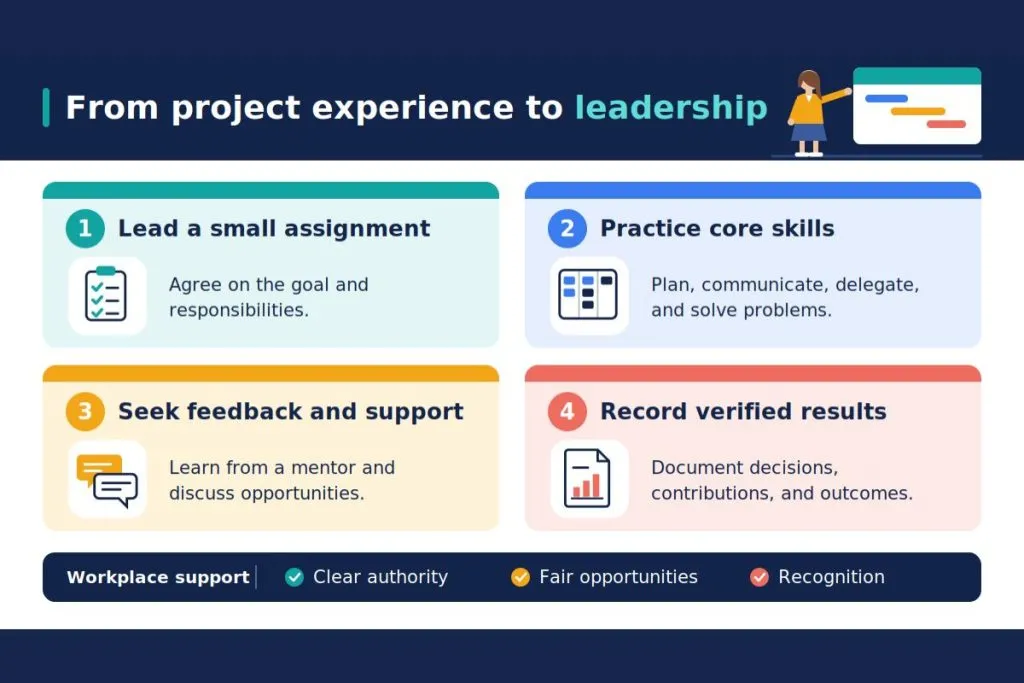
Taking up small projects, learning along the way, and listening to feedback can help women get better at handling bigger responsibilities at work.
– Begin with a manageable assignment
An internal event or a change to an existing report can be a good first project, giving women a chance to divide the work, follow up with team members, and deal with issues as they come up.
– Seek guidance and support
Having someone to turn to for advice can make a difference at work, as a mentor may help with team issues and project decisions, while a senior colleague may put a woman forward for a new role or assignment, giving women in project management more chances to learn and take on bigger tasks, though managers should also give everyone a fair chance.
– Build evidence and address learning needs
After the project ends, keep a note of the work done, issues that came up, decisions taken, and how the team helped complete it.
Women can also learn through courses, workshops, and certifications, but putting those lessons into practice is what helps them handle real project work.
How women can lead business initiatives
Leading an initiative involves understanding a business problem, coordinating action, and checking the outcome.
– An example of improving employee onboarding
An HR executive may be asked to find out why new employees face delays during onboarding; even when their joining documents are ready, IT access and manager briefings may still be pending.
She begins by reviewing the process with the departments involved. Before proposing changes, she confirms who can approve them and secures management support.
| Stage | Her action | Evidence to review |
| Understand | Identify where onboarding stalls | Recent records and employee feedback |
| Plan | Agree on tasks and responsibilities | Written ownership and deadlines |
| Test | Try a revised checklist | Missing steps and unresolved issues |
| Review | Compare the process before and after | Delays, errors, and feedback |
This demonstrates how to lead business initiatives effectively through investigation and coordination.
The example also shows project management skills for female leaders in practice. Her contribution includes identifying the problem, obtaining agreement, organizing the test, and reporting findings.
– What project leadership can mean for women’s careers
A woman leading a project gets to take on unfamiliar tasks, work with different teams, and decide how the work should move forward.
– Building evidence for broader responsibilities
Completed projects give female project managers real examples of their work to discuss in reviews and interviews, including the decisions they made, the changes they brought, and the results of their efforts, which may help them take on larger projects in the future.
Frequently asked questions
1. Why are project management skills important for women leaders?
These skills help women plan tasks, work with different team members, and make better decisions. They also make it easier to show what has been achieved and take responsibility for work across different departments, even without a manager title.
2. What skills do women need to lead business projects?
Project managers need to plan tasks, share information clearly, assign work, discuss agreements, manage costs, and deal with problems. They should also know who can approve decisions and how to check whether the work has met its goals, depending on the project.
3. How project management skills help women leaders
A project becomes easier to handle when everyone knows their part and understands what needs attention first. Women can also explain their suggestions better when they have facts to support them, but having a say in decisions often depends on the freedom and support given by the organization.
Conclusion
Women can start building project management skills for women by taking responsibility for small tasks and learning from the work they complete. Planning, working with teams, and handling problems can prepare them for bigger projects. Feedback and practical experience also help them improve over time. Workplaces should give women a fair chance to lead, make decisions, and receive credit for their efforts. With the right opportunities, women can take on bigger roles and contribute to important business decisions.

About the Author
Anannya K is a content writer interested in women’s empowerment, career growth, leadership, and professional development. She writes about practical skills that help women grow and succeed in their careers.