She Feels Everything — A Woman’s Complete Guide to Mental Health & Emotional Resilience
Read first: If you haven’t yet, start with our foundational piece → The Complete Woman’s Guide to Holistic Health: Body, Mind, and Hormones in Harmony — this article builds directly on it.
Women feel deeply. That is not a weakness. It is a biological, psychological, and social reality, and when understood properly, it becomes one of the most powerful things about being a woman. But feeling deeply in a world that rarely slows down, rarely validates, and rarely teaches women how to process what they carry? That’s where the cracks begin.
Mental health is not the absence of hard emotions. It is the ability to move through them with awareness, with tools, and without losing yourself in the process. This guide is about building that capacity: not performing wellness, not suppressing your interior life, but genuinely becoming more resilient from the inside out.
Part One: Why Women’s Mental Health Is Its Own Conversation
Mental health statistics tell a clear story. Women are diagnosed with anxiety disorders at roughly twice the rate of men. Depression affects women at nearly double the rate too. Eating disorders, borderline personality disorder, post-traumatic stress disorder (PTSD), and autoimmune-linked mood conditions all skew heavily female.
This is not because women are fragile. It is because women face a distinct constellation of biological, hormonal, social, and relational stressors, and the mental health system was not originally built with them in mind.
The Hormonal-Mental Health Feedback Loop
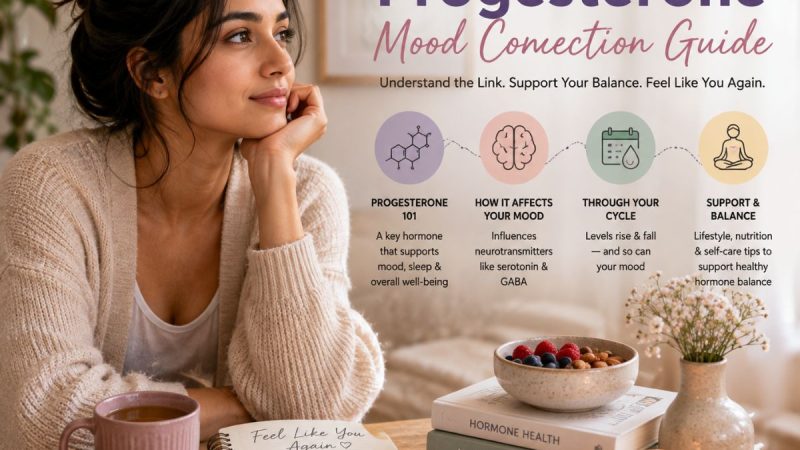
As we explored in our Holistic Health guide, hormones are master controllers of the entire body including the brain. Estrogen modulates serotonin, dopamine, and GABA (the brain’s primary calming neurotransmitter). When estrogen drops around menstruation, postpartum, or during perimenopause, so can mood stability.
Key insight: If your mental health symptoms follow a pattern that tracks with your cycle, they are not “all in your head.” They are hormonal. And that changes how they should be treated.
Progesterone, often called the “calming hormone,” supports GABA activity. In the luteal phase (the two weeks before your period), progesterone rises and then falls sharply. For women with premenstrual dysphoric disorder (PMDD) — a severe form of PMS — this drop triggers clinically significant depression, rage, or anxiety that resolves almost immediately when menstruation begins.
PMDD affects approximately 3–8% of women of reproductive age. It is frequently misdiagnosed as general depression or bipolar disorder. If you experience mood symptoms that disappear within a day or two of your period starting, bring this pattern to a clinician. Tracking is essential — the symptom logging approach outlined in our Holistic Health article applies directly here.
🧞♀️ RealShePower Genie Says
“Before you diagnose yourself with depression, anxiety, or a bad personality — check your hormones. Check your sleep. Check your gut. Check who you’ve been surrounding yourself with. The mind doesn’t break in a vacuum.”
The Weight Women Are Asked to Carry
Beyond biology, there is sociology. Women perform a disproportionate share of emotional labor — in relationships, in workplaces, in families. They are socialized from childhood to prioritize others’ feelings, to smooth conflict, to shrink their own needs to preserve harmony.
This is not ancient history. Research published as recently as 2023 shows that women still carry the majority of unpaid domestic and caregiving labor globally, and that this invisible load is a significant predictor of burnout, anxiety, and depression.
The mental load is real. It is measurable. And naming it is the first step to redistributing it.
Part Two: Understanding Anxiety — The Most Common Thing Nobody Talks About Honestly
Anxiety is the most prevalent mental health condition among women, and it is also the most misunderstood. It gets flattened into “being a worrier” or “overthinking” language that makes it sound like a personality quirk rather than a physiological state.
What Anxiety Actually Is
Anxiety is the nervous system stuck in a state of threat detection. The amygdala — the brain’s alarm centre — fires, triggering the release of adrenaline and cortisol. The body prepares for danger. Heart rate rises. Muscles tense. Digestion slows. Breathing becomes shallow.
In a genuinely dangerous situation, this is lifesaving. But when the alarm fires in response to an email, a social situation, a difficult conversation, or an uncertain future, and when it fires chronically, without recovery it becomes debilitating.
Forms of Anxiety in Women
Generalized Anxiety Disorder (GAD): Persistent, excessive worry about multiple areas of life — work, health, relationships, money that is difficult to control and causes physical symptoms like tension, fatigue, irritability, and sleep disruption.
Social Anxiety: Intense fear of social situations and judgment. Often mistaken for introversion, but the key difference is distress — introversion is a preference, social anxiety is a fear.
Health Anxiety: Preoccupation with having or developing a serious illness. Can be exacerbated by googling symptoms and by genuine experiences of medical dismissal (which, as we noted in our Holistic Health guide, disproportionately affects women).
Panic Disorder: Recurrent, unexpected panic attacks — sudden surges of intense fear accompanied by heart palpitations, shortness of breath, dizziness, and a sense of unreality or impending doom.
Perinatal Anxiety: Anxiety during pregnancy or in the postpartum period. Far more common than postpartum depression, and far less discussed.
If you have been white-knuckling anxiety as a personality trait — please hear this: it is a health condition. It responds to treatment. You do not have to live like this.
🧞♀️ RealShePower Genie Says
“Anxiety is not you being dramatic. It’s your nervous system trying to protect you from a threat it can’t distinguish from an email notification. The work is teaching it the difference.”
What Actually Helps Anxiety
Therapy — specifically the right kind:
- Cognitive Behavioural Therapy (CBT): Identifies and challenges distorted thought patterns. Highly evidence-based for anxiety.
- Acceptance and Commitment Therapy (ACT): Teaches psychological flexibility like experiencing difficult thoughts and feelings without letting them dictate behaviour.
- Somatic therapy: Works with the body, not just the mind. Since anxiety lives in the nervous system, not just in thoughts, body-based approaches (breathwork, movement, touch) can reach it in ways that talking alone cannot.
- EMDR (Eye Movement Desensitisation and Reprocessing): Particularly effective when anxiety has a trauma component.
Lifestyle levers with real evidence:
- Regular aerobic exercise reduces anxiety as effectively as medication in mild to moderate cases
- Reducing caffeine (a direct nervous system stimulant)
- Stable blood sugar — as covered in our Holistic Health guide, blood sugar crashes trigger adrenaline release, worsening anxiety
- Limiting alcohol, which disrupts GABA and serotonin balance
- Prioritising sleep — the anxious brain and the sleep-deprived brain look nearly identical on a scan
Nervous system regulation tools:
- Physiological sigh: Double inhale through the nose, long slow exhale through the mouth. Activates the parasympathetic nervous system within seconds.
- Cold water exposure: A brief cold shower activates the sympathetic nervous system but trains faster recovery.
- Vagal toning: Humming, singing, gargling, and slow rhythmic breathing all stimulate the vagus nerve — the primary pathway of the parasympathetic system.
Part Three: Depression in Women — Beyond the Blue
Depression is not sadness. Sadness is an emotion — it passes. Depression is a state: a pervasive dimming of motivation, pleasure, energy, and selfhood that can last weeks, months, or years.
Women experience depression differently than men. Where men often present with anger, irritability, and risk-taking, women more commonly present with low energy, excessive guilt, social withdrawal, sleep disruption, and physical symptoms like headaches or chronic pain.
Types of Depression Women Experience
Major Depressive Disorder (MDD): Two or more weeks of persistent low mood or loss of interest, accompanied by changes in sleep, appetite, concentration, and self-worth.
Persistent Depressive Disorder (Dysthymia): A lower-grade but chronic depression lasting two or more years. Because it is less acute, women often normalise it — describing it as “just how I am” — and never seek treatment.
Premenstrual Dysphoric Disorder (PMDD): As described above — cyclical, hormonally driven depression and rage that tracks with the luteal phase. Distinct from MDD. Requires a different treatment approach.
Postpartum Depression (PPD): Affects 10–15% of new mothers. Can emerge at any point in the first year postpartum, not just immediately after birth. Baby blues (the first two weeks of tearfulness and emotional overwhelm) are normal and distinct from PPD.
Perimenopausal Depression: Declining and fluctuating estrogen in the menopausal transition creates significant vulnerability to depression, even in women with no prior history. Frequently missed or misattributed to “life stress.”
Seasonal Affective Disorder (SAD): Depression that follows a seasonal pattern, typically worsening in autumn and winter. Light therapy (using a 10,000-lux light box for 20–30 minutes each morning) is a first-line treatment.
The Serotonin Story — More Complex Than You Were Told
For decades, depression was explained almost entirely as a serotonin deficiency. This framing influenced billions of prescriptions. A major 2022 umbrella review in Molecular Psychiatry cast serious doubt on this simple model, finding no consistent evidence that people with depression have lower serotonin levels or activity.
This does not mean antidepressants don’t work — they do for many women. It means depression is more complex than a simple chemical shortage. Inflammation, neuroplasticity, hormones, trauma, and social factors all play roles.
The most effective treatment for depression is usually a combination: therapy (particularly CBT or behavioural activation), lifestyle intervention, social support, and medication where appropriate. No single lever works in isolation.
🧞♀️ RealShePower Genie Says
“Depression doesn’t always look like crying on the floor. Sometimes it looks like being very, very busy. Sometimes it looks like being fine. Know your own baseline. Notice when you’ve drifted from it.”
Part Four: Trauma — The Hidden Driver
Trauma is not only what happens in war zones. Trauma is any experience that overwhelms the nervous system’s capacity to process and integrate it. And women experience trauma at extraordinarily high rates.
One in three women globally has experienced physical or sexual violence. Childhood adversity, emotional neglect, relationship abuse, medical trauma, birth trauma, racial trauma, and the chronic low-grade trauma of living in a body that the world has opinions about — all leave physiological imprints.
How Trauma Lives in the Body
The psychiatrist Bessel van der Kolk’s foundational work established something crucial: the body keeps the score. Traumatic memories are not stored primarily as narrative, they are stored as sensory and somatic impressions. The smell, the sound, the physical contraction of fear.
This is why talk therapy alone is sometimes insufficient for trauma. The nervous system needs to learn, at a somatic level, that the danger has passed. Body-based approaches such as EMDR, somatic experiencing, yoga, breathwork address this directly.
Trauma symptoms include:
- Hypervigilance (always scanning for threat)
- Emotional numbing or dissociation
- Flashbacks or intrusive memories
- Avoidance of reminders
- Startling easily
- Difficulty trusting or forming close relationships
- Chronic physical symptoms with no clear medical cause (pain, fatigue, digestive issues)
If any of these resonate, please know: you are not broken. Your nervous system learned to protect you. The work is helping it learn that it can relax.
Complex Trauma (C-PTSD)
Distinct from PTSD (which typically follows a single traumatic event), complex PTSD develops from prolonged, repeated trauma particularly in childhood or in abusive relationships. Symptoms include profound difficulties with emotional regulation, persistent shame, distorted self-perception, and difficulty sustaining relationships.
C-PTSD is frequently misdiagnosed as borderline personality disorder, bipolar disorder, or treatment-resistant depression. If you have received diagnoses that don’t quite fit, or treatments that haven’t worked, a trauma-informed assessment may be transformative.
Part Five: Emotional Regulation — The Skill Nobody Taught You
Emotional regulation is not suppression. It is not “controlling yourself” in the sense of denying what you feel. It is the capacity to experience emotions including the intense ones without being swept away by them or acting in ways you later regret.
Most women were never taught this. We were taught to be pleasant. To manage other people’s emotions. To make ourselves palatable. We were not taught what to do with our own.
The Window of Tolerance
Developed by psychiatrist Dan Siegel, the window of tolerance describes the zone of arousal in which the brain and body can function effectively. Within this window, you can think clearly, feel your feelings, and respond rather than react.
Outside this window, you are either hyperaroused (anxious, reactive, flooded, overwhelmed) or hypoaroused (numb, shut down, disconnected, frozen). Trauma, chronic stress, sleep deprivation, and hormonal shifts all narrow this window.
The goal of emotional regulation work is to widen it so you can tolerate more of life without being dysregulated by it.
Practical Regulation Tools
Name it to tame it. Research by neuroscientist Matthew Lieberman shows that labelling an emotion in specific language reduces its intensity in the amygdala. Not “I feel bad” but “I feel embarrassed” or “I feel grief.” Precision matters.
TIPP (from Dialectical Behaviour Therapy):
- Temperature — cold water on the face activates the dive reflex, slowing heart rate rapidly
- Intense exercise — burns off stress hormones
- Paced breathing — slow the exhale to lengthen it
- Progressive muscle relaxation — systematically tense and release muscle groups
The STOP technique:
- Stop what you’re doing
- Take a breath
- Observe what you’re feeling, thinking, and sensing in the body
- Proceed with awareness
Journalling: Expressive writing about difficult experiences; not venting, but structured reflection has been shown in numerous studies to reduce distress, improve immune function, and promote cognitive integration of difficult events.
Movement: As noted in our Holistic Health guide, exercise is one of the most powerful emotional regulators available. It metabolises stress hormones, boosts BDNF (brain-derived neurotrophic factor essentially fertiliser for the brain), and shifts physiological state in ways that thought alone cannot.
🧞♀️ RealShePower Genie Says
“Your emotions are not the problem. The problem is never having been taught what to do with them. You’re not too sensitive. You were just never given the tools.”
Part Six: Boundaries — The Most Misunderstood Wellness Practice
Boundaries are discussed constantly in wellness culture, but often in ways that make them sound either selfish or simple. They are neither.
A boundary is a honest communication about what you will and will not accept — grounded in your values, your capacity, and your self-respect. It is not a punishment. It is not a wall. It is an act of clarity.
Why Women Struggle with Boundaries
Women are socialised from a young age to be accommodating, agreeable, and relationally oriented. Saying no often triggers deep fear: of rejection, of being seen as difficult, of damaging a relationship, of losing love.
This is not weakness. It is the product of decades of social conditioning. Recognising it as conditioning rather than truth is the beginning of change.
Boundary-setting is a skill, not a personality trait. It can be learned. And it gets easier.
The Difference Between Requests and Boundaries
A common misconception: a boundary is something you set on another person’s behaviour. It is not. You cannot control what others do. A boundary is about what you will do in response to certain behaviours.
- Not a boundary: “You need to stop being so critical of me.”
- A boundary: “If this conversation becomes critical, I’m going to step away from it.”
The difference is agency. One is a demand (which will be resisted). The other is a statement of your own action (which you can follow through on, regardless of the other person).
Practical Boundary Language
- “I’m not available for that.”
- “That doesn’t work for me.”
- “I need to think about that before I respond.”
- “I’m not in a position to take that on right now.”
- “I care about this relationship, and I need to be honest with you about what I can and can’t do.”
None of these require an apology, an explanation, or a lengthy justification. That discomfort, the pull to over-explain is worth sitting with.
Part Seven: Relationships and Mental Health
Humans are wired for connection. The neuroscience is clear: social bonds are not a luxury but a biological need. Chronic loneliness activates the same neural pathways as physical pain and is associated with elevated cortisol, impaired immune function, and increased mortality risk.
But not all connection is equal. Toxic, draining, or unsafe relationships can be as damaging to mental health as isolation.
The People Who Drain vs. the People Who Restore
Take honest stock of your relationships. After spending time with someone, do you generally feel:
- More energised, more yourself, more clear? → Restorative
- More depleted, more anxious, more contracted? → Draining
This is not about cutting everyone who challenges you — friction and growth are part of real relationships. But a relationship that consistently leaves you smaller, more afraid, or more confused about your own worth deserves serious examination.
Attachment Styles — Understanding Your Patterns
Developed from John Bowlby’s attachment theory and expanded by psychologist Mary Ainsworth, attachment styles describe the patterns of relating that form in early childhood and persist (often unconsciously) into adult relationships.
Secure attachment: Comfortable with closeness and independence. Can communicate needs and tolerate conflict without excessive fear of abandonment or engulfment.
Anxious attachment: Preoccupied with relationships. Tends to worry about being abandoned, seeks constant reassurance, and can become clingy or reactive when needs feel unmet.
Avoidant attachment: Prioritises independence and self-sufficiency. Tends to withdraw from emotional closeness and can feel suffocated by others’ needs.
Disorganised attachment: A combination of anxious and avoidant patterns, often associated with trauma. Simultaneously craves and fears closeness.
Understanding your attachment style is not about labelling yourself. It is about understanding the automatic patterns that drive your relational choices, and knowing they can change.
Therapy particularly attachment-focused therapy is one of the most effective ways to shift deeply ingrained relational patterns.
🧞♀️ Genie Says
“You will repeat what you don’t repair. Not because you’re weak, because the nervous system goes to what’s familiar. Healing is teaching it something new.”
Part Eight: Building Genuine Resilience
Resilience is not toughness. It is not the ability to pretend nothing hurts. It is the capacity to experience difficulty — loss, failure, pain, uncertainty — and to return, gradually, to a functional state. It is not a fixed trait. It is a dynamic process, and it can be cultivated.
What Research Actually Shows About Resilience
Post-traumatic growth — the phenomenon of meaningful development following adversity — is real and well-documented. It doesn’t erase suffering, but it can coexist with it. Studies consistently find that the people who recover most fully from hardship are those who:
- Have strong social support networks
- Find meaning or purpose in their experience
- Maintain a sense of agency (“I can influence my situation”)
- Practice self-compassion rather than self-criticism
- Maintain basic physiological foundations: sleep, movement, nutrition
Notice that none of these is “being strong” in the stoic, suppress-your-feelings sense. In fact, emotional avoidance is one of the strongest predictors of poor resilience outcomes.
Self-Compassion — The Most Underused Tool
Developed by psychologist Kristin Neff, self-compassion involves three components:
- Self-kindness — treating yourself with the same warmth you would offer a close friend in pain
- Common humanity — recognising that suffering and struggle are part of the shared human experience, not evidence of personal failure
- Mindfulness — observing difficult feelings with balance, neither suppressing them nor over-identifying with them
Research on self-compassion is striking. Higher self-compassion is associated with lower anxiety, lower depression, greater emotional resilience, healthier relationships, and — critically — greater motivation (contrary to the fear that self-compassion leads to complacency).
Self-compassion is not self-pity. Self-pity says “why me?” Self-compassion says “this is hard, and I deserve care.”
The Role of Meaning
Viktor Frankl, writing from the experience of surviving Nazi concentration camps, argued that the most fundamental human drive is not pleasure or power but meaning. People who find a sense of purpose — in work, relationships, creativity, service, or spiritual life — consistently show greater psychological resilience.
You don’t need a grand life purpose. Research shows that small, everyday sources of meaning — moments of connection, creative expression, contribution to something beyond yourself — accumulate into a life that feels worthwhile. Ask yourself not “what is the meaning of life?” but “what makes today matter?”
Part Nine: When to Seek Professional Help
Perhaps the most important thing this article can do is be clear: professional help is not a last resort. It is a resource. It is healthcare.
You don’t wait until a tooth is falling out to see a dentist. You don’t wait until you can’t walk to see a physiotherapist. Mental health care deserves the same logic.
Signs That Professional Support Is Warranted
- Persistent low mood, anxiety, or emotional numbness lasting more than two weeks
- Thoughts of self-harm or suicide (if you are experiencing these now, please reach out to a crisis line immediately — in India: iCall at 9152987821; internationally, the International Association for Suicide Prevention maintains a directory at https://www.iasp.info/resources/Crisis_Centres/)
- Symptoms that are significantly interfering with work, relationships, or daily functioning
- Emotional responses that feel out of proportion and uncontrollable
- Patterns in relationships that keep repeating despite your best intentions
- Trauma history that has never been properly processed
- Mood symptoms that track with your hormonal cycle (see a gynaecologist or endocrinologist alongside a therapist)
Types of Mental Health Professionals
Psychiatrist: A medical doctor who can diagnose mental health conditions and prescribe medication. Best for complex presentations, medication management, or conditions with a strong biological component.
Psychologist: Typically holds a doctoral-level degree in psychology. Provides therapy and psychological assessment. Cannot prescribe medication (in most countries).
Psychotherapist / Counsellor: Provides talk therapy. Titles and qualifications vary significantly by country — look for accredited practitioners.
Trauma therapist: Specialises in trauma-informed care. Look for training in EMDR, somatic experiencing, or IFS (Internal Family Systems).
On Affordability
Mental health care is expensive in many contexts, and this is a real barrier. Practical options to explore:
- Community mental health centres and NGOs (many offer sliding scale fees)
- University training clinics (supervised trainees offer lower-cost sessions)
- Online platforms (iCall, Vandrevala Foundation Helpline in India; BetterHelp, Open Path internationally)
- Group therapy (often more affordable and offers the added benefit of communal healing)
🧞♀️ RealShePower Genie Says
“Asking for help is not falling apart. It’s the beginning of the opposite. The strongest women you know? Most of them have sat across from a therapist at some point. That’s not a coincidence.”
Part Ten: Daily Mental Health Maintenance — Small Things That Compound
Grand gestures matter less than daily practice. The women with the strongest mental health are rarely doing dramatic things. They are doing small, consistent things — relentlessly.
Morning: Avoid reaching for your phone immediately upon waking. Give yourself 10–20 minutes of quiet — light, movement, or stillness — before the world’s noise begins.
Movement: Even a 20-minute walk changes your neurochemistry. Non-negotiable. As detailed in our Holistic Health guide, movement is one of the most evidence-based mental health interventions available.
Connection: A genuine conversation — not a scroll through someone’s highlight reel — with another person you trust. Daily if possible.
Reflection: End the day with three questions: What was hard today? What am I grateful for? What do I need tomorrow? Not toxic positivity — honest accounting.
Digital hygiene: Social media is designed to exploit the brain’s threat-detection system. Limit it. Curate ruthlessly. Your mental environment is as important as your physical one.
Sleep: Return to our Holistic Health guide’s sleep section and treat it as non-negotiable. The anxious, depressed, dysregulated brain and the sleep-deprived brain are nearly indistinguishable.
Conclusion: You Were Not Made to Be Fine. You Were Made to Flourish.
The standard for women’s mental health has been set far too low for too long. “Coping” is not the goal. “Getting through it” is not the summit. You were built for something more than maintenance.
Flourishing — living with genuine wellbeing, authentic connection, meaningful engagement, and the capacity to feel deeply without being destroyed by it — is available to you. Not in some future version of yourself after you’ve fixed everything. Right now, in the life you have, with the history you carry.
It requires honesty. It requires help. It requires practice, and patience, and the willingness to treat your interior life as worthy of the same care you give everything else.
Real she power isn’t feeling nothing. It’s feeling everything and knowing how to hold it.
Continue reading: The Complete Woman’s Guide to Holistic Health: Body, Mind, and Hormones in Harmony | Coming soon: Strength Training for Women — What Your Body Is Actually Capable Of
Disclaimer: This article is for informational and educational purposes only. It does not constitute medical or psychological advice. If you are experiencing a mental health crisis, please contact a qualified professional or crisis service immediately.
Crisis support in India: iCall — 9152987821 | Vandrevala Foundation — 1860-2662-345 (24/7)