What Do the Tarot Cards Have to Say About You? Pick a Card, Trust Your Instincts and Prepare for a Little Drama
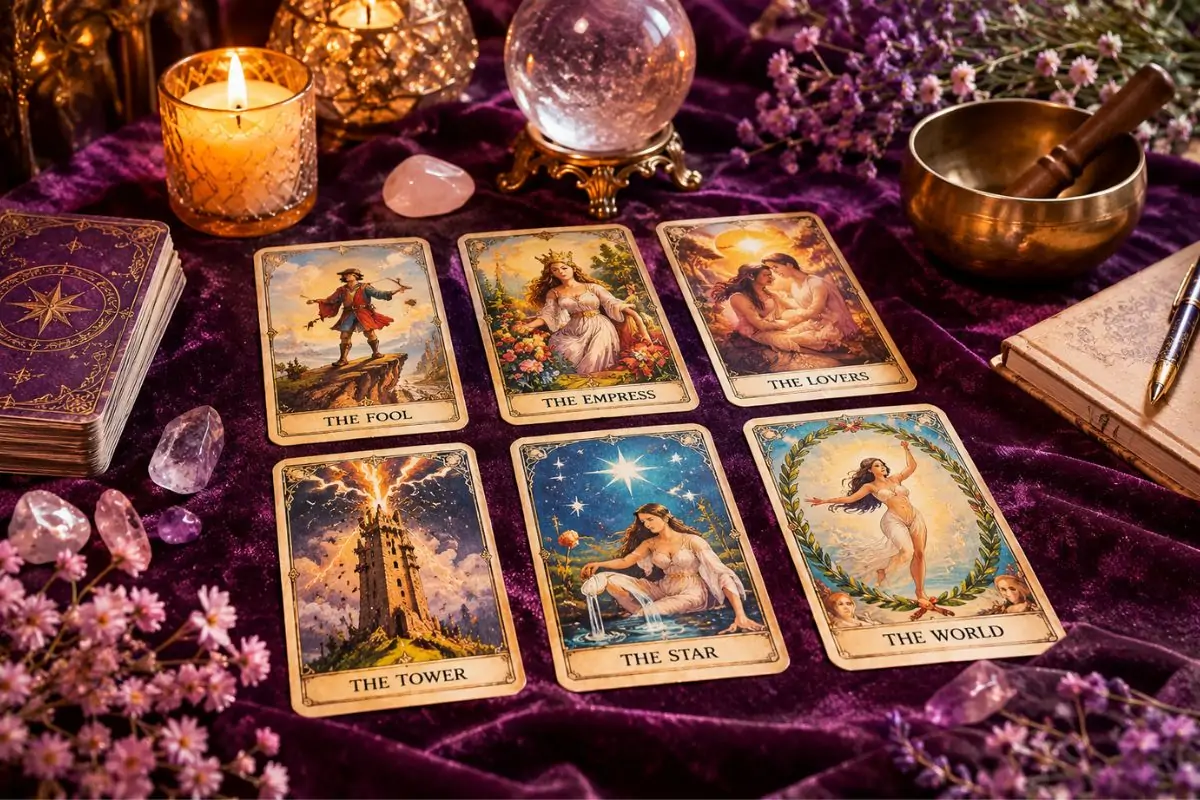
Is the universe sending you a message, or are you simply overdue for a holiday? Let’s consult the cards.
You have a decision to make. Your best friend has an opinion. Your mother has three. Your group chat has conducted a full investigation, and Google has somehow made everything more confusing.
Perhaps it is time to ask the tarot cards.
Before you imagine a mysterious woman in a velvet cape whispering about your destiny, relax. Tarot is not exclusively about predicting weddings, warning you about mysterious strangers or announcing that your ex will return during Mercury retrograde.
At its heart, tarot is a symbolic system of 78 illustrated cards. Each card carries themes, imagery and interpretations that readers use to explore questions, emotions, relationships, decisions and personal patterns.
Some people approach tarot spiritually. Others use it as a creative reflection exercise. And some simply enjoy the theatrical pleasure of turning over a card and wondering why a picture of a woman holding eight swords feels suspiciously relevant to their Monday morning.
Whatever your reason, tarot has one excellent quality: it makes you pause and look at a situation from another perspective.
And today, you get to play.
First, What Exactly Is Tarot?
A traditional tarot deck contains 78 cards divided into two groups.
The Major Arcanaconsists of 22 cards, including The Fool, The Lovers, Death, The Devil, The Tower and The World. These cards represent larger themes, transitions, challenges and turning points.
The Minor Arcanacontains 56 cards divided into four suits:
- Cups:Emotions, relationships, intuition and matters of the heart.
- Wands:Passion, ambition, creativity and action.
- Swords:Thoughts, communication, decisions and conflict.
- Pentacles:Money, work, stability, health and material life.
Think of the Major Arcana as the big plot twists and the Minor Arcana as the everyday episodes.
A card does not have one universal meaning in every reading. Its interpretation can change according to the question, its position in a spread, surrounding cards and whether it appears upright or reversed.
Meet the Tarot Cards That Have Main-Character Energy
Some tarot cards are practically celebrities. They have dramatic names, unforgettable illustrations and enough symbolism to keep an entire dinner party occupied.
Here are six worth knowing.
1. The Fool: Your Life Is Calling. Please Pick Up.
The Fool is card zero of the Major Arcana and represents beginnings, curiosity, spontaneity and the courage to step into the unknown.
It is the energy of booking a solo trip, starting a business, learning something new or deciding that the old version of your life no longer fits.
The warning? Enthusiasm is wonderful, but perhaps read the contract before jumping off the metaphorical cliff.
The message:Be brave enough to begin, but do not confuse confidence with preparation.
2. The Empress: Expensive Taste, Excellent Boundaries
The Empress represents abundance, creativity, nurturing, sensuality and growth.
She is associated with nature, fertility, beauty and the ability to create something meaningful. This does not automatically mean pregnancy or motherhood, despite what some dramatic internet interpretations suggest.
In a career reading, she may point towards creativity and growth. In a relationship reading, she may invite you to consider whether you are receiving as much care as you give.
The message:You can be generous without becoming everybody’s unpaid emotional support department.
3. The Lovers: Chemistry Is Not a Business Plan
The Lovers is associated with relationships, attraction, harmony and important choices.
Yes, it can suggest romantic connection. But it is also about alignment, values and decisions that reflect who you genuinely are.
Sometimes the most important relationship question is not whether someone likes you. It is whether the relationship actually works for you.
The message:Butterflies are lovely. Compatibility is better.
4. The Tower: Well, That Escalated Quickly.
The Tower is one of tarot’s most dramatic cards. It depicts a structure being struck by lightning, often representing sudden change, disruption or the collapse of something built on unstable foundations.
It sounds alarming, but it does not automatically predict disaster.
It can symbolise an uncomfortable truth becoming impossible to ignore, a belief being challenged or a situation finally changing after a long period of tension.
The message:Sometimes the thing falling apart was never built to last.
5. The Star: Breathe. You Are Not Finished.
Following the Tower in the Major Arcana comes The Star, a card associated with hope, renewal, inspiration and emotional healing.
It represents the possibility of finding clarity after a difficult period.
It is not a promise that everything will magically improve tomorrow. Rather, it encourages patience, perspective and the willingness to believe that a difficult chapter does not define your entire story.
The message:A bad chapter is not the whole book.
6. The World: Look Who Finally Made It.
The World is the final card of the Major Arcana. It symbolises completion, achievement, integration and a sense of fulfilment.
It may represent finishing a major project, reaching an important personal milestone or recognising how far you have come.
The interesting part? Completion is not necessarily an ending. Sometimes it is the beginning of a much bigger adventure.
The message:Celebrate the progress. Then decide what comes next.
Your Turn: Pick a Tarot Card
Now comes the interesting part.
Take a breath, think about what has been occupying your mind lately, and choose one of the six cards below. Do not overthink it. Your first instinct is part of the fun.
The interactive tarot spread below reveals a card and its interpretation when you click on it.
A little disclaimer:This is a playful tarot-inspired reading, not a prediction of guaranteed events. Use it as a prompt for reflection, not as a substitute for your own judgement.
🔮 Pick Your Tarot Card
Trust your first instinct. Choose one card and tap to reveal its message.
Card 0 🃏 The Fool Reveal your card
Close card ↑
Card III 👑 The Empress Reveal your card
Close card ↑
Card VI 💕 The Lovers Reveal your card
Close card ↑
Card XVI ⚡ The Tower Reveal your card
Close card ↑
Card XVII ⭐ The Star Reveal your card
Close card ↑
Card XXI 🌍 The World Reveal your card
Close card ↑
How to Read Your Card Without Panicking
Tarot cards are not simply a collection of good and bad omens. Even the cards with intimidating names can carry useful interpretations.
The Death card, for instance, usually symbolises transformation, endings and new beginnings rather than literal death. The Devil can highlight unhealthy attachments, temptation or patterns that deserve attention. The Tower can represent disruption, but also the opportunity to rebuild more honestly.
Context matters.
A card appearing in a relationship reading may have a different emphasis from the same card appearing in a career reading. A three-card spread can also tell a more nuanced story than interpreting one card in isolation.
Three Tarot Myths That Need to Go
Myth 1: The Death card means someone will die.
No. In traditional tarot interpretation, Death is primarily associated with endings, transformation and transition. It should not be treated as a prediction of physical death.
Myth 2: Tarot can tell you exactly when you will get married or become rich.
Tarot readings are interpretive, not scientifically validated forecasting systems. Be cautious of anyone promising guaranteed outcomes, especially when money is involved.
Myth 3: You must be psychic to understand tarot.
Not necessarily. Tarot can be studied through its history, symbolism, traditional interpretations and different reading systems. You do not need supernatural abilities to explore it as a reflective practice.
Should You Try a Three-Card Tarot Reading?
If you want to explore tarot beyond a single card, a simple three-card spread is a good starting point.
You can assign the cards these positions:
- The Past:What experience or pattern has influenced the situation?
- The Present:What deserves your attention right now?
- The Possible Direction:What might be worth considering as you move forward?
Notice the wording: possible direction, not guaranteed future.
You can use this spread for a career decision, a personal goal or a relationship question. Keep your question open enough to invite reflection rather than demanding a yes-or-no verdict.
The Real SHEE Power Takeaway
Tarot is fascinating because it gives us a different language for thinking about familiar human experiences: love, ambition, fear, change, uncertainty and hope.
You may turn over The Star and feel encouraged. You may pick The Tower and laugh nervously. Or you may discover that The Fool is exactly the reminder you needed to stop waiting for the perfect moment.
But remember this: the cards can offer symbols, questions and perspectives. They do not get to make your decisions.
You do.
And if the cards happen to suggest that you need a little adventure, perhaps start by booking that holiday.
Just check your bank balance first.
Frequently Asked Questions About Tarot
1. What is tarot reading?
Tarot reading is the practice of interpreting a deck of 78 symbolic cards to explore questions, situations and possible perspectives. It is used by some as a spiritual practice and by others as a tool for reflection.
2. How many cards are in a tarot deck?
A traditional tarot deck has 78 cards: 22 Major Arcana cards and 56 Minor Arcana cards.
3. Is tarot scientifically proven to predict the future?
No. There is no reliable scientific evidence that tarot cards can predict future events. Readings are best understood as symbolic or reflective interpretations.
4. What is the most positive tarot card?
There is no universally agreed answer, but The Sun, The Star, The World and The Empress are commonly associated with positive themes such as happiness, hope, fulfilment and abundance.
5. Does the Death card mean actual death?
No. In traditional tarot, the Death card usually represents transformation, endings and new beginnings.
6. Can beginners read tarot cards?
Yes. Beginners can start by learning the symbolism and traditional meanings of the cards, then practising simple one-card and three-card spreads.