Why Do We Keep Falling for the Same Type of Person? The Psychology of Repeating Relationship Patterns

Different face. Different name. Same emotional roller coaster. If your romantic history feels like a television series that keeps releasing the same season with a slightly different cast, there may be a psychological reason.
There is a particular kind of frustration that comes from realising you have fallen for the same type of person again.
The first one was charming but emotionally unavailable. The second was ambitious but had no time for a relationship. The third was wonderfully attentive for three weeks before developing an unexplained allergy to communication.
And now, somehow, you are having the same conversation you promised yourself you would never have again.
At some point, you have to wonder: Is this bad luck, a terrible dating pool, or am I unknowingly auditioning the same personality in different outfits?
Psychologists have long studied why people repeat relationship patterns. The answer is not that everyone is secretly attracted to disaster. It is often a complicated combination of familiarity, attachment experiences, emotional expectations, self-perception and the way our brains learn what love is supposed to feel like.
The interesting part is that the person you are attracted to may not always be the person who is good for you.
And those two things are not necessarily the same.
1. Familiarity Can Feel Like Chemistry
One of the most interesting explanations comes from the psychology of familiarity.
Human beings tend to feel more comfortable with what they recognise. This does not mean we consciously choose partners who resemble our parents or recreate childhood experiences. But early relationships can help shape our expectations of closeness, attention, affection and emotional availability.
If affection in your early environment was inconsistent, you may grow accustomed to working hard for attention. If emotional distance was normal, a partner who struggles to express feelings might not immediately seem unusual.
The brain does not always ask whether something is healthy. Sometimes it simply recognises the pattern.
This is why an emotionally unpredictable relationship can feel strangely compelling, particularly if you have experienced similar dynamics before.
A person who communicates inconsistently may create uncertainty, but uncertainty can sometimes be mistaken for excitement.
The uncomfortable question: Are you attracted to this person, or are you attracted to a dynamic you already know?
2. The Attachment Style Connection
Attachment theory is one of the most widely discussed frameworks for understanding adult relationships.
Developed from earlier research into relationships between children and caregivers, attachment theory explores how people experience closeness, trust, emotional security and separation.
In adult relationships, researchers commonly discuss four broad attachment patterns:
Secure attachment:People generally feel comfortable with emotional intimacy, trust and independence. They can communicate needs without constantly fearing rejection.
Anxious attachment:People may become particularly sensitive to signs of distance, delayed communication or perceived rejection. They may seek reassurance when a relationship feels uncertain.
Avoidant attachment:People may feel uncomfortable with too much emotional dependence or closeness and sometimes withdraw when relationships become intense.
Fearful-avoidant attachment:People may desire intimacy while also feeling anxious about it, creating a push-and-pull experience.
These are broad descriptions, not permanent personality labels or clinical diagnoses. Attachment patterns can vary between relationships and change through experience.
The interesting complication is that different attachment tendencies can sometimes interact in difficult ways.
For example, someone who seeks reassurance may become increasingly distressed when paired with someone who withdraws during emotional conversations. The more one person pursues connection, the more the other may retreat.
Soon, both people feel misunderstood.
Neither person necessarily intends to hurt the other, but the relationship can become an exhausting cycle.
3. Why Emotionally Unavailable People Can Feel So Attractive
Let’s talk about the person who sends a beautiful message at midnight but cannot answer a straightforward question about where the relationship is going.
They are affectionate when they want to be, mysterious when you need clarity and somehow always busy when an emotionally important conversation appears.
Why can such people become so difficult to forget?
One possible explanation is intermittent reinforcement.
In behavioural psychology, intermittent reinforcement describes a situation in which a reward is delivered unpredictably rather than consistently.
Imagine receiving affection, attention and reassurance at irregular intervals. You never know exactly when the next positive interaction will happen.
That unpredictability can make the reward particularly compelling and encourage repeated attempts to obtain it.
In relationships, this might look like someone being intensely affectionate one week and emotionally distant the next.
You begin waiting for the wonderful version of them to return.
You analyse messages. You replay conversations. You wonder whether you said something wrong. When affection finally arrives, the relief can feel enormous.
But relief is not the same as emotional security.
A healthy relationship should not require you to become an expert in interpreting silence.
 Relationships & Dating
10 Signs He Likes the Attention You Give Him More Than He Actually Likes You
Is he genuinely interested, or does he simply enjoy being wanted? Discover the subtle signs that can reveal the difference between real connection, attention and emotional inconsistency.
Read Full Article4. The Potential Trap: Falling in Love With Who Someone Could Become
There is a difference between loving a person and loving the possibility of who they might become.
Perhaps they have extraordinary ambition but never follow through. Perhaps they are kind but emotionally immature. Perhaps they have a difficult past and promise that things will be different once their circumstances improve.
You can see their potential so clearly that the present begins to look like a temporary inconvenience.
You become patient. You make allowances. You explain their behaviour to yourself and sometimes to other people.
Eventually, the relationship becomes less about what is happening and more about what you hope will happen.
This can be especially difficult for people who are nurturing, optimistic or naturally inclined to see the best in others.
But potential is not a relationship.
You cannot build a partnership entirely around someone’s future possibilities while ignoring their present behaviour.
A useful rule: Pay attention to patterns, not promises.
5. Why Red Flags Sometimes Look Like Green Flags
Some behaviours can initially appear attractive because they resemble qualities we genuinely value.
Consider these examples:
| What it looks like initially | What it may actually be |
|---|---|
| Extremely intense attention from day one | Love bombing or premature emotional intensity |
| Constantly wanting to know where you are | Possessiveness or controlling behaviour |
| Being mysterious and difficult to understand | Poor communication or emotional unavailability |
| Making every decision for you | Controlling behaviour disguised as confidence |
| Never admitting mistakes | Difficulty accepting accountability |
| Making you work hard for affection | An unhealthy imbalance of emotional effort |
Not every intense romance is love bombing, and not every private person is emotionally unavailable. Context, consistency and behaviour over time matter.
The important distinction is whether the relationship allows both people to feel respected, comfortable and free to express themselves.
A person who genuinely likes you should not make basic emotional clarity feel like a luxury.
6. The Rescuer Syndrome: Why Some People Become Relationship Projects
Some people repeatedly find themselves attracted to partners who need fixing.
One needs emotional support. Another needs career direction. Someone else needs help becoming responsible, communicating better or overcoming a complicated past.
At first, helping feels meaningful. You feel valued because you are the person they trust.
But gradually, the relationship can become unequal.
You are managing their emotions, encouraging their ambitions, solving problems and trying to maintain the connection. Meanwhile, your own needs keep moving to the bottom of the list.
This dynamic can sometimes be linked to a strong need to feel useful, valued or indispensable.
It is important to distinguish genuine support from taking responsibility for another adult’s growth.
You can love someone through a difficult period without becoming their therapist, parent, career counsellor and personal crisis-management department.
A partnership should have room for two people.
7. The Chemistry Confusion: Why Peace Can Feel Boring
Here is something worth considering.
If you have experienced relationships filled with uncertainty, emotional highs and sudden lows, a stable relationship may initially feel unfamiliar.
Someone who communicates consistently, respects your boundaries and does not disappear for days may seem less exciting.
Where is the suspense? Where is the dramatic reunion? Why are they answering messages normally instead of creating a three-day mystery?
But emotional security is not the absence of attraction.
It is the absence of unnecessary instability.
A relationship can be passionate without being unpredictable. It can be romantic without being exhausting. It can have excitement without leaving you constantly worried about where you stand.
Sometimes what feels like a lack of chemistry is simply the unfamiliar experience of not being anxious.
Of course, not every calm relationship is compatible. You still need attraction, shared values, humour, respect and genuine interest.
But emotional chaos should not be the price of romance.
8. How to Stop Repeating the Same Relationship Pattern
Recognising a pattern is important, but changing it requires more than deciding to choose differently next time.
Here are some practical steps.
Start noticing what attracts you
Think about the people you have been drawn to over the years.
Are they consistently unavailable? Do they avoid commitment? Are they charming but unreliable? Do you find yourself attracted to people who need rescuing?
Look for repeated behaviours rather than superficial similarities.
Slow down the beginning
Early attraction can be intense, but it does not reveal everything about a person’s character.
Allow time to observe how someone behaves when they are disappointed, busy, stressed or faced with a disagreement.
Consistency becomes clearer over time.
Stop treating mixed signals as a puzzle
If someone repeatedly makes you uncertain about their intentions, you do not have to spend months decoding them.
Ask direct questions. Observe their responses. Decide whether their behaviour meets your expectations.
You are allowed to want clarity.
Develop boundaries before you need them
Boundaries are easier to maintain when you understand your non-negotiables.
These might include honesty, respect, emotional availability, financial responsibility, shared expectations about commitment and freedom from controlling behaviour.
A boundary is not an attempt to control another person. It is a decision about what you will accept and what you will do if a situation becomes unhealthy.
Learn to recognise reciprocity
Healthy relationships involve mutual effort.
Both people initiate conversations, make plans, offer emotional support, accept responsibility and show interest in each other’s lives.
If you are consistently carrying the relationship, it may be time to reconsider the balance.
Consider therapy if the pattern feels difficult to break
Repeated relationship difficulties can sometimes be connected to deeper emotional experiences, attachment concerns, low self-esteem or unresolved trauma.
A qualified mental health professional can help you explore these patterns without judgement and develop healthier ways of relating.
You do not need to wait until a relationship becomes a crisis to seek support.
9. A Small Reality Check: Are You Choosing the Person or the Feeling?
Before entering another relationship, consider these questions:
- Do I feel comfortable being myself around this person?
- Can I express disagreement without fearing punishment or withdrawal?
- Are their actions consistent with their words?
- Do I feel respected even when we disagree?
- Am I attracted to their actual behaviour or their potential?
- Is the emotional effort reasonably mutual?
- Do I feel more secure over time, or increasingly uncertain?
You do not need to answer every question perfectly. Relationships are complicated, and nobody behaves flawlessly all the time.
But repeated discomfort deserves attention.
10. The Ultimate Relationship Pattern Quiz
Now for a little self-reflection.
Are you attracted to emotionally available people, ambitious but distant personalities, romantic idealists or people who need a complete life renovation?
Take our fun quiz below and discover which relationship pattern you might recognise in yourself.
This is an entertainment and reflection exercise, not a psychological assessment or diagnosis.
❤️ What Is Your Relationship Pattern?
Remember: This is a light-hearted reflection quiz, not a psychological assessment or diagnosis.
The Real SHEE Power Takeaway
Perhaps the most important relationship lesson is this: attraction is not always an instruction.
You can find someone fascinating and still recognise that they are not right for you. You can feel extraordinary chemistry and still decide that the relationship lacks the emotional security you need.
You can understand someone’s difficult past without accepting behaviour that hurts you.
And you can change your mind, change your standards and choose differently.
The goal is not to find a person who never makes mistakes. That person does not exist.
The goal is to build a relationship in which both people are willing to communicate, grow, take responsibility and show up consistently.
Because if every new romance feels like the previous one with a different profile picture, perhaps it is time to change the selection criteria.
Not your capacity to love.
Just what you are willing to accept.
Frequently Asked Questions
1. Why am I attracted to emotionally unavailable people?
There can be several reasons, including familiarity with inconsistent affection, attachment tendencies, self-esteem concerns and the appeal of unpredictable attention. There is no single explanation that applies to everyone.
2. Can childhood experiences affect adult relationships?
Yes. Early experiences can influence expectations around trust, intimacy, emotional support and communication. However, childhood does not determine someone’s romantic future. People can develop healthier relationship patterns over time.
3. What is intermittent reinforcement in relationships?
It refers to unpredictable patterns of attention or affection. When positive interactions happen inconsistently, a person may become increasingly focused on receiving the next reassuring interaction.
4. Why does a healthy relationship sometimes feel boring?
People accustomed to emotional uncertainty may initially find stability unfamiliar. However, a healthy relationship can still be passionate, exciting and romantic without constant conflict or anxiety.
5. How can I stop repeating unhealthy relationship patterns?
Start by recognising recurring behaviours, slowing down new relationships, setting clear boundaries, prioritising consistency and seeking professional support if needed.
6. Does having an anxious or avoidant attachment style mean a relationship is doomed?
No. Attachment tendencies are not permanent verdicts. Self-awareness, communication, emotional regulation and supportive relationships can help people develop greater security.
 Tarot & Spirituality
What Do the Tarot Cards Have to Say About You?
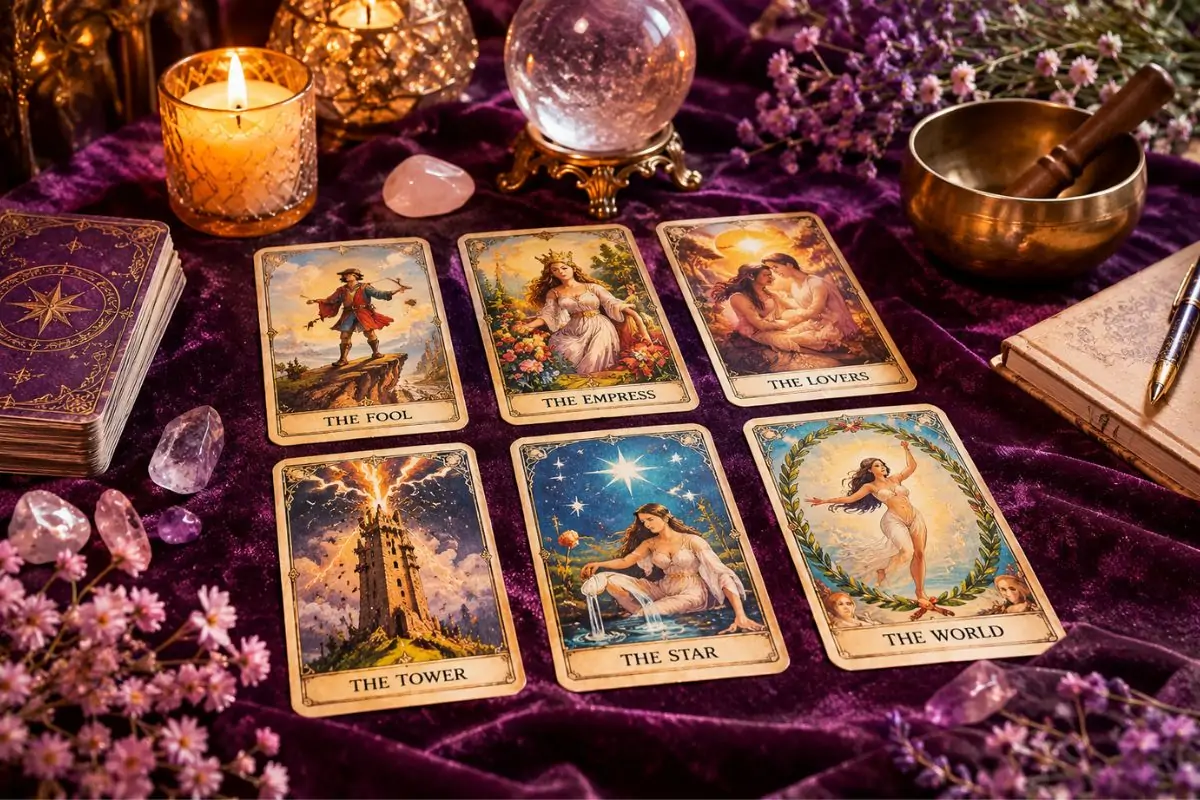
Pick a card, trust your instincts and explore the symbolism behind The Fool, The Empress, The Lovers, The Tower, The Star and The World in this fun tarot-inspired reading.
Read Full Article