India’s Gender Equality Triumph: 14-Rank Leap in GII 2022 Unveiled!
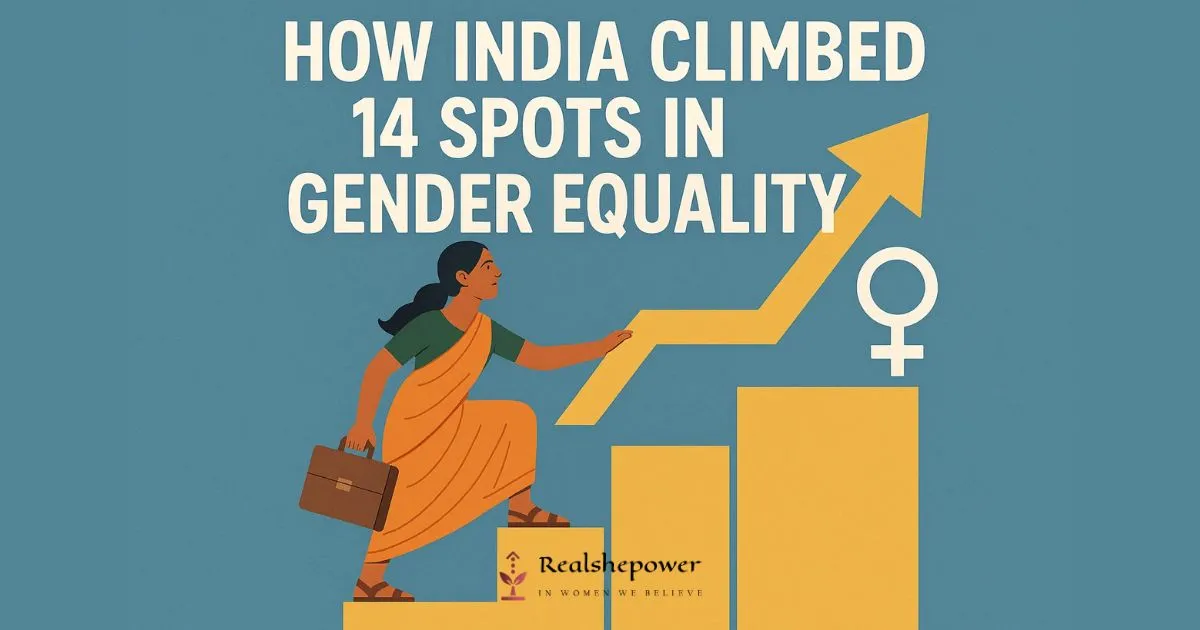
In a remarkable stride toward gender equality, India has jumped 14 ranks in the Gender Inequality Index (GII) 2022, securing the 108th position out of 193 countries with a score of 0.437. Released on March 13, 2024, as part of the United Nations Development Programme (UNDP) Human Development Report 2023/2024, this achievement highlights India’s ongoing commitment to bridging the gender gap. But what does this mean for the country, and how did India get here?
What is the Gender Inequality Index (GII)?
Before we get into India’s big win, let’s break down what the GII is all about. The Gender Inequality Index, introduced by the UNDP in 2010, is a composite measure that evaluates gender disparities across three key dimensions:
- Reproductive Health: Measured by maternal mortality ratio and adolescent birth rates.
- Empowerment: Assessed through the share of parliamentary seats held by women and the percentage of the population with at least secondary education, by gender.
- Labor Market Participation: Gauged by the labor force participation rates for women and men.
The GII score ranges from 0 (perfect equality) to 1 (extreme inequality). A lower score, like India’s 0.437, indicates better progress toward gender equality. For context, India’s score is better than the global average of 0.462 and the South Asian average of 0.478, which is something to celebrate.
India’s 14-Rank Jump: A Decade of Progress
India’s climb from 122nd in 2021 (with a score of 0.490) to 108th in 2022 is no small feat. This 14-rank improvement reflects a decade-long trend of steady progress in gender equality. Back in 2014, India was ranked 127th, so moving to 108th shows consistent efforts paying off. According to the Ministry of Women and Child Development, this leap is the result of “a decisive agenda set by the government for ensuring women’s empowerment through policy initiatives aimed at their long-term socio-economic and political development.”
But what’s driving this change? Let’s look at the key highlights.
Key Highlights of India’s GII 2022 Performance
1. Improved Reproductive Health:
- India’s adolescent birth rate dropped to 16.3 births per 1,000 women aged 15-19 in 2022, down from 17.1 in 2021.
- The maternal mortality ratio has also seen improvements, thanks to initiatives like Janani Suraksha Yojana and Ayushman Bharat, which focus on better healthcare access for women. These programs have strengthened maternal and child health services across the country.
2. Empowerment Through Education and Representation:
- India has made strides in educational attainment, with more women accessing secondary education. The expected years of schooling rose to 12.6 years, and mean years of schooling increased to 6.57 years.
- The Constitution (106th Amendment) Act, 2023, reserves one-third of seats for women in the Lok Sabha, state legislative assemblies, and Delhi’s Legislative Assembly, building on the existing 33% reservation in Panchayati Raj Institutions. This is a game-changer for women’s political participation.
- Programs like Beti Bachao Beti Padhao and Vigyan Jyoti are encouraging girls to pursue education and careers, especially in STEM fields, where women’s participation has historically been low.
3. Economic Empowerment Initiatives:
- Schemes like Stand-Up India, Mahila e-Haat, and Pradhan Mantri Mudra Yojana (PMMY) are empowering women entrepreneurs by providing access to credit and online marketplaces.
- Despite progress, challenges remain in labor force participation, with a significant gender gap: only 28.3% of women are in the workforce compared to 76.1% of men, a 47.8% difference.
4. Reduction in Child Marriage:
- The prevalence of child marriage has halved from 47% in 2006 to 23.3% in 2019-21, according to NFHS-5. However, states like Bihar, Jharkhand, and West Bengal still report higher-than-average rates, indicating the need for targeted interventions.
5. Gender-Sensitive Policies:
- The Nirbhaya Fund and One Stop Centres (OSCs) provide critical support for women’s safety, offering integrated services like medical aid, legal assistance, and counseling for victims of violence.
- Legal reforms, such as those recommended by the Justice Verma Committee (2013), are pushing for stronger laws against gender-based violence and workplace discrimination.
Why This Matters: A Step Toward Inclusive Growth
India’s improved GII ranking isn’t just a number—it’s a testament to the country’s commitment to women-led development. As Angela Lusigi, UNDP India’s Resident Representative, noted, “With a renewed focus on women-led development, quality education, and healthcare for all, India is well-positioned to achieve inclusive growth and continued progress on human development.”
This progress aligns with India’s broader gains in the Human Development Index (HDI), where it ranked 130th in 2023 with an HDI value of 0.685, up from 133rd in 2022. Improvements in life expectancy (72 years), education, and gross national income (GNI) per capita ($9,046.76) have contributed to this holistic growth.
However, challenges persist. Income inequality remains a hurdle, with men earning 82% of labor income compared to women’s 18%, according to the World Inequality Report 2022. Additionally, the gender wage gap and low female labor force participation highlight areas needing urgent attention. Cultural barriers, safety concerns, and unpaid care work continue to limit women’s economic contributions.
The Road Ahead: Challenges and Opportunities
While India’s GII improvement is worth celebrating, there’s still work to be done. Here are some areas to focus on:
- Closing the Labor Force Gap: Encouraging women’s participation through better workplace safety, flexible hours, and freelancing platforms can help.
- Tackling Unpaid Care Work: Recognizing and redistributing unpaid domestic work can free up women’s time for economic opportunities.
- Strengthening Legal Frameworks: Enforcing laws against gender-based violence and introducing provisions like those for marital rape will further protect women’s rights.
- Regional Disparities: Addressing higher child marriage rates and gender gaps in states like Bihar and Jharkhand is critical for uniform progress.
Conclusion: A Promising Future for Gender Equality
India’s 14-rank jump to 108th in the Gender Inequality Index 2022 is a clear sign that the country is moving in the right direction. With a GII score of 0.437, better than global and South Asian averages, India is setting an example of what targeted policies and persistent efforts can achieve. From reproductive health improvements to women’s empowerment through education and political representation, the progress is tangible. Yet, challenges like the gender wage gap and low labor force participation remind us that the journey is far from over.
As India continues to invest in women-led development, initiatives like Beti Bachao Beti Padhao, and Nirbhaya Fund are paving the way for a more inclusive future. With sustained focus, India can not only maintain this upward trajectory but also inspire other nations to prioritize gender equality.
Sources:
- United Nations Development Programme (UNDP) Human Development Report 2023/2024
- Ministry of Women and Child Development, Government of India
- Business Standard (Omega Seiki Mobility initiative)
- Drishti IAS
- Times of India