
What are common grooming phrases and conversational patterns parents should look for in chat logs?
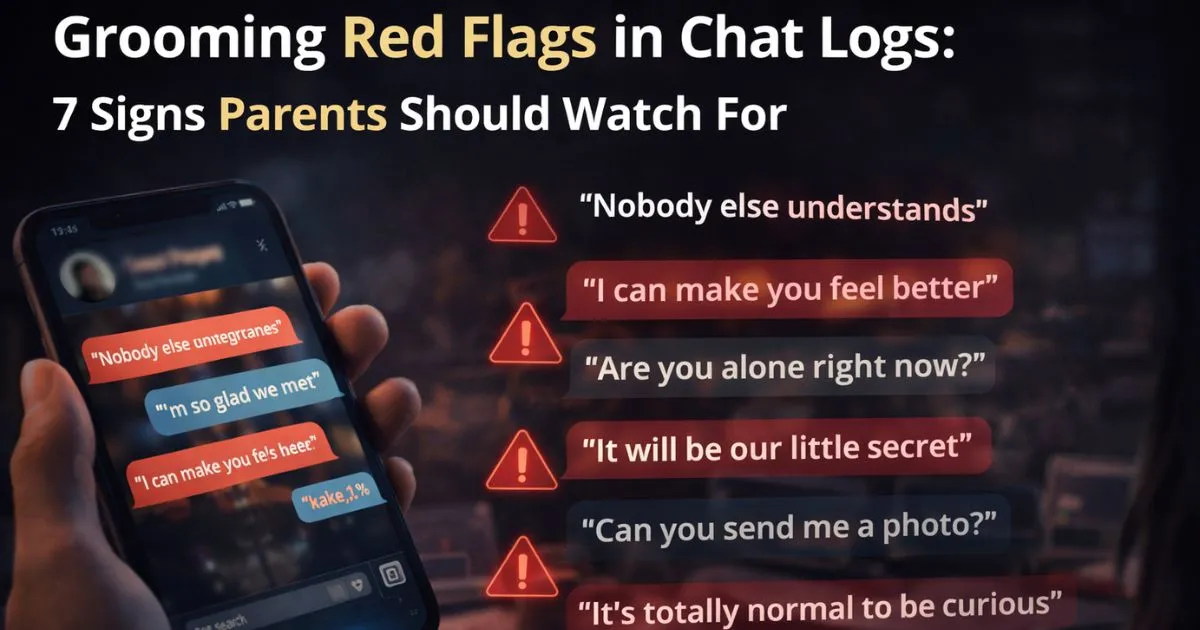
Groomers don’t usually start with explicit requests. Instead, they use a psychological process called “Testing the Fence” small, seemingly innocent boundaries are pushed to see if the child pushes back or keeps a secret.
In 2026, these patterns are often masked by “internet slang” or AI-assisted scripts that mimic teenage speech patterns. Here is the anatomy of a grooming conversation.
Phase 1: The “Special Connection” (Validation)
The goal is to make the child feel that this “friend” understands them better than anyone in the real world.
- “You’re so much more mature than kids your age.” — This is the most common phrase. It frames the relationship as two “equals” and makes the child feel special.
- “Your parents just don’t get you, do they? I’m here for you.” — This creates an “us vs. them” mentality, driving a wedge between the child and their support system.
- “I’ve never told anyone this before…” — Artificial intimacy. They share a “fake” secret to pressure the child into sharing a real one in return.
Phase 2: Testing the Secrecy (The Fence)
Before moving to anything dangerous, the predator must ensure the child will keep the interaction private.
- “Let’s keep this just between us; it’s our little secret.” — Directly framing secrecy as a sign of friendship or loyalty.
- “If your parents saw this, they’d probably overreact and take your phone.” — This uses the child’s greatest fear (losing digital access) to ensure they don’t report the conversation.
- “Don’t tell your friends about this; they’ll just get jealous.” — Isolating the child from their peer group.
Phase 3: The Pivot to Private Apps
Groomers almost always try to move the conversation away from monitored or public platforms to encrypted or “disappearing” apps.
- “Add me on [App Name], it’s easier to talk there.” — Usually moving from a game or Instagram to Snapchat, Telegram, or Discord.
- “Send it on disappearing mode so it doesn’t take up space.” — Encouraging the use of vanishing media to erase evidence of grooming.
Conversational Patterns to Watch For
| Pattern | Description |
| The Gift/Reward Cycle | “I’ll send you 200 rs on UPI if you do me a small favor.” |
| Information Mining | Frequent questions about: “Are your parents home?”, “Is your door locked?”, “What are you wearing right now?” |
| The Guilt Trip | “I thought we were friends,” or “I’m really sad you won’t help me out.” |
| Sexual “Jokes” | Testing the water with “edgy” memes or jokes to see if the child engages or gets uncomfortable. |
Crucial Insight: If you see a name in a chat log you don’t recognize, look for consistency. A real friend talks about school, mutual friends, and shared hobbies. A predator’s conversation is almost exclusively focused on the child’s feelings, their “special bond,” and requests for photos or private information.
➤ How do I confront my child if I find grooming phrases in their chat logs without losing their trust?