
India’s Wetlands Are Dying And the Flamingos Are the First to Warn Us
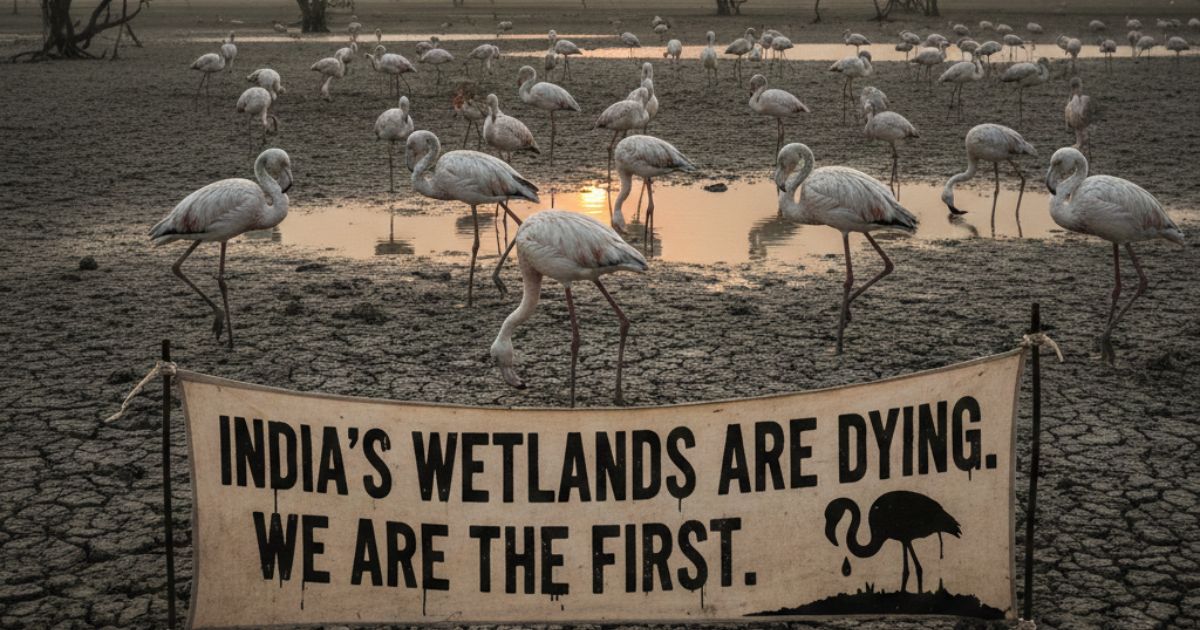
Every winter, when flamingos arrive in India, social media fills with awe.
Pink skies.
Mirror-like lakes.
Drone shots of thousands of birds moving in perfect synchrony.
We celebrate the spectacle.
What we refuse to confront is the warning.
Because flamingos don’t migrate for beauty.
They migrate for survival.
And right now, their movements are telling us something deeply uncomfortable:
India’s wetlands are failing fast.
Table of Contents
Wetlands: India’s Most Ignored Climate Infrastructure
Wetlands are not decorative landscapes.
They are living infrastructure.
They:
- filter water naturally
- prevent floods and droughts
- recharge groundwater
- regulate local climate
- absorb carbon
- support fisheries and livelihoods
- sustain migratory birds across continents
India has lost over 30% of its natural wetlands in just three decades.
Urbanisation, mining, encroachment, pollution, and policy neglect have turned many into dumping grounds or real estate opportunities.
And unlike forests or rivers, wetlands die quietly.
No protests.
No headlines.
Just disappearance.
Why Flamingos Matter More Than We Think
Flamingos are not just birds.
They are ecological sensors.
They survive only when:
- water depth is precise
- salinity is balanced
- algae populations are stable
- pollution is minimal
- human disturbance is controlled
When flamingos arrive in large numbers, it means an ecosystem is still barely holding together.
When they arrive erratically, leave early, or die in mass events—as happened at Sambhar Lake—
it means the system is collapsing.
Flamingos do not adapt to broken ecosystems.
They flee them.
Or perish in them.
That is why their behaviour is one of the clearest climate indicators we have.
Sambhar Lake: A Warning We Ignored Once Already
Sambhar Lake, India’s largest inland saltwater wetland and a Ramsar site, should have been fiercely protected.
Instead, it became a case study in neglect.
- Unregulated salt mining disrupted natural water flow
- Encroachment shrank feeding grounds
- Pollution altered salinity levels
- Climate-driven heat intensified evaporation
In 2019, over 20,000 migratory birds died there.
That should have been a national wake-up call.
Instead, it became a brief news cycle.
The flamingos returned again in later years—not because the lake healed, but because they had fewer options left.
That is not resilience.
That is desperation.
The Illusion of ‘Seasonal Beauty’
We have reduced migration to a tourism calendar event.
“Flamingo season.”
“Birdwatching months.”
“Instagram hotspots.”
This aestheticisation hides the truth:
- Wetlands are shrinking every year
- Migration routes are breaking
- Birds are crowding into fewer viable sites
- Disease risk is rising
- Food chains are destabilising
When too many birds are forced into too little space, mass die-offs become inevitable.
Nature does not announce collapse dramatically.
It shows it through imbalance.
The Gendered Reality of Wetland Loss (That No One Talks About)
When wetlands die, the burden does not fall evenly.
It falls hardest on:
- rural women who depend on water access
- women engaged in fishing, salt work, or farming
- mothers dealing with polluted drinking water
- girls who walk farther each year to fetch water
Women ecologists understand this deeply.
That is why so many of India’s most persistent wetland defenders today are women scientists, researchers, and grassroots conservationists—working in hostile terrain, limited funding, and low public visibility.
They are not just protecting birds.
They are protecting human futures tied to water.
Must Read
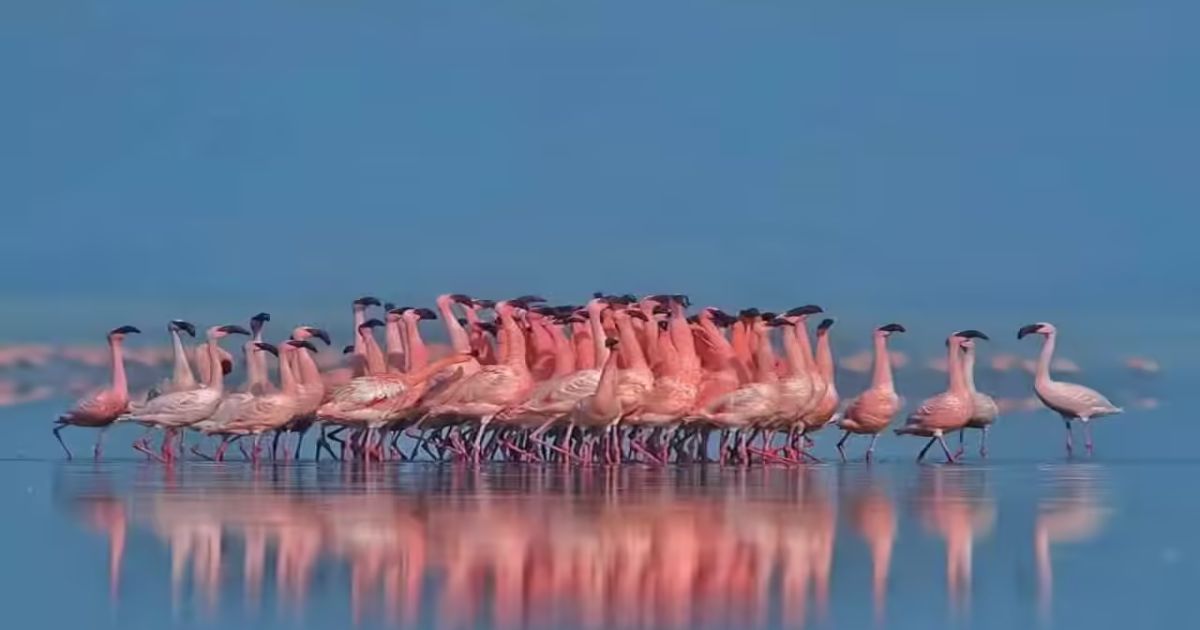
Flamingos at Sambhar Lake & Climate Change
How climate change is impacting flamingos and their habitat at Sambhar Lake.
→ Read Full ArticlePolicy Failure Disguised as Inaction
India has laws to protect wetlands.
What it lacks is:
- enforcement
- funding
- regional coordination
- political urgency
Wetlands fall between departments—environment, water, urban development, revenue until no one is accountable.
Climate action plans mention wetlands as footnotes.
Budgets treat them as expendable.
Urban planning sees them as vacant land.
Flamingos are not fooled by paperwork.
They respond only to ecological truth.
What the Flamingos Are Really Telling Us
They are telling us that:
- climate change is already restructuring ecosystems
- biodiversity loss is accelerating, not slowing
- our conservation response is reactive, not preventive
- once a wetland collapses, recovery is slow and uncertain
- beauty is often the last stage before disappearance
Flamingos are not arriving because wetlands are healthy.
They are arriving because there are fewer safe places left.
This Is Not About Birds Alone
If wetlands disappear:
- floods will intensify
- water scarcity will worsen
- heatwaves will become more lethal
- rural livelihoods will collapse
- migration pressures will rise
- cities will become more unlivable
Protecting wetlands is not an environmental luxury.
It is climate survival strategy.
And flamingos are the first to tell us when that strategy is failing.
Listen Before the Silence Comes
India still has a choice.
We can continue treating flamingos as seasonal spectacles—
or we can recognise them as early warning systems for ecological collapse.
When flamingos stop coming,
or come and die,
or abandon centuries-old routes,
it won’t just be a loss of colour in the sky.
It will mean we ignored the warning for too long.
Nature is speaking softly, through wings and water and fragile pink bodies.
The question is no longer what are the flamingos doing here?
The question is:
Why are we still not listening?
Must Read
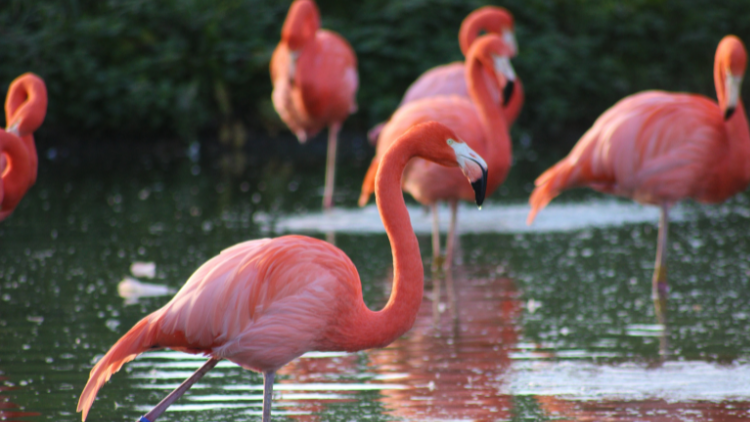
Facts About Flamingos You Never Knew
Surprising and lesser-known facts about flamingos and their unique traits.
→ Read Full Article