Why Gen Z Women Are Refusing Marriage More Than Ever Before
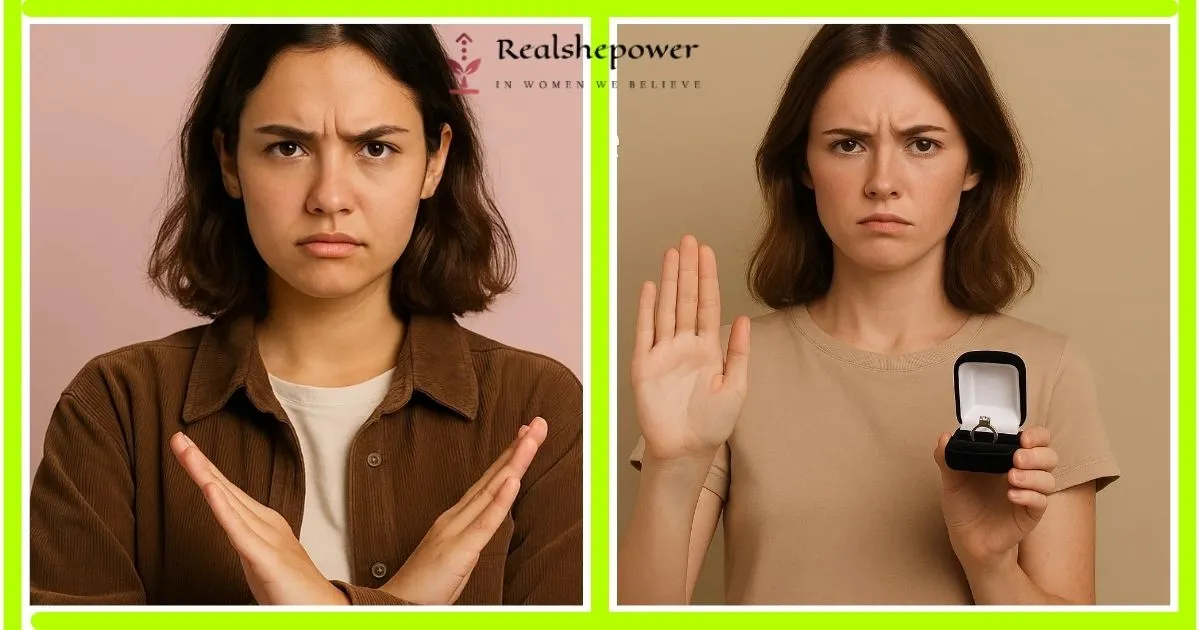
Marriage has long been seen as the ultimate milestone for women. For generations, it was not just a personal choice but an expectation, almost a rite of passage that marked a woman’s worth in society. Fast forward to today and something seismic is happening. A growing number of Gen Z women are walking away from the institution of marriage altogether. They are saying “no” to the ring, the vows, and in some cases, the entire idea of long-term legal partnerships.
This isn’t just a fleeting trend. Data, sociology, and real-life experiences suggest that the future of marriage as we know it may be on shaky ground.
The Numbers Tell a Story
- Marriage rates are declining worldwide. In the United States, the marriage rate has dropped nearly 60% since 1970, according to the National Center for Health Statistics. In India, urban women are marrying later than ever, with the average age climbing past 25 years in metro cities, compared to 18-20 just a generation ago. In countries like Japan and South Korea, marriage rates have plummeted so dramatically that governments are now offering cash incentives to couples who tie the knot.
- Gen Z is more skeptical of marriage than previous generations. A 2023 Pew Research survey found that only 26% of adults under 30 consider marriage a very important goal in life, compared to nearly 60% of Baby Boomers at the same age.
- Women are leading the refusal. Sociologist Stephanie Coontz, an expert on family studies, notes that women are no longer as economically dependent on men, thanks to better education and workforce participation. When financial independence rises, the appeal of marriage as a “necessity” declines.

Why Gen Z Women Are Opting Out
1. Economic Independence Means Freedom
Unlike their mothers and grandmothers, Gen Z women are building their own careers. With remote work, freelancing, and digital entrepreneurship, young women no longer see marriage as a ticket to financial stability.
A 24-year-old Reddit user shared:
“My mom married my dad at 22 because she didn’t have a choice. She couldn’t afford rent on her own. I have a job, I invest, and I travel. Why would I marry someone just to split bills when I can already take care of myself?”
2. Divorce Trauma and Broken Marriages
Gen Z grew up watching their parents’ marriages crumble. In the U.S., about half of all marriages end in divorce. Many women witnessed bitter custody battles, financial struggles, or emotional scars left by toxic partnerships.
This lived experience has created a deep skepticism. As one 22-year-old TikTok creator put it:
“Why would I gamble with my peace when I saw my mom lose herself in a marriage that drained her?”
3. Redefining Happiness Beyond Marriage
Traditionally, a woman’s life was measured by marriage and motherhood. Today, Gen Z women are rewriting the script. Travel, friendships, career milestones, personal growth, and even choosing not to have children are being prioritized over the conventional family structure.
Psychologists note that women are now placing a higher value on self-actualization, the idea that fulfillment comes from personal growth, not external validation.
4. Rejecting Gender Inequality
Even in 2025, marriage remains deeply unequal in many cultures. Studies consistently show that married women do more unpaid labor than men, even when both partners work full-time jobs. A University College London study found that married women do twice the housework as their husbands on average.
Many young women simply do not want to step into a system where the burden of care, chores, and emotional labor often falls disproportionately on them.
5. Marriage Is No Longer the Only Path to Love or Family
With cohabitation, long-term partnerships without marriage, and even solo parenting becoming normalized, the need for legal marriage has diminished. IVF, adoption, and modern family structures have created more choices for women.
A Gen Z woman interviewed in The Guardian explained:
“If I want kids, I’ll have them with or without a husband. I’m not waiting for a man to give me permission to be a mother.”

The First-Person Voices
To truly understand this shift, you have to listen to the women themselves.
- Anjali, 25, India: “I watched my older sister rush into marriage at 23, and now she is stuck with a husband who doesn’t support her career. I decided early on that I’d rather be single than trapped.”
- Maya, 21, U.S.: “I’m in love, but I don’t need a marriage certificate to prove it. We live together, share everything, and respect each other. That’s more real than some legal contract.”
- Sara, 28, UK: “I was engaged but broke it off. The pressure to ‘settle down’ felt suffocating. I realized I wanted to settle into myself first.”
The Sociological Shift
Sociologists argue that Gen Z women refusing marriage isn’t about hating love. It’s about refusing inequality, dependency, and outdated traditions. As more women access higher education, global work opportunities, and reproductive freedom, marriage loses its status as the ultimate achievement.
Interestingly, this mirrors patterns in history. Whenever women gain more social power, traditional institutions like marriage undergo transformation. Gen Z may just be pushing marriage into its next evolution: one based on choice, equality, and freedom rather than obligation.
The Future of Marriage
Will marriage disappear completely? Probably not. But it is becoming less universal and more selective. Those who do marry may do so later in life, with clearer expectations and prenuptial agreements. Others will find love and family in different ways, unconstrained by old norms.
What’s clear is this: Gen Z women are teaching us that happiness isn’t measured by a wedding ring. It is measured by agency, choice, and the freedom to design life on their own terms.
✅ Final Thought: The refusal of marriage by Gen Z women is not a rejection of love but a demand for equality and freedom. And that makes it one of the most radical and inspiring cultural shifts of our time.