
101 Ways to Influence People’s Behavior (Without Manipulation)
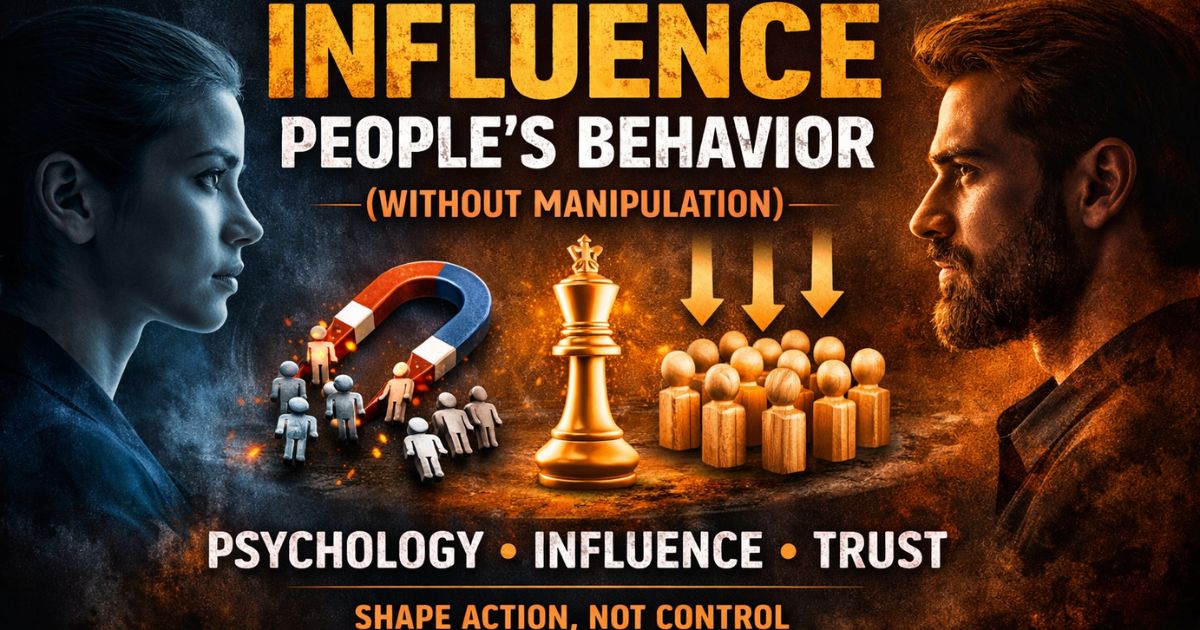
Quick Insight on People’s Behavior
You cannot control people.
But you can:
👉 shape their environment
👉 influence their perception
👉 guide their decisions
And that’s where real power lies.
The Truth Most People Don’t Understand
People don’t behave randomly.
They act based on:
- emotion
- environment
- identity
- perceived reward
If you understand these, you don’t need force.
You create influence.
🧠 PART 1: MASTER HUMAN PSYCHOLOGY (1–20)
1. People act on emotion first, not logic
Most decisions are made emotionally in the moment, and logic is used later to justify them. If you want to influence behavior, speak to how something feels not just why it makes sense.
2. Fear of loss is stronger than desire for gain
People are more motivated to avoid losing something than to gain something new. Highlight what they might lose by not acting, and you’ll see stronger responses.
3. Identity shapes behavior more than intention
People behave in ways that align with how they see themselves. If someone believes “this is who I am,” their actions will follow that identity almost automatically.
4. People resist being controlled
The moment someone feels forced, they subconsciously push back even if the idea is good. Influence works best when it feels like their own decision.
5. Familiarity creates trust
The more something is repeated or seen, the more acceptable it becomes. People trust what feels known, even if it wasn’t logical initially.
6. Behavior is mostly habitual
People don’t think through every action—they repeat what they’ve done before. If you want to change behavior, you need to interrupt patterns, not just give advice.
7. Social proof drives decisions
People look at others to decide what is acceptable or “correct.” Showing examples of others doing something often works better than telling someone what to do.
8. Feeling understood lowers resistance
When people feel seen and heard, they stop defending themselves. Influence becomes easier because they are no longer trying to protect their position.
9. Emotional state affects decisions
A stressed or angry person will make very different choices than a calm one. Timing matters more than content in many situations.
10. People protect their ego
If an idea threatens someone’s self-image, they will reject it—even if it’s correct. Influence requires protecting their dignity while guiding them.
11. People need a sense of control
Even small choices make people feel empowered. Giving options instead of instructions increases cooperation.
12. People avoid discomfort
If something feels difficult or stressful, people delay or avoid it. Making actions feel easier increases the chances of follow-through.
13. People repeat what gets rewarded
Behavior that leads to positive outcomes is repeated naturally. Reinforcement is stronger than instruction.
14. People prefer clarity over complexity
Too much information creates confusion and inaction. The simpler something feels, the more likely people are to act.
15. People justify their decisions afterward
Once someone commits, they create reasons to support their choice. Influence the action, and the mindset often follows.
16. People fear uncertainty
Unknown outcomes create hesitation. When something feels predictable, people are more willing to move forward.
17. People mirror energy
Your tone, body language, and emotional state influence how others respond. Calmness often leads to calm responses.
18. People respond to urgency
Without urgency, action is delayed indefinitely. A clear timeframe increases the likelihood of decision-making.
19. People trust consistency
When someone behaves predictably, they become reliable in others’ eyes. Consistency builds long-term influence.
20. People avoid being wrong publicly
If correction feels like embarrassment, people will resist. Influence works better when it protects their self-respect.
21. People are influenced by authority
Confidence and perceived expertise increase persuasion. People trust those who appear certain and capable.
22. People follow emotional narratives
Stories connect more deeply than facts. A relatable example often changes behavior faster than data.
23. People want to belong
Decisions are often shaped by the desire to fit in. Social acceptance is a powerful driver of behavior.
24. People act faster when benefits are immediate
Long-term rewards feel distant and abstract. Immediate benefits create stronger motivation.
25. People need psychological safety
When people feel safe, they are more open to new ideas. Fear shuts down curiosity and openness.
Start building control over your own habits first →
⚡ PART 2: INFLUENCE THROUGH ENVIRONMENT (21–40)
26. Make the desired action easy
If something requires too much effort, people won’t do it—even if they want to. Reduce effort, and behavior changes naturally.
27. Remove friction
Small obstacles create large resistance. Eliminating even minor barriers increases participation.
28. Use visual triggers
What people see repeatedly influences what they do. Environment silently guides behavior.
29. Create routines
Routines reduce the need for decision-making. When something becomes automatic, consistency improves.
30. Limit choices
Too many options overwhelm people. Fewer choices lead to quicker and clearer decisions.
31. Control access
What is available gets used. If something is easily accessible, it becomes the default choice.
32. Use default settings
People tend to stick with pre-selected options. Designing defaults can guide behavior without force.
33. Reduce distractions
Focus improves decision quality. A cluttered environment leads to scattered behavior.
34. Use reminders strategically
People forget more than they realize. Timely reminders bring attention back to intended actions.
35. Align environment with goals
If surroundings contradict intentions, behavior won’t change. Environment must support desired outcomes.
36. Make progress visible
Tracking progress creates motivation. People stay consistent when they can see improvement.
37. Use deadlines
Open-ended tasks rarely get completed. Deadlines create structure and urgency.
38. Shape digital exposure
What people consume influences how they think and act. Content subtly programs behavior over time.
39. Create accountability
People behave differently when they know they’re being observed. Accountability increases responsibility.
40. Simplify processes
Complex steps discourage action. Clear and simple paths increase follow-through.
41. Build systems, not reliance on motivation
Motivation fluctuates, but systems remain stable. Structure ensures consistency when motivation drops.
42. Remove negative triggers
Certain environments reinforce bad habits. Eliminating triggers prevents unwanted behavior.
43. Reinforce positive actions
Acknowledging effort increases repetition. People continue what gets recognized.
44. Use cues to initiate behavior
Triggers signal when to act. Consistent cues build automatic responses.
45. Start with small actions
Large tasks create resistance. Small steps create momentum.
46. Build consistency loops
Repeated actions create habits. Habits reduce effort over time.
47. Design physical space intentionally
Space affects mindset. A structured environment promotes structured thinking.
48. Choose the right timing
The same message can fail or succeed based on timing. Awareness of context matters.
49. Reduce overwhelm
Too much information creates paralysis. Breaking things down increases clarity.
50. Align actions with identity
People follow through when actions feel like “who they are.” Identity reinforces consistency.
PART 3: COMMUNICATION POWER (41–70)
51. Speak clearly and directly
Ambiguity creates confusion. Clear communication removes hesitation.
52. Use simple language
Complex words create distance. Simplicity builds understanding.
53. Ask thoughtful questions
Questions guide thinking without forcing conclusions. They create internal realization.
54. Listen more than you speak
Understanding someone gives you insight into how they think. Influence begins with listening.
55. Mirror tone and energy
People feel more connected when you match their communication style. This builds trust quickly.
56. Use storytelling
Stories create emotional engagement. They make ideas memorable and relatable.
57. Frame ideas positively
How something is presented shapes how it is received. Positive framing reduces resistance.
58. Avoid judgment
Judgment creates defensiveness. Neutral language keeps people open.
59. Stay calm under pressure
Calmness signals control. Emotional reactions reduce credibility.
60. Use silence effectively
Pauses create emphasis. Silence often communicates more than words.
61. Maintain eye contact
It builds trust and presence. People respond more when they feel your attention is genuine.
62. Validate emotions
People don’t need agreement—they need acknowledgment. Feeling understood opens them up.
63. Stay consistent in messaging
Contradictions reduce trust. Consistency builds credibility.
64. Repeat key ideas
Repetition reinforces belief. What is repeated feels important.
65. Adapt your communication style
Different people process differently. Flexibility increases effectiveness.
66. Control emotional tone
Emotion spreads quickly. Staying composed stabilizes interaction.
67. Speak with confidence
Confidence influences perception. Uncertainty weakens impact.
68. Use fewer words, more clarity
Overexplaining reduces strength. Precision increases impact.
69. Align words with actions
Inconsistency destroys trust. People believe what they see, not what they hear.
70. Focus on solutions
Problem-focused conversations create resistance. Solutions create movement.
71. Be intentional with words
Every word shapes perception. Thoughtful communication creates influence.
72. Respect different perspectives
People respond when they feel respected. Dismissal creates distance.
73. Guide instead of forcing
Suggestions work better than commands. People prefer autonomy.
74. End conversations clearly
Clarity ensures action. Unclear endings lead to inaction.
75. Create emotional connection
Connection builds influence. People follow those they feel aligned with.
PART 4: TRUST & AUTHORITY (76–90)
76. Be reliable
Consistency builds trust over time. People follow those they can depend on.
77. Keep your promises
Broken promises reduce influence instantly. Trust is built slowly but lost quickly.
78. Show competence
People follow capability, not just confidence. Results matter.
79. Stay composed
Emotional control signals strength. Stability attracts trust.
80. Set boundaries
Boundaries create respect. Without them, influence weakens.
81. Don’t seek approval
Authority comes from self-assurance. Seeking approval reduces influence.
82. Be honest
Authenticity builds connection. People sense insincerity quickly.
83. Lead through action
Behavior influences more than words. People follow what they see.
84. Take responsibility
Ownership builds credibility. Blame weakens authority.
85. Be consistent over time
Trust is built through repetition. One-time effort is not enough.
86. Stay grounded
Clarity and calmness build confidence in others. Chaos creates doubt.
87. Build credibility gradually
Influence grows over time. It cannot be rushed.
88. Deliver results
Results reinforce trust. Words without results lose impact.
89. Be patient
Influence is not instant. It develops through consistency.
90. Stay authentic
People trust what feels real. Pretending weakens connection.
PART 5: SELF-MASTERY (91–101)
91. Control your reactions
Your response shapes the situation. Calm responses influence outcomes.
92. Build discipline
Consistency creates authority. People respect those who follow through.
93. Manage your emotions
Emotional control allows clarity. Without it, influence collapses.
94. Stay patient
Rushed decisions create resistance. Patience builds better outcomes.
95. Avoid forcing outcomes
Force creates pushback. Influence requires subtlety.
96. Focus on long-term results
Short-term wins don’t last. Sustainable influence takes time.
97. Increase self-awareness
Understanding yourself improves how you interact with others. Awareness creates control.
98. Build confidence internally
Confidence is not external—it’s internal stability. It shapes how others respond to you.
99. Stay calm under pressure
Pressure reveals character. Calmness increases respect.
100. Keep learning human behavior
People evolve, and so should your understanding. Growth improves influence.
101. Influence yourself first
If you can’t guide your own behavior, you cannot guide others. Self-mastery is the foundation of all influence.
👉 Read next:
How to Stop Overthinking and Take Action Immediately
You need control over yourself.
Start building discipline, clarity, and consistency here:
Start Your 30-Day Reset
FINAL THOUGHT
Control is an illusion.
Influence is a skill.
And the people who understand this:
👉 don’t force behavior
👉 they shape it







)