You Can’t Miss Diving into the Flooded Desert of Lençóis Maranhenses
Welcome to Lençóis Maranhenses
If you were to drop blindfolded onto a specific patch of coastline in northeastern Brazil, right outside the Amazon Basin, and open your eyes, your brain would instantly tell you a lie. You would think you were standing in the middle of a brutal, hyper-arid desert.
Blindingly white sand dunes roll out in every direction as far as the eye can see, sculpted into dramatic peaks by the relentless Atlantic winds.
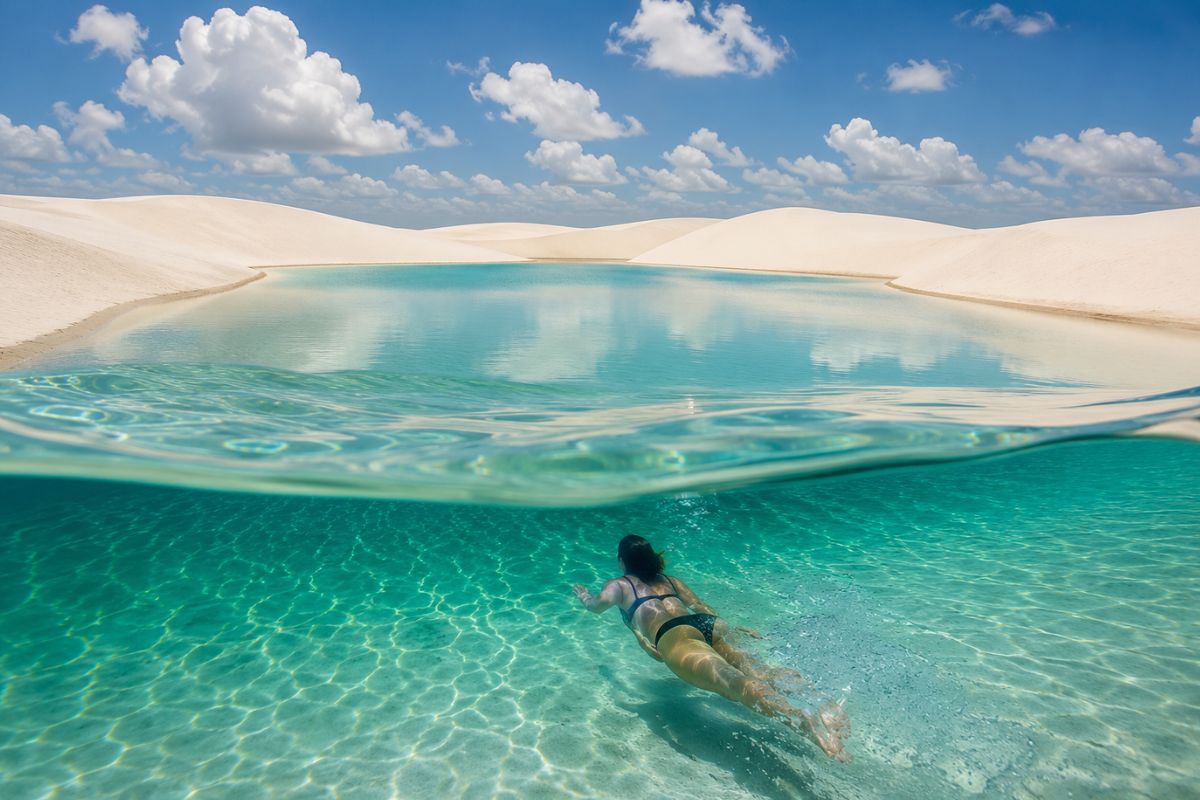
But look down between those massive, 100-foot dunes, and the mirage reveals its true, impossible magic. Sitting in the valleys between the white sand peaks are thousands of crystal-clear, intensely turquoise and emerald-green rainwater pools.
This is Lençóis Maranhenses National Park—a surreal, shape-shifting landscape that defies every rule of geography.
The Phenomenon: Why a Desert Floods
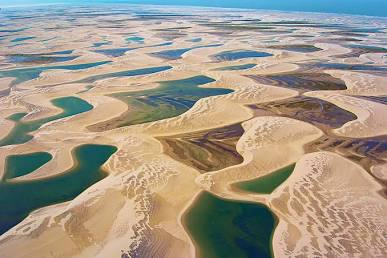
Despite looking exactly like the Sahara, Lençóis Maranhenses is technically not a desert. Because of its proximity to the rainy Amazon Basin, the region gets a massive amount of rainfall during the first half of the year.
The secret lies just beneath the sand. Deep underground sits a massive sheet of impermeable rock that prevents the heavy rainwater from draining into the water table.
As the torrential rains pour down from January to May, the water gets trapped in the valleys between the sweeping dunes. By June, the entire 600-square-mile park transforms into a colossal, natural labyrinth of interconnected freshwater swimming holes.
The Experience: Swimming in a Hidden Oasis
To experience this marvel, you head out from the remote base town of Barreirinhas in an open-air, 4×4 overland truck. The vehicle crashes through deep sand tracks, navigates river crossings, and suddenly drops you at the edge of the monument.
Walking over the crest of the first massive dune is a physical shock. The sand is stark white and remains surprisingly cool to the touch because it reflects the sun’s heat.
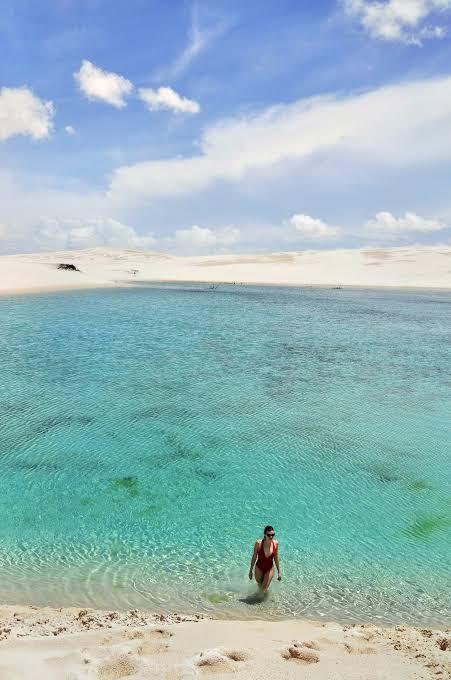
You can hike up to the peak of a dune, feel the heavy tropical wind, and then dive directly down into a warm, perfectly calm freshwater lagoon like Lagoa Azul or Lagoa do Peixe. The water is so clear you can see your own shadow moving across the rippling white sand floor.
Shockingly, many of these temporary pools are full of life. Wolf fish and small silver tracking fish swim through the waters. They survive the dry season by burying themselves deep into the damp mud layers beneath the sand, waiting for the rains to wake them up.
The Expedition Blueprint
Because this landscape is entirely seasonal, timing your trip is everything:
- The Golden Window (June to September): This is the ultimate time to visit. The rains have stopped, the sky is a flawless blue, and the lagoons are at their absolute maximum capacity. By October, the hot equatorial winds blow the sand forward, evaporating the lagoons until they disappear entirely, resetting the canvas for the next year.
- The Route: Fly into the historical city of São Luís, the capital of Maranhão state. From there, take a 4-hour ground transfer to Barreirinhas or the quieter, completely sand-locked village of Atins, which sits right where the dunes crash into the Atlantic Ocean.
- The Insider Secret: For the ultimate bucket-list experience, skip the afternoon trucks and book a multi-day foot trek across the heart of the park with a local guide. You will sleep in hammocks inside remote oasis communities (Queimada dos Britos), hike across the silent dunes under the glow of the Milky Way, and watch the sun rise over a flooded world.