From Orchard to Ocean: A Beautiful Three-Course Spring Feast
There is something deeply satisfying about a meal that tastes like a season rather than simply containing seasonal ingredients. Spring is particularly generous in this regard. Asparagus becomes tender and bright, peas bring sweetness, herbs become intensely fragrant, and fruits begin to return with a freshness that feels almost startling after winter.
A Symphony of Land, Sea, and Orchard is designed around exactly that transition. This three-course tasting menu moves from a crisp orchard-inspired starter to delicate sea bass and finally to a soft, floral dessert built around rhubarb and honey. Each course has its own personality, but together they tell one story: spring at its freshest, greenest and most elegant.
Course One: The Orchard
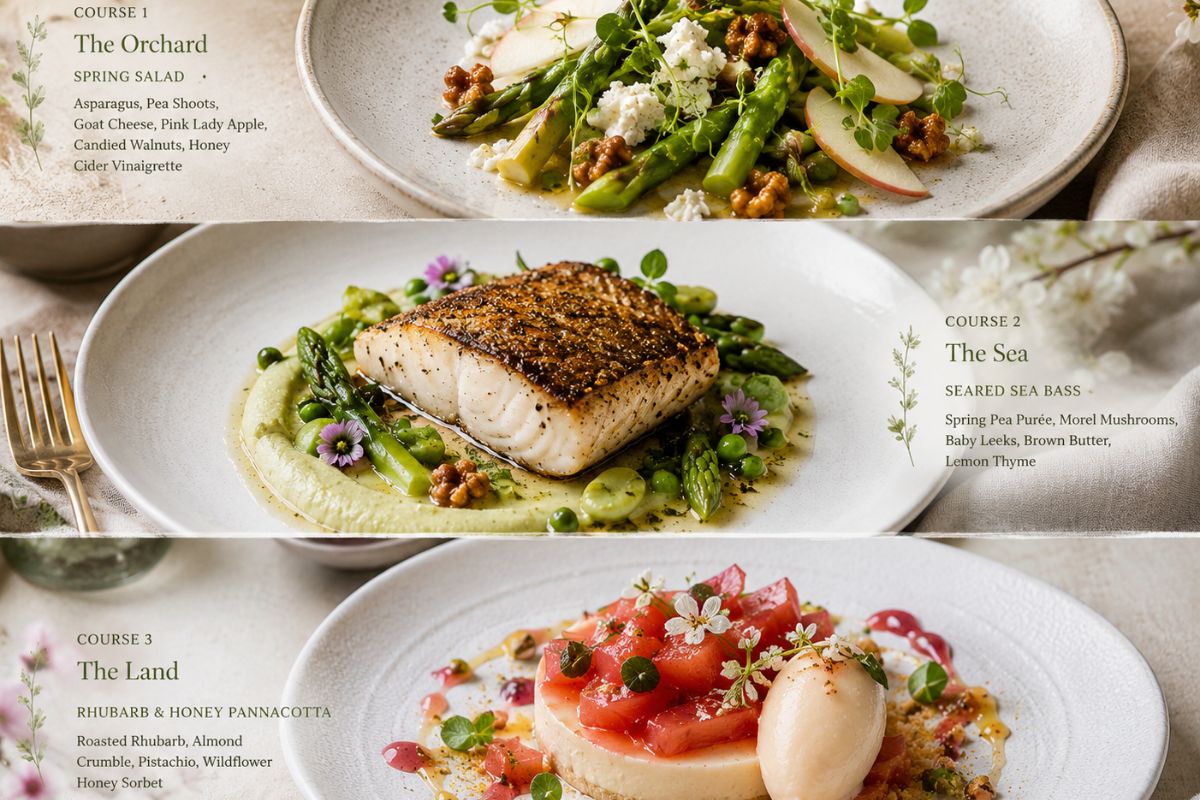
Spring Salad with Asparagus, Pea Shoots, Goat Cheese, Pink Lady Apple and Candied Walnuts
The opening course should wake up the palate, and this salad does exactly that.
Tender asparagus provides the foundation, bringing a grassy, slightly earthy flavor. Instead of overpowering it with a heavy dressing, the dish uses pea shoots and thin slices of Pink Lady apple to introduce freshness and acidity.
The apple is particularly important. Its crisp texture and gentle sweetness create contrast against the asparagus, while the goat cheese contributes a creamy, slightly tangy element.
Then come the candied walnuts.
Their caramelized sweetness and crunch keep the salad from becoming too delicate. Every bite moves between crisp apple, tender asparagus, creamy cheese and toasted nuttiness.
The finishing touch is a honey-cider vinaigrette, which brings together the sweet, tart and savory components without drowning them.
Why It Works
The brilliance of this first course is contrast.
You get:
- Asparagus for earthiness
- Pea shoots for freshness
- Apple for acidity and sweetness
- Goat cheese for richness
- Candied walnuts for crunch
- Honey-cider vinaigrette for balance
It is essentially spring on a plate.
Course Two: The Sea
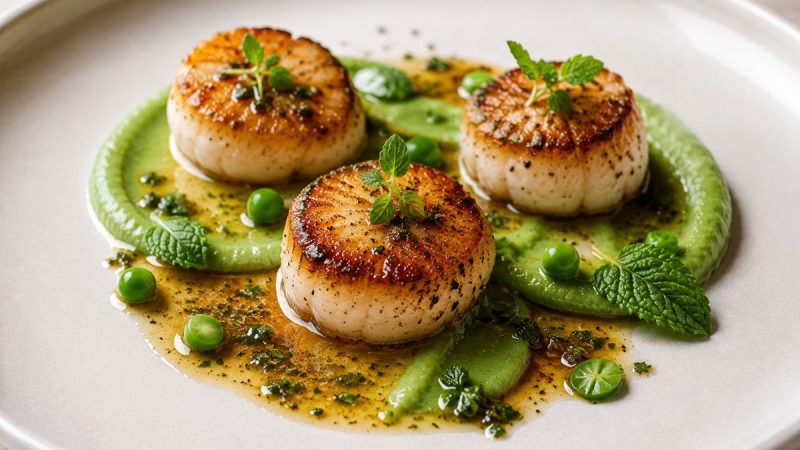
Seared Sea Bass with Spring Pea Purée, Morel Mushrooms, Baby Leeks, Brown Butter and Lemon Thyme
The second course takes the meal somewhere deeper.
A beautifully seared piece of sea bass becomes the centerpiece, with its crisp golden skin contrasting against delicate, flaky flesh.
The fish doesn’t need an aggressive sauce. Instead, the dish builds its complexity around spring peas, morel mushrooms, baby leeks and brown butter.
The pea purée provides a naturally sweet, silky base. Morels bring an earthy, almost woodland character, making the dish feel connected to the landscape rather than simply decorated with vegetables.
Baby leeks add subtle sweetness and softness.
Then comes brown butter.
Nutty, aromatic and intensely comforting, brown butter gives the dish its luxurious edge. A little lemon thyme cuts through that richness, preventing the butter from becoming overwhelming.
The Secret Is Restraint
This is the course where technique matters.
The sea bass should be cooked so that the skin becomes deeply crisp while the interior remains moist and tender. The pea purée needs to be smooth rather than dense. Morels should be cooked enough to release their earthy aroma without losing their texture.
And the brown butter should remain an accent.
The objective isn’t to cover the fish with sauce. It is to create a series of flavors that arrive one after another.
First the crisp skin.
Then the delicate fish.
Then sweetness from the peas.
Then earthiness from the mushrooms.
Finally, the nutty richness of brown butter and the brightness of lemon thyme.
That progression is what makes the dish feel restaurant-worthy.
Course Three: The Land
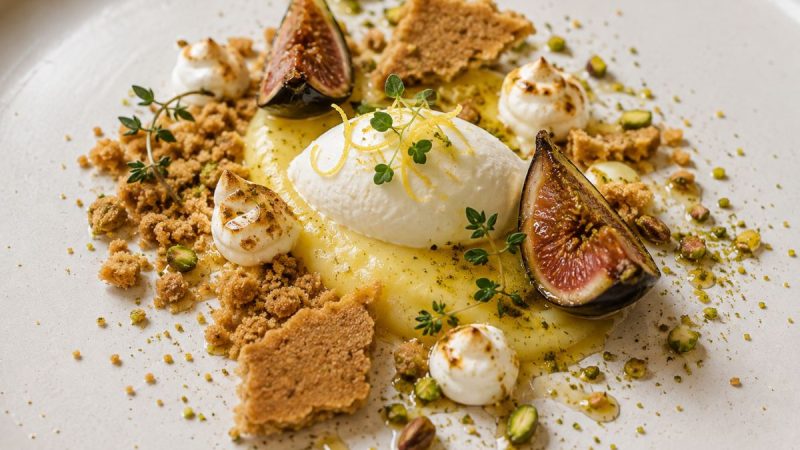
Rhubarb & Honey Panna Cotta with Roasted Rhubarb, Almond Crumble, Pistachio, Wildflowers and Honey Sorbet
Dessert brings the menu back to the garden.
Panna cotta is an ideal ending because it provides a creamy, almost cloud-like foundation without being excessively heavy.
Here, honey replaces a more aggressive sweetness, allowing the natural tartness of rhubarb to remain the star.
Roasted rhubarb adds color and acidity, while almond crumble introduces the texture that the silky panna cotta needs.
Pistachio contributes nuttiness and a subtle savory note.
Then comes honey sorbet, which brings another layer of cold, clean sweetness to the plate.
The finishing touch is almost theatrical: delicate edible flowers and fresh herbs scattered across the dessert.
But they aren’t simply decoration.
Their floral aroma reinforces the central idea of the menu: spring has arrived.
The Philosophy Behind the Menu
What makes this tasting menu work isn’t simply the quality of its ingredients.
It is the way the ingredients communicate with one another.
The first course is fresh and bright.
The second becomes earthy, savory and luxurious.
The third is creamy, tart, floral and refreshing.
There is also a deliberate progression in texture.
Crisp → Creamy → Tender → Silky → Crunchy
The salad begins with raw and lightly cooked textures. The sea bass introduces crisp skin and delicate flesh. Dessert finishes with panna cotta, sorbet and crunchy almond and pistachio elements.
Nothing feels repetitive.
How to Serve It at Home
You don’t need a professional restaurant kitchen to recreate the spirit of this menu.
The key is mise en place.
Prepare the components that can be made ahead of time first.
The panna cotta can be chilled several hours before serving. The rhubarb can be roasted in advance. The candied walnuts can be prepared and stored in an airtight container. The pea purée can be made shortly before serving and gently reheated if necessary.
The sea bass should be cooked last.
And don’t underestimate plating.
Use large, neutral-colored plates and leave plenty of negative space around each component. Instead of piling everything together, arrange the ingredients so that each element can be identified.
Fine dining is often less about adding more and more ingredients and more about knowing when to stop.
The Real SHEE Power Takeaway
A memorable meal doesn’t have to be complicated. It has to be intentional.
This three-course menu works because every dish has a clear identity while still belonging to the same seasonal story. The orchard gives us freshness, the sea brings depth, and the land returns in the form of rhubarb, honey, herbs and flowers.
It is not simply three dishes served one after another.
It is a progression.
Bright beginnings. Deep middle notes. A delicate, floral finish.
And that is exactly what a great spring tasting menu should feel like.