The Art of the Searing Pan: Elevating the Humble Scallop to Culinary Mastery
In the high-stakes world of fine dining, few dishes reveal a chef’s technical precision as instantly as the sea scallop. Silky, rich, and naturally sweet, this prized bivalve requires no intricate foam or elaborate gel to shine. It simply demands reverence for the fundamental laws of heat, fat, and time.
Mastering the perfect caramel crust while preserving a tender, translucent core is an essential rite of passage for every gourmet cook.
The Anatomy of the Perfect Sear
Achieving a deep, golden-brown crust without overcooking the delicate interior comes down to strict molecular physics: theMaillard reaction.
To trigger this transformation before the scallop turns rubbery, three non-negotiable rules apply:
Dryness is Supreme:Moisture is the absolute enemy of a crisp crust. Scallops must be patted completely dry with paper towels and seasoned with fine sea saltimmediatelybefore hitting the pan.
High Smoke-Point Fat:Ditch extra virgin olive oil, which burns too quickly. Opt for clarified butter (ghee) or grapeseed oil, which can withstand intense heat without scorching.
Thermal Retention:Heavy-gauge cast iron or stainless steel holds high heat, ensuring the pan temperature doesn’t drop the moment the cold seafood makes contact.
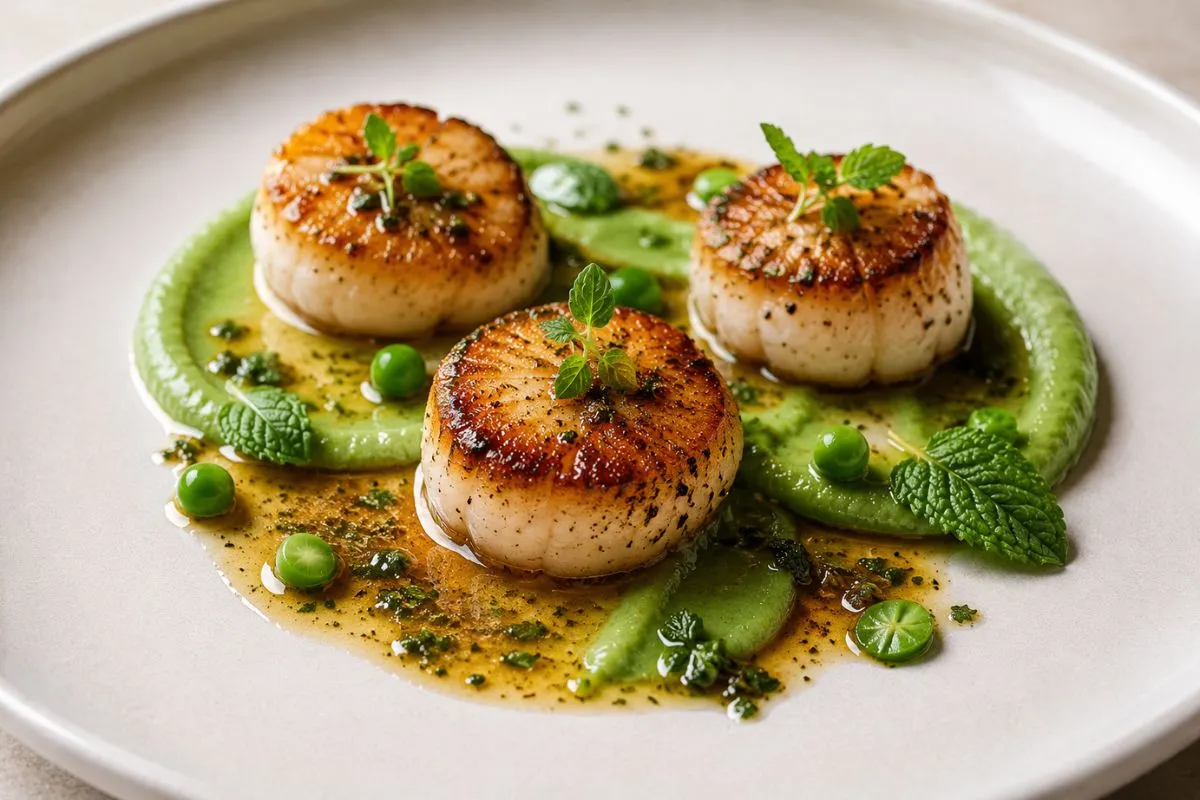
The Recipe: Pan-Seared Scallops with Sweet Pea Puree & Brown Butter Mint Nectar
This classic flavor pairing balances the rich, caramelized notes of the sea with the bright, grassy sweetness of early spring peas.
| Component | Key Ingredients | Role in the Dish |
| The Star | U-10 Dry Sea Scallops | Delicate seafood sweetness and rich texture |
| The Base | Sweet Pea & Mint Puree | Vibrant color, cool fresh contrast |
| The Emulsion | Beurre Noisette (Brown Butter) | Nutty, aromatic richness that ties the plate together |
Execution Protocol
1.Prep the Scallops:Prevents steaming in the pan.
Remove the small side muscle (foot) from each scallop. Lay them on a paper towel-lined plate and let them sit uncovered in the refrigerator for 30 minutes to surface-dry.
2.Blanch & Puree the Peas:Essential for vibrant green color and fresh flavor.
Blanch 2 cups of fresh sweet peas in salted boiling water for 90 seconds. Plunge into an ice bath immediately. Blend with a knob of butter, a splash of cream, fresh mint, and a pinch of white pepper until velvety smooth.
3.Heat the Pan:Use high heat until the oil ripples and just begins to smoke.
Place a heavy stainless steel skillet over high heat for 3 minutes. Add 1 tablespoon of high-heat oil.
4.The 90-Second Sear:Resist the urge to move or shake the pan.
Season the top of the scallops with sea salt. Gently place them into the pan clockwise, starting at 12 o’clock. Sear untouched for 90 seconds until a deep mahogany crust forms.
5.Baste & Finish:Nourishes the crust and cooks the interior gently.
Flip each scallop. Immediately drop 2 tablespoons of unsalted butter and a sprig of thyme into the pan. Tilt the pan and spoon the foaming brown butter over the scallops for 30–45 seconds. Remove to a warm plate instantly.
Sommelier Pairing Notes
To slice through the rich brown butter while honoring the scallop’s sweet, oceanic flavor, pair this dish with amineral-driven, high-acid white wine:
Primary Recommendation:A crispChablis(100% Chardonnay) from Burgundy, France. Its flinty limestone minerality cuts through the butter with precision.
Alternative:A cool-climateSauvignon Blancfrom Sancerre or Marlborough, whose herbal, grassy undertones mirror the minty pea puree.