The Forgotten Recipes of India: 12 Lost Dishes That Deserve a Place on Our Dining Tables Again
There are recipes in India that never made it into restaurant menus, glossy cookbooks or food delivery apps. They survived in handwritten notebooks, in the memories of grandmothers, in village kitchens and in the cooking traditions of families who rarely measured ingredients.
Some were prepared for harvest celebrations. Others were associated with particular seasons, religious occasions or ingredients that grew abundantly in a region. A few were simply everyday meals, made with whatever the household could afford.
Today, many of these dishes are disappearing.
Not because they were ordinary, but because the world around them has changed. Younger generations have moved away from ancestral homes. Traditional grains have been replaced by commercially popular alternatives. Cooking methods that once seemed effortless now require time, knowledge and patience.
India’s culinary heritage is enormous, but its most interesting stories are not always found in famous dishes such as biryani, butter chicken or dosa.
Sometimes, they are hidden in a bowl of fermented rice, a forgotten millet preparation or a recipe that exists only because one grandmother still remembers how to make it.
Here are 12 traditional Indian dishes and food preparations that deserve another look.
Table of Contents
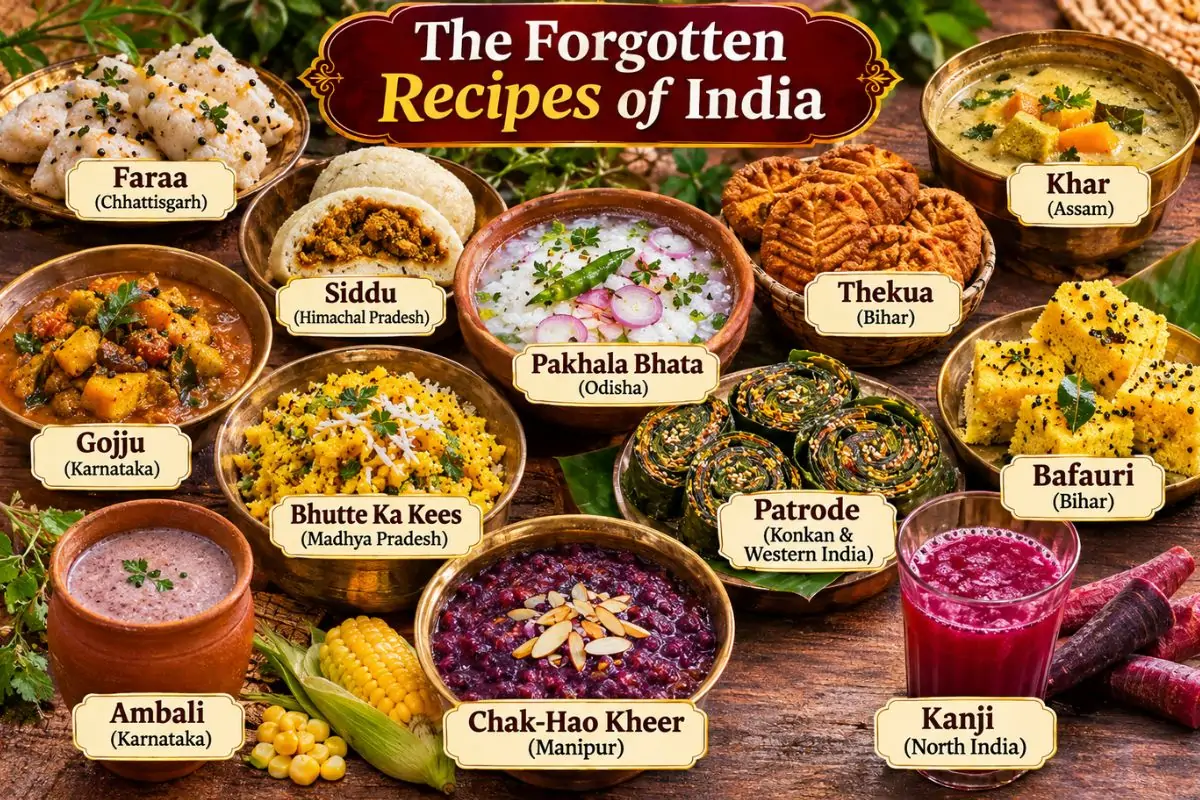
1. Faraa, The Steamed Delicacy of Chhattisgarh
Imagine a dish that resembles a dumpling but is made from rice flour, filled or flavoured with simple spices, and steamed rather than deep-fried.
That is faraa, a traditional preparation associated with Chhattisgarh and parts of central India.
The dough is prepared using rice flour, shaped into small pieces and steamed until cooked. Depending on the household and regional variation, the pieces may be served steamed or lightly sautéed with mustard seeds, curry leaves, green chillies and spices.
It is often enjoyed as a snack or a light meal.
What makes faraa interesting is its simplicity. It transforms a familiar staple, rice, into something entirely different without requiring elaborate ingredients.
In an age of packaged snacks and complicated recipes, faraa is a reminder that traditional food can be both economical and inventive.
2. Siddu, The Comfort Food of Himachal Pradesh
High in Himachal Pradesh, where winters can be unforgiving, traditional food has always been closely connected to climate and local agriculture.
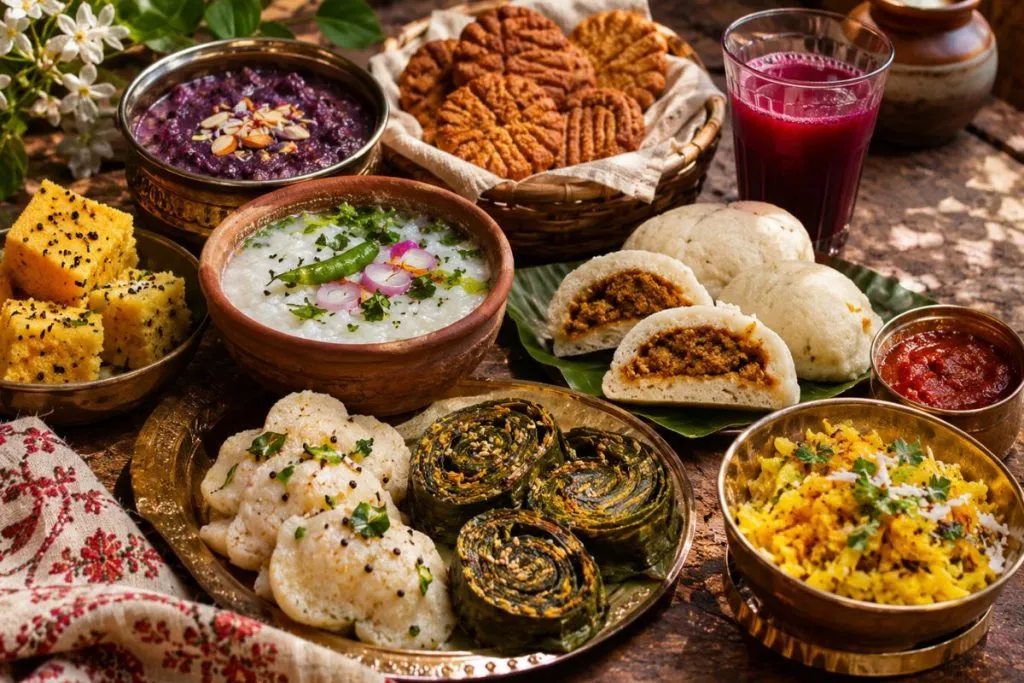
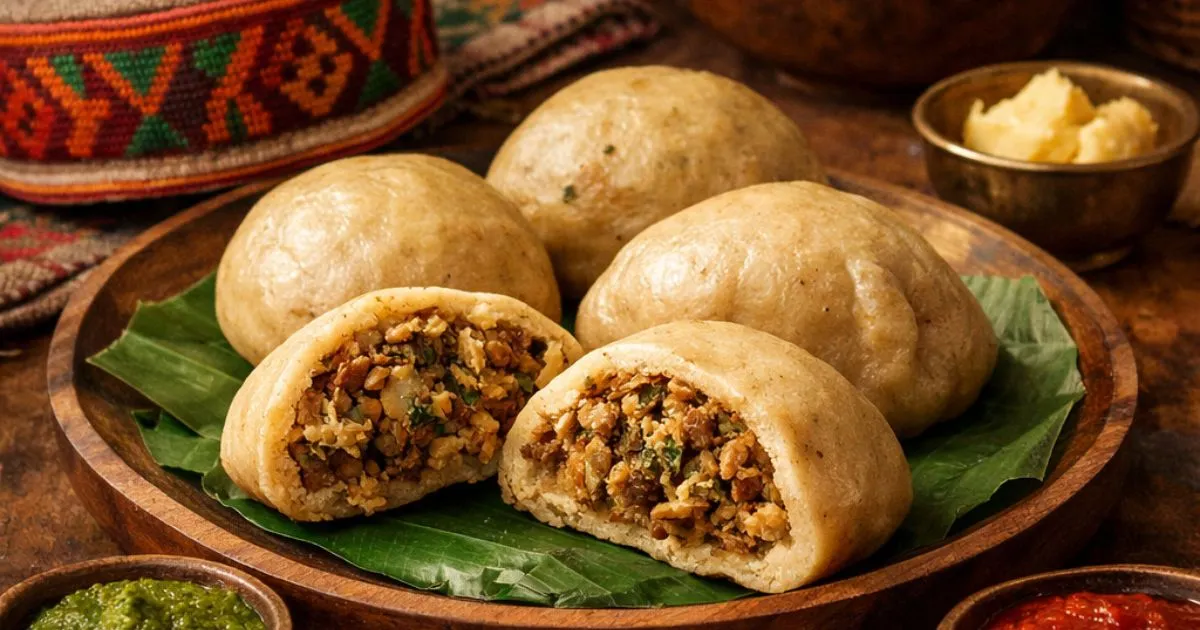
Siddu is a steamed bread made from wheat flour, traditionally prepared using fermented dough. It is often filled with a mixture of ground walnuts, poppy seeds, lentils or other locally available ingredients, depending on the region and family recipe.
It is commonly served with ghee and chutney, or enjoyed alongside local dishes.
The fermentation gives the bread its distinctive texture, while the filling makes it substantial enough to serve as a satisfying meal.
Siddu is particularly associated with Himachali food traditions in areas such as Kullu and Shimla.
It is not a complicated dish, but getting the dough, fermentation and steaming right requires experience.
That is precisely the kind of knowledge that traditional kitchens once passed from one generation to another.
 Food & Heritage
Siddu: The Ancient Fermented Bread of the Himalayas
Discover Himachal Pradesh’s traditional steamed bread, made with slowly fermented wheat dough and delicious fillings of poppy seeds, walnuts or lentils. Explore the regional flavours, traditional preparation and cultural story behind this Himalayan comfort food.
Read Full Article3. Pakhala Bhata, Odisha’s Cooling Summer Meal
In Odisha, summer has its own culinary answer.
Pakhala bhata is a traditional preparation of cooked rice soaked in water, often lightly fermented, and served with accompaniments such as fried vegetables, green chillies, badi chura, leafy preparations and fish.
The preparation varies between households. Some versions are freshly soaked, while others are fermented for a longer period.
It is refreshing, economical and deeply connected to the region’s food culture.
Pakhala is particularly celebrated during Pakhala Dibasa, observed in Odisha on March 20.
This is a dish that deserves more recognition outside eastern India. It demonstrates how traditional food cultures developed meals suited to local climates long before modern conversations about seasonal eating became fashionable.
4. Thekua, Bihar’s Traditional Sweet That Travels Through Generations
Thekua is not exactly disappearing, but its traditional home-style preparation deserves more attention.
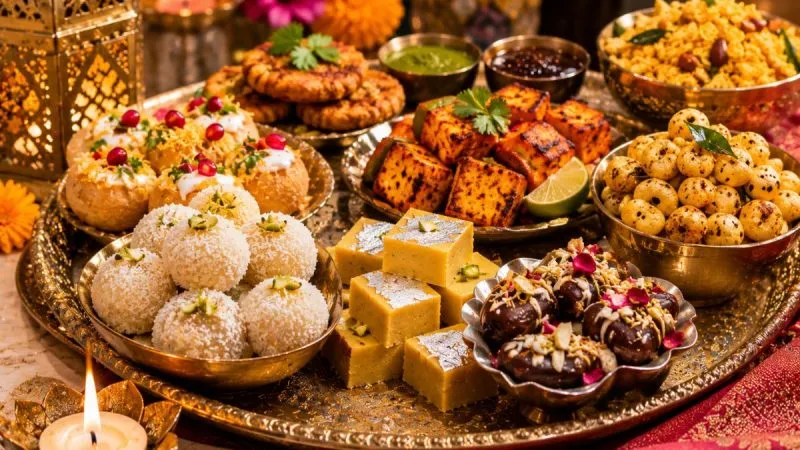
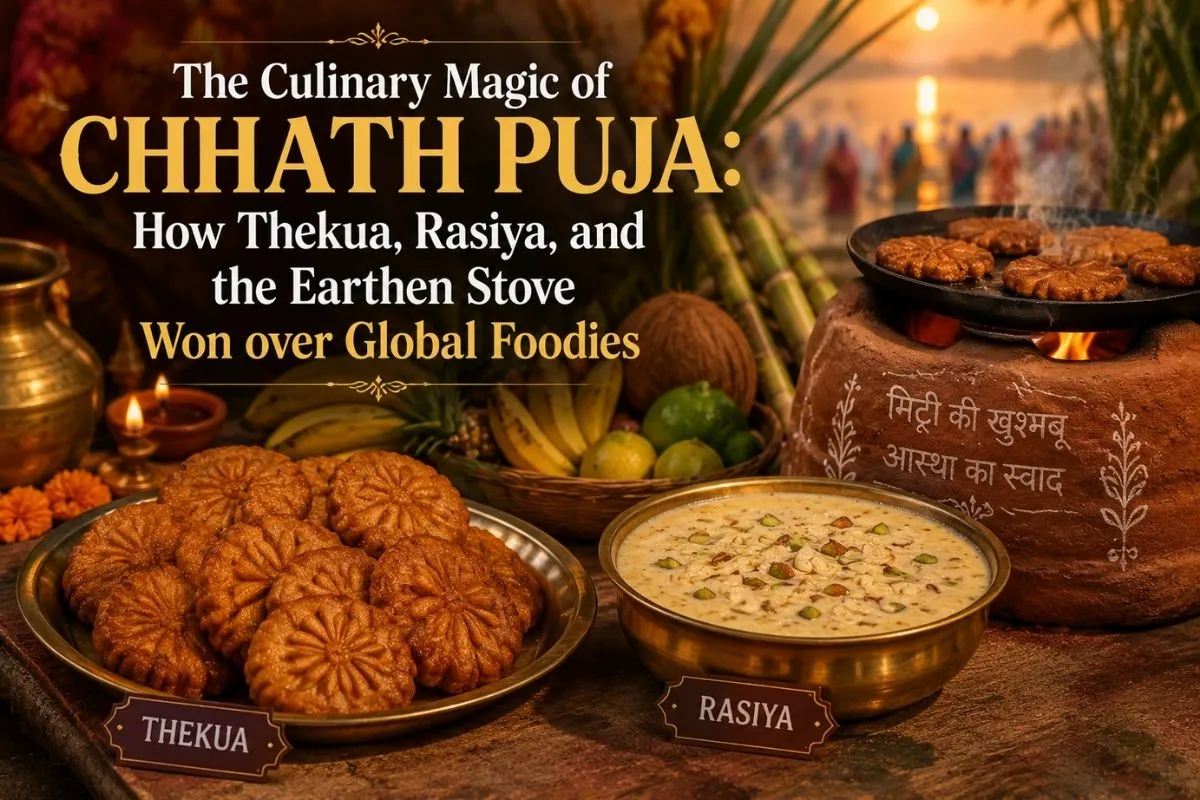
Made with wheat flour, jaggery or sugar, ghee and sometimes coconut or cardamom, the dough is shaped and deep-fried until crisp.
It is strongly associated with Chhath Puja, particularly in Bihar, Jharkhand and parts of eastern Uttar Pradesh.
Thekua is more than a sweet snack. Its preparation is connected to ritual, family participation and the sharing of food during one of the region’s most important festivals.
Different families have their own proportions, shapes and techniques. Some prefer a harder, crunchier texture, while others make it slightly softer.
The recipe is simple enough to survive, but the knowledge of how to achieve the perfect texture is often passed down informally.
 Food & Culture
How Thekua, Rasiya and the Earthen Stove Won Our Hearts
Explore the beautiful food traditions of Chhath Puja, from the golden crunch of homemade thekua and the sweetness of rasiya to the significance of cooking on an earthen stove. A heartfelt celebration of faith, family and Bihar’s culinary heritage.
Read Full Article5. Khar, Assam’s Unusual Alkaline Delicacy
Assamese cuisine has several preparations that are unfamiliar to people outside the Northeast.
One of its most distinctive is khar, a traditional alkaline preparation made using an ingredient derived from the filtered water of sun-dried banana or other plant ash.
The liquid, also called khar, is used in different dishes, often with raw papaya, pulses, vegetables or fish.
The resulting food has a distinctive flavour and is an important part of Assamese culinary identity.
Khar is particularly interesting because it demonstrates the scientific knowledge embedded in traditional food practices. The use of alkaline ingredients changes the cooking process and contributes to the dish’s characteristic taste.
This is not a recipe that can be casually replicated without understanding its traditional preparation. The ingredient and method matter.
6. Gojju and Seasonal Vegetable Preparations of Karnataka
Karnataka has a remarkable range of regional gojju preparations.
Gojju is a thick, tangy, sweet-sour or spicy accompaniment made with ingredients such as tamarind, jaggery, spices and vegetables.
Different communities prepare it differently. Pineapple, bitter gourd, brinjal and seasonal vegetables can all feature in regional versions.
It is often served with rice, making a small quantity capable of transforming an otherwise simple meal.
The beauty of traditional gojju lies in its balance of flavours. Tamarind brings sourness, jaggery adds sweetness, and spices provide depth.
It is an excellent example of how Indian home cooking uses contrast rather than relying on one dominant flavour.
7. Bhutte Ka Kees, Madhya Pradesh’s Monsoon Favourite
Indore is famous for its street food, but one preparation deserves particular attention: bhutte ka kees.
Fresh corn is grated and cooked slowly with milk, spices and a tempering of mustard seeds, cumin and green chillies. Some versions include coconut, coriander and lemon.
The result is a creamy, mildly sweet and savoury preparation that tastes very different from roasted corn or ordinary corn curry.
It is associated with Madhya Pradesh, particularly Indore, and is a wonderful example of a regional dish built around a locally available ingredient.
Although it remains popular in some places, it is still relatively unfamiliar across much of India.
8. Patrode, The Leaf-Wrapped Treasure of the Konkan and Western India
Patrode, also known by regional names such as patra or pathrode, is prepared using colocasia leaves.
The leaves are layered with a spiced paste made from ingredients such as rice, lentils, coconut, tamarind and spices. They are rolled, steamed and then sliced.
Some versions are eaten steamed, while others are shallow-fried or cooked further with seasoning.
The technique requires care because colocasia leaves contain naturally occurring calcium oxalate crystals that can cause irritation if the leaves are not properly processed and cooked.
This is one reason traditional preparation methods matter. It is not simply a matter of mixing ingredients and putting them in a steamer.
Patrode demonstrates the remarkable creativity of regional Indian cooking, particularly in communities that learned to make the most of seasonal leaves and locally available grains.
9. Bafauri, Bihar’s Protein-Rich Steamed Snack
Bafauri is a traditional preparation associated with Bihar and parts of eastern India.
It is made using ground chana dal or gram flour, mixed with spices, herbs and sometimes vegetables, shaped into small portions and steamed.
Unlike many popular Indian snacks, it does not depend on deep-frying.
The result is a savoury, filling preparation that can be served with chutney or added to a meal.
Bafauri is especially interesting in today’s food landscape because it uses familiar, affordable ingredients to create a protein-rich dish.
It is the kind of recipe that could easily find a place in contemporary kitchens without losing its traditional character.
10. Ambali, Karnataka’s Traditional Fermented Ragi Drink
Before probiotic drinks became a marketing category, several Indian communities had their own fermented food and drink traditions.
Ambali is a traditional preparation made using ragi, also known as finger millet.
Ragi flour is cooked with water into a thin porridge-like preparation, then cooled and fermented in some traditional versions. It may be consumed as a drink or a light meal, sometimes with buttermilk, salt or other accompaniments.
It has been valued in parts of Karnataka as an inexpensive, filling food.
The use of ragi is particularly significant. Finger millet is well suited to several dryland agricultural regions and has a long history in Indian food systems.
Ambali is a reminder that fermented foods were not invented by modern wellness culture.
11. Chak-Hao Kheer, Manipur’s Beautiful Black Rice Dessert
Some forgotten recipes are visually spectacular.
Chak-hao kheer is a traditional dessert made using black rice, especially associated with Manipur.
The rice has a naturally deep purple-black colour and develops a beautiful appearance when cooked. It is prepared with milk, sugar or other sweeteners and sometimes flavoured with cardamom and nuts.
Chak-hao is valued in Manipuri food culture and is also associated with special occasions.
The dessert is particularly interesting because its main ingredient represents a distinct regional agricultural tradition.
Black rice has gained attention in modern food markets, but its culinary and cultural significance in Manipur goes much deeper than its fashionable reputation as a so-called superfood.
12. The Forgotten Art of Making Kanji in Indian Kitchens
Kanji is a traditional fermented preparation found in different parts of India, with considerable regional variation.
One familiar North Indian version is made using black carrots, water, mustard seeds and salt. It is left to ferment until it develops a distinctive sour, pungent flavour.
In some regions, other vegetables and ingredients are used.
Kanji is traditionally associated with winter in North India, particularly where black carrots are available seasonally.
The preparation is relatively simple, but fermentation requires cleanliness, suitable ingredients and attention to storage conditions.
It is a fascinating example of how Indian kitchens developed ways of preserving seasonal produce while creating entirely new flavours.
Why Are India’s Traditional Recipes Disappearing?
The decline of traditional recipes is not simply a matter of changing tastes.
Several factors are contributing to the loss of regional food knowledge.
Changing family structures:As families become smaller and generations move away from ancestral homes, everyday opportunities to learn traditional cooking techniques become less frequent.
Urban lifestyles:Recipes that require fermentation, grinding, steaming or lengthy preparation can be difficult to accommodate in busy households.
Changing agriculture:When traditional grains, vegetables and local ingredients become less available, the recipes built around them become harder to prepare.
Restaurant culture:Popular Indian restaurants often focus on a relatively small selection of dishes. Many regional home-style preparations rarely appear on commercial menus.
The loss of oral knowledge:Some recipes were never written down. Measurements were communicated through phrases such as a handful, a little more, or until the dough feels right. When the person who knows the technique is gone, the recipe can disappear with them.
How We Can Bring These Recipes Back
Preserving traditional food does not mean rejecting modern cooking or expecting every household to return to the kitchen practices of a century ago.
It means recognising that culinary knowledge is worth protecting.
We can begin by asking older family members to demonstrate recipes rather than simply describing them. Record the ingredients, cooking times, regional names and preparation methods.
Buy local grains and seasonal ingredients when possible. Support regional food producers and restaurants that preserve traditional cooking.
Most importantly, give these dishes a place in everyday life.
A bowl of pakhala, a plate of siddu or a serving of bhutte ka kees does not need to be presented as an exotic discovery. These are living food traditions, not museum exhibits.
The Real SHEE Power Takeaway
India’s food history is not written only in royal kitchens, ancient texts or famous restaurant menus.
It is also written in the kitchens of ordinary women who knew how to turn a handful of grain, a seasonal vegetable and a few spices into something unforgettable.
Many of these women never called themselves chefs. They did not publish cookbooks or appear on television. They simply cooked, remembered and taught.
And somewhere between one generation and the next, some of those recipes began to disappear.
Perhaps it is time to ask our mothers and grandmothers a different question.
Not just, “What are we cooking today?”
But, “What did your mother used to make that nobody cooks anymore?”
The answer might reveal a forgotten piece of India.
Frequently Asked Questions
What are some forgotten traditional Indian foods?
Some lesser-known or regionally rooted traditional preparations include faraa from Chhattisgarh, siddu from Himachal Pradesh, pakhala bhata from Odisha, khar from Assam, bafauri from Bihar and ambali from Karnataka.
Which Indian state is famous for fermented rice?
Odisha is particularly well known for pakhala bhata, a traditional preparation of rice soaked in water and sometimes fermented.
What are traditional Indian foods made with millets?
Traditional millet preparations include ragi ambali from Karnataka and several regional porridges, breads and fermented preparations made with finger millet, pearl millet and other indigenous grains.
Why are traditional Indian recipes disappearing?
Changing lifestyles, migration, declining use of traditional crops, limited availability of local ingredients and the loss of oral cooking knowledge all contribute.
How can traditional Indian recipes be preserved?
Families can document recipes, record cooking demonstrations, support local farmers, preserve regional ingredients and teach younger generations how to prepare traditional dishes.