The Culinary Magic of Chhath Puja: How Thekua, Rasiya, and the Earthen Stove Won over Global Foodies
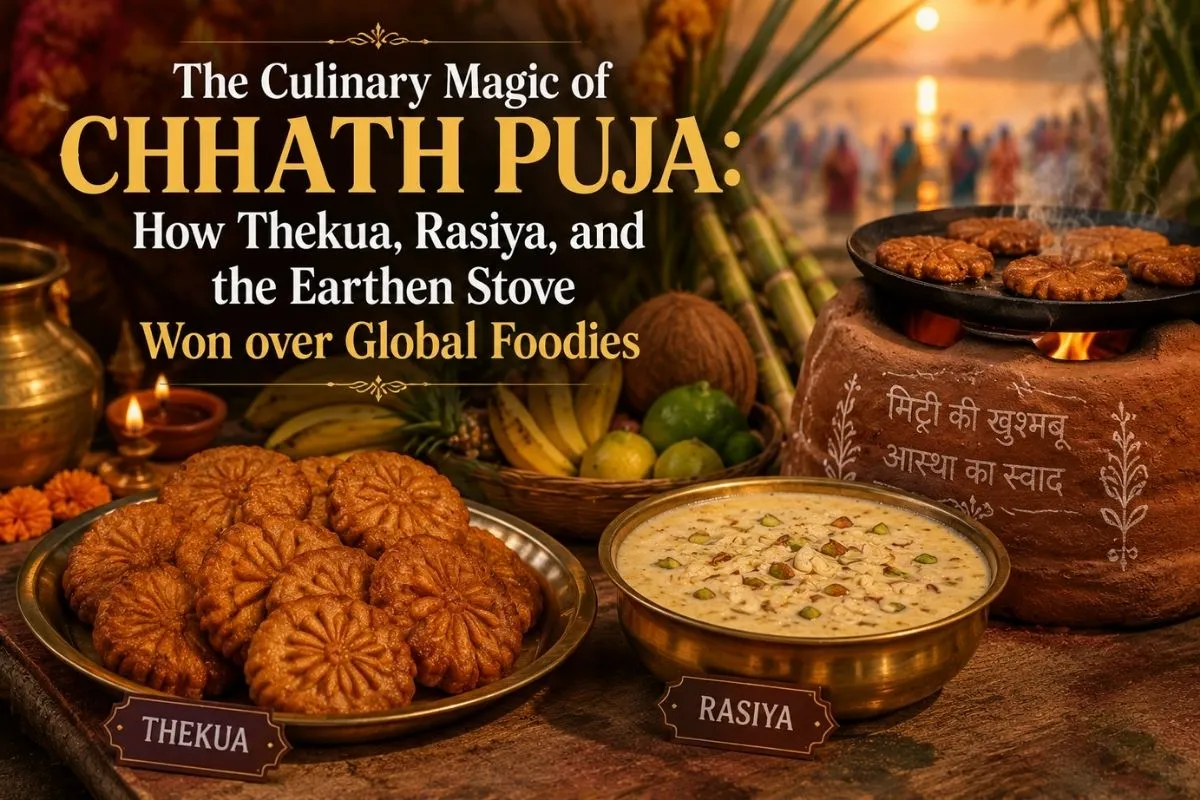
If Chhath Puja is the ultimate festival of discipline, its food is the ultimate labor of love.
While the festival is famous for its intense 36-hour waterless fast, anyone who has ever lived near a household celebrating Chhath knows the real secret: thePrasad(sacred food offering) produced during these four days is otherworldly. Made without modern appliances, artificial preservatives, or commercial gadgets, the culinary traditions of Chhath Puja prove that the simplest ingredients—when paired with patience and reverence—create magic.
From the smoky sweetness ofThekuato the velvety comfort ofRasiya, let’s explore the delicious, fascinating, and deeply disciplined food culture behind one of the world’s most ancient festivals.
1. Thekua: The Ancient Energy Bar That Put Regional Sweets on the Map

Before artisanal energy bars and gourmet whole-wheat cookies hit supermarket shelves, there wasThekua(also known asKhajuriaorThokwa).
Made from coarse whole-wheat flour, melted dark jaggery (or unrefined sugar), aromatic fennel seeds, crushed cardamom, and generous dollops of pure cow ghee, Thekua is the undisputed star of Chhath Puja.
Why is Thekua so special?
- Hand-Carved Craftsmanship:The dough is pressed onto beautifully carved wooden molds (Sancha) featuring leaf, floral, or geometric patterns, giving each piece a distinct rustic identity.
- Slow-Cooked Magic:It is deep-fried on low heat over an earthen stove (Chulha) fueled strictly by dried mango wood. This slow-frying process gives it an iconic crunch on the outside while keeping the inside dense and aromatic.
- The Ultimate Travel Snack:Because it contains zero water and uses natural preservatives like ghee and jaggery, traditional Thekua can stay fresh for weeks without refrigeration. Historically, travelers and pilgrims carried it across long distances as a high-calorie energy bite!
2. Rasiya and Puri: The Sacred Meal of Kharna
On the second night of the festival—known asKharna—the house goes completely silent. The devotee (Vratin) cooks a special evening meal that marks the absolute last food and water they will consume for the next 36 hours.
The main dish of this night isRasiya, a rich, creamy kheer made with:
- Unpolished new-harvest rice
- Full-cream milk
- Organic dark jaggery (Gur)
Because jaggery can curdle hot milk if added incorrectly, preparing Rasiya requires master-level timing and temperature control. It is served hot alongside crisp, ghee-fried whole-wheatPuris.
Once the devotee offers this meal to the deities and takes their first bite, the household remains quiet so as not to distract them. The moment they finish, the epic 36-hour fast begins!
3. Kaddu-Bhat: The Surprising Detox Meal That Kicks It All Off
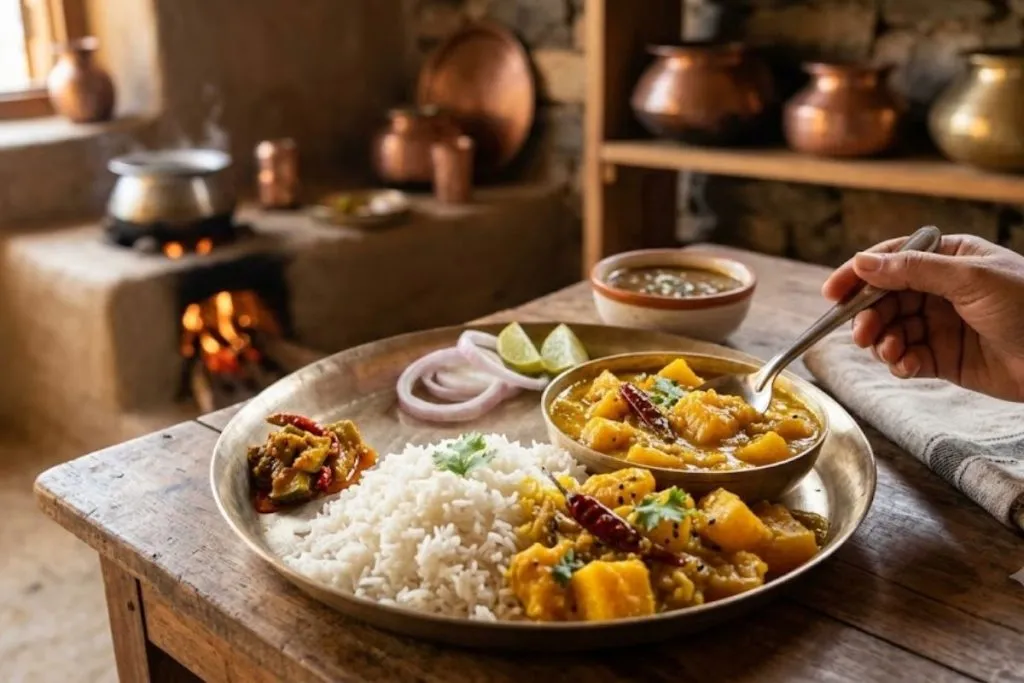
You wouldn’t expect a major festive feast to start with bottle gourd (calabash), but on Day 1 (Nahay Khay), the humbleKaddu-Bhattakes center stage.
The meal consists of:
- Lauki / Kaddu:Fresh bottle gourd cooked with rock salt (Saindhav Namak), cumin, and green chilies in pure ghee.
- Arwa Chawal:Clean, unpolished white rice cooked in brass vessels.
- Chana Dal:Bengal gram lentils simmered to perfection.
The Science Behind the Menu
This meal isn’t chosen at random. Bottle gourd has extremely high water content and is light on the stomach, while chana dal and unpolished rice provide complex carbohydrates and protein. Eating this clean, high-hydration meal on Day 1 prepares the devotee’s digestive system for the intense dry fast that follows on Days 3 and 4!
4. The Zero-Waste Fruit Basket: Nature’s Seasonal Bounty
Walk up to the riverbank during sunset, and you’ll see thousands of handcrafted bamboo baskets (Soop) overflowing with colorful, unrefined fruits.
Unlike other festivals that feature store-bought commercial sweets, Chhath Puja offerings are entirely seasonal, raw, and organic:
- Sutroni & Bada Nimbu (Pomelo):Massive, citrusy local fruits packed with Vitamin C to fight off the autumn chill.
- Raw Sugarcane (Ganna):Whole stalks complete with leaves, symbolizing agricultural prosperity and sweet beginnings.
- Singhara (Water Chestnuts):Crunchy, seasonal aquatic fruits harvested right before winter.
- Kachcha Haldi & Adrak:Whole raw turmeric and ginger plants with roots attached, honoring the medicinal powers of nature.
5. Why You Can Never “Replicate” the Taste at Home
Ask anyone who has tried making Thekua on a standard gas stove in a modern kitchen, and they will tell you the same thing:it just doesn’t taste the same.
Why? Because the flavor of Chhath food isn’t just in the recipe—it’s in theprocess:
- The Woodsmoke Effect:Cooking over dried mango wood imparts a subtle, natural smokiness that electric or gas stoves cannot replicate.
- Absolute Purity:The grains are washed, sun-dried under watchful eyes (to prevent birds from touching them), and ground in freshly cleaned mills used exclusively for the festival.
- Collective Devotion:The mood during preparation—filled with traditional folk songs sung by family members sitting together on the floor—adds an intangible warmth to every single batch.
The Flavor of Togetherness
At the end of the day, the food of Chhath Puja is about far more than satisfying hunger. It is about sharing.
When the fast breaks on the fourth morning, thePrasadis distributed to everyone—neighbors, strangers, rich, and poor alike. Holding a warm piece of crunchy Thekua on a chilly autumn morning along the riverbank isn’t just enjoying a sweet treat; it’s tasting centuries of unbroken tradition, community, and gratitude.
To learn more about the ancient history, 36-hour fasts, and spiritual meaning behind these rituals, check out our complete guide on [The Sun, the River, and the Unbroken Vow: The Fascinating Wonders of Chhath Puja].”