Khinkali: Georgia’s Juicy Soup Dumplings You Have to Eat With Your Hands
Some foods are delicious. Others come with a set of rules, a little drama, and the very real possibility of burning your tongue. Khinkali, Georgia’s famous soup dumplings, belong firmly in the second category.
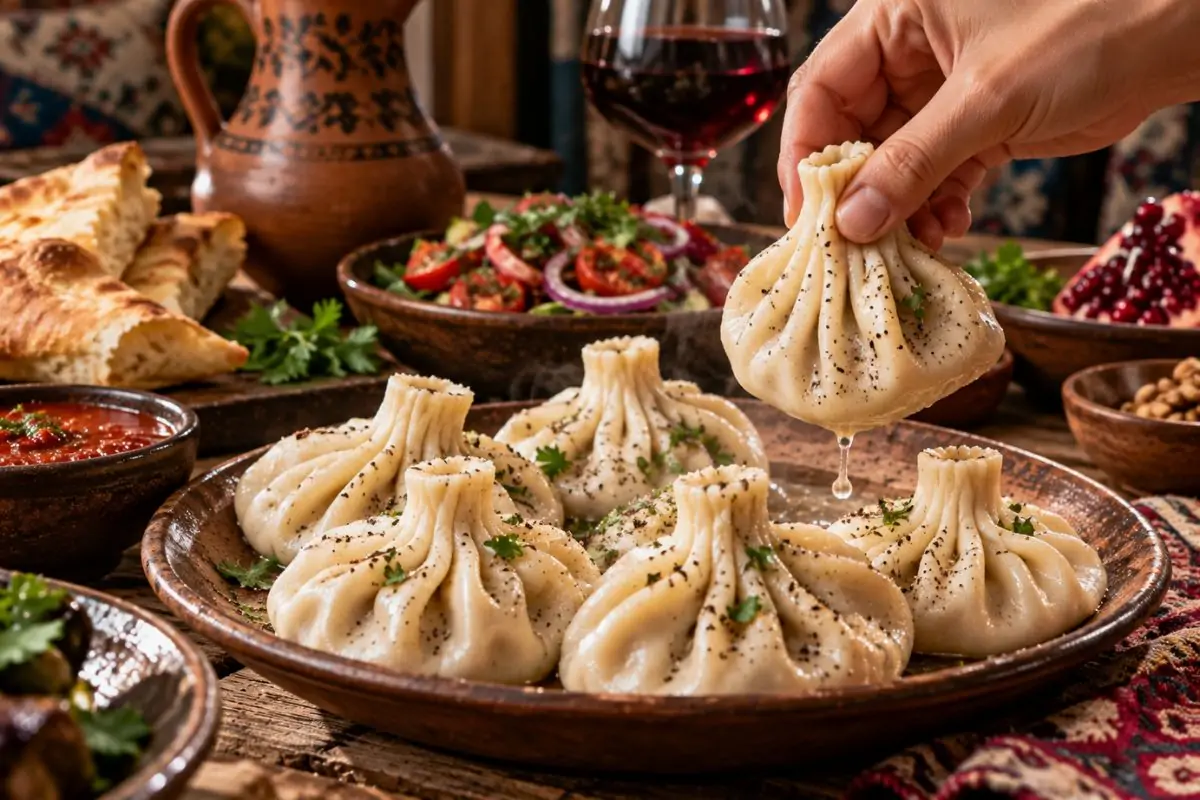
At first glance, they look like oversized dumplings gathered into beautiful folds at the top. But bite into one too quickly and you will discover their secret: a pocket of steaming, savoury broth hidden inside the dough.
Khinkali are among Georgia’s most beloved traditional foods, closely associated with the country’s mountainous regions and its culture of generous, communal meals. They are a natural companion to a Georgian supra, where tables fill with food and conversations stretch long into the evening.

What Makes Khinkali So Special?
The magic lies in the contrast between the soft, slightly chewy dough and the juicy filling. Traditional versions often contain minced meat, onion, pepper and spices. As the dumplings cook, the filling releases its juices, creating the broth that makes khinkali so distinctive.
Modern variations can include cheese, mushrooms or potatoes, making them appealing to people who do not eat meat. Recipes differ between regions and households, and there is no single version that represents every Georgian kitchen.
Their distinctive pleated tops are part of their identity. Making them properly takes practice because the dough must seal tightly enough to keep the broth inside while cooking.
The Golden Rule: Never Rush the First Bite
Eating khinkali is an experience in itself.
Pick up a dumpling by its twisted top, let it cool briefly, then take a small bite from the side. Sip the hot broth before eating the rest. A knife and fork can release the precious liquid onto your plate, which is why many Georgians traditionally eat khinkali with their hands.
The thick knot at the top is often left uneaten. In some settings, people count the leftover tops to see how many dumplings everyone has managed to finish.
And please, do not bite into a piping-hot khinkali immediately. The broth can be much hotter than the dough feels.
An Easy Homemade Khinkali Recipe
Traditional khinkali require patience, but you can make a home-style version with simple ingredients. This recipe makes approximately 12 to 15 dumplings, depending on their size.
Ingredients
For the dough
- 2 cups all-purpose flour, plus extra for dusting
- About ¾ cup water, added gradually
- ½ teaspoon salt
For the filling
- 250 g minced beef
- 1 small onion, finely chopped
- 2 to 3 tablespoons fresh coriander or parsley, chopped
- ½ teaspoon ground cumin
- Black pepper and salt, to taste
- ¼ to ½ cup cold water or unsalted stock, added gradually
Method
1. Make the dough.Mix the flour and salt in a bowl. Gradually add water and knead until you have a firm, smooth dough. Cover and rest for around 30 minutes.
2. Prepare the filling.Combine the minced beef, onion, herbs, cumin, pepper and salt. Gradually mix in enough cold water or stock to make the filling moist and juicy, without turning it into a watery mixture.
3. Shape the dumplings.Roll the dough thinly and cut out circles. Place a spoonful of filling in the centre of each circle. Gather the edges into pleats and pinch the top tightly closed. Make sure there are no gaps.
4. Cook carefully.Bring a large pot of salted water to a gentle boil. Lower the dumplings into the water in batches and stir carefully to prevent sticking. Cook until the dough is cooked through and the meat filling reaches a safe internal temperature of 71°C (160°F).
5. Serve hot.Lift the dumplings out carefully, sprinkle with freshly ground black pepper and serve immediately. Let them cool slightly before taking your first bite.
Cooking note:Khinkali are traditionally boiled, and the dough needs to be sealed securely to retain the broth. Cooking times vary with size and thickness, so check that the filling is fully cooked before serving.
What Should You Eat With Khinkali?
Khinkali are filling enough to be a meal on their own, but they are also served as part of a larger Georgian spread.
Try them alongside fresh tomato and cucumber salad, herbs, Georgian bread or a plate of pkhali, a vegetable dish often prepared with walnuts and seasonings. If you are recreating a supra at home, serve several dishes in the middle of the table so everyone can share.
For a first taste, keep the accompaniments simple. The real pleasure is in the dumpling itself: the peppery filling, the soft dough and that burst of hot broth.
Why Khinkali Are More Than Just Dumplings
Food often tells the story of a place better than a guidebook can. Khinkali carry the flavours of Georgia’s mountain cooking traditions into restaurants, family kitchens and celebratory gatherings across the country.
They also reward participation. Someone folds the dumplings, someone watches the pot, and everyone gathers around to eat them while they are still hot. Imperfect pleats and slightly messy first bites are part of learning the dish.
The next time you encounter a plate of khinkali, resist the urge to treat them like ordinary dumplings. Pick one up, let it cool, sip the broth and enjoy the small ritual.
Sometimes, the best way to understand a country is to begin with one bite.
Frequently Asked Questions
What is khinkali?
Khinkali are traditional Georgian dumplings filled with seasoned meat or other fillings. Classic meat versions contain savoury broth inside the dough.
How do you eat khinkali?
Hold one by its twisted top, allow it to cool, bite a small opening in the side and sip the broth before eating the rest.
Are khinkali spicy?
They are usually savoury and peppery rather than intensely hot. The seasoning varies by recipe, restaurant and region.
Can khinkali be vegetarian?
Yes. Mushroom, cheese and potato fillings are available in some traditional and modern variations. Always check the ingredients when ordering.
What is the difference between khinkali and momos?
Both are dumplings, but their fillings, shapes, seasonings and cooking traditions differ. Classic Georgian khinkali are particularly known for the broth trapped inside the dumpling.
Where can you try authentic khinkali?
You can find khinkali throughout Georgia, especially in Tbilisi and areas associated with the country’s mountain food traditions. Look for restaurants that make them fresh and serve them hot.
“`html“`