Your Skin Doesn’t Need a Pollution Detox. It Needs You to Stop Damaging It.
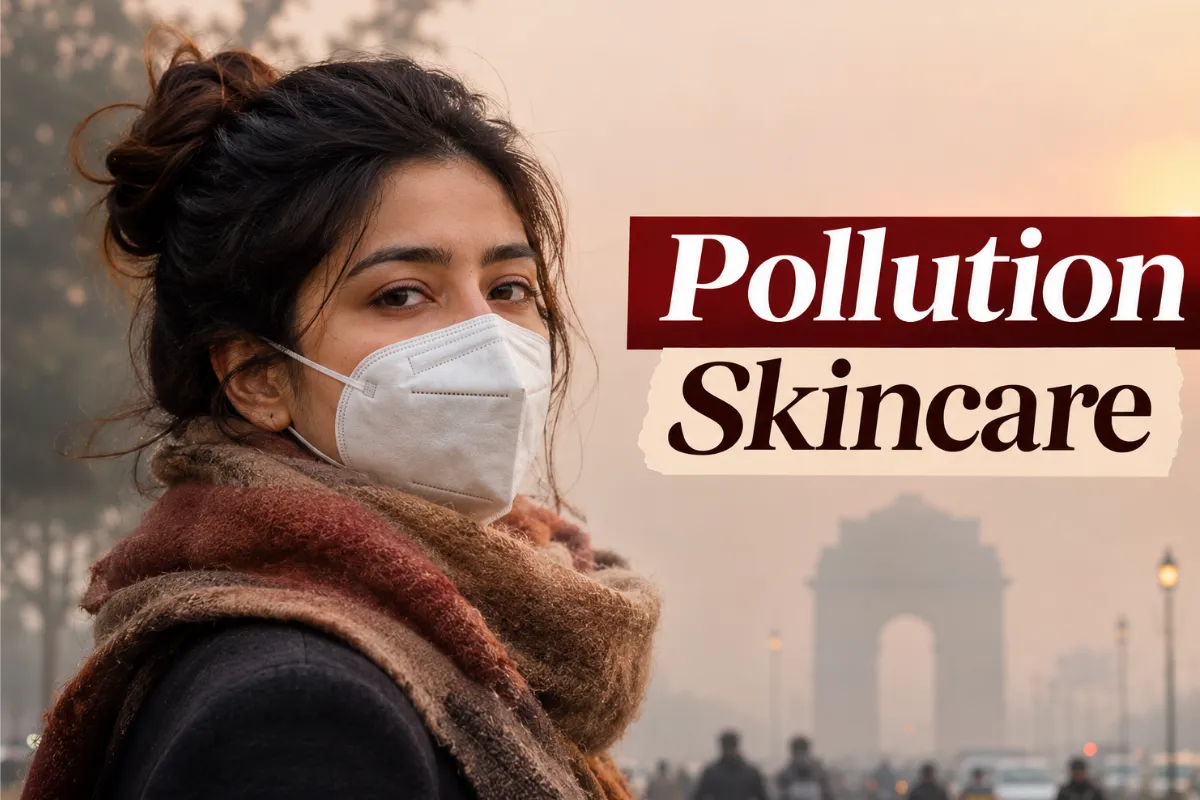
Delhi’s worsening winter pollution has created a new beauty obsession: anti-pollution serums, charcoal masks, detox facials and expensive skin-barrier treatments. But dermatologists are warning that some of the routines people adopt to protect their skin may actually make irritation worse.
There is a peculiar contradiction in India’s winter skincare culture.
The air outside is increasingly polluted. Your skin feels dry, your face looks dull, your scalp starts itching, and suddenly every beauty advertisement seems to have a solution.
A pollution-fighting serum. A charcoal detox mask. An oxygen facial. A deep-cleansing treatment that promises to remove the impurities of city life.
The implication is simple. Your skin has been contaminated by the environment, and you need to purchase something to rescue it.
But what if the most useful thing you could do for your skin this winter is buy fewer products?
That question has become especially relevant in November 2026.
As pollution levels rise across Delhi and other Indian cities, dermatologists are reporting increased concerns about sensitivity, pigmentation, breakouts and scalp irritation.
The situation has also created a growing market for products promising to defend the skin against environmental damage.
Yet the science of pollution and skin health is more complicated than the marketing suggests.
And the biggest mistake might be treating your face as though it needs to be scrubbed clean of the entire city.
 CHILDREN’S HEALTH
How Delhi’s Air Pollution Is Threatening Children’s Lungs, Learning and Future
Delhi’s toxic air is more than a seasonal inconvenience. Research links air pollution exposure to respiratory problems and potential effects on children’s cognitive development. Explore the risks, the science and practical steps parents can take to reduce exposure.
READ THE FULL REPORTWhy Pollution Is Becoming a Serious Skincare Conversation in 2026
Air pollution is not just a respiratory concern.
Research has associated exposure to certain air pollutants with oxidative stress, inflammation and changes in skin-barrier function.
Fine particulate matter, commonly known as PM2.5, is especially concerning because these particles are small enough to penetrate deep into the lungs and contribute to wider health risks.
The skin is also exposed to airborne particles and other pollutants.
Environmental exposure may aggravate certain existing skin conditions, although individual responses vary and not every breakout or rash can be attributed to pollution.
According to a November 2026 report by The Economic Times, dermatologists in India have been seeing increased interest in treatments for acne, pigmentation, sensitivity, dandruff and other skin or scalp complaints associated with pollution exposure.
The same report describes a rise in consumer questions about barrier-repair moisturisers, vitamin C serums and detox treatments.
But an important distinction is often lost in the conversation.
Pollution can contribute to skin problems. That does not mean every product labelled anti-pollution can prevent them.
1. The Charcoal Mask Obsession Is Getting Out of Hand
Activated charcoal has become one of the most recognisable ingredients in products marketed as detoxifying.
Black masks, charcoal cleansers and deep-cleansing treatments frequently promise to remove dirt, excess oil and impurities.
Charcoal can adsorb certain substances under appropriate conditions, but that does not establish that a charcoal face mask removes pollution-related damage from living skin.
Your skin is not a kitchen exhaust filter.
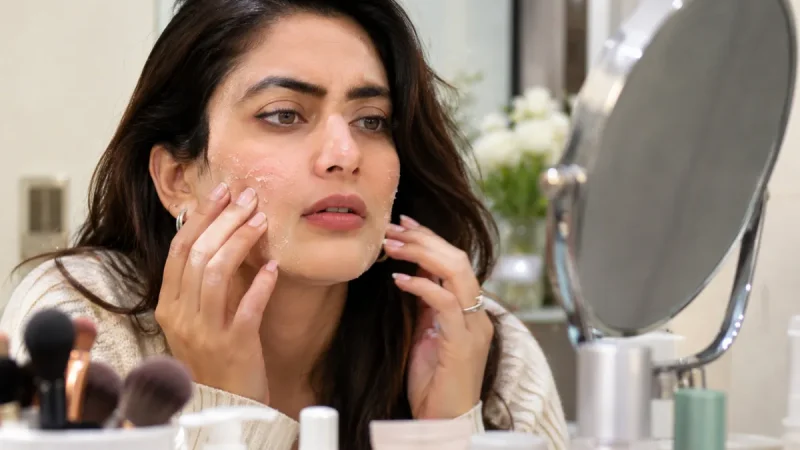
Aggressive cleansing, repeated exfoliation and frequent use of drying masks may strip away surface lipids and aggravate irritation.
This is particularly relevant during winter, when cold air, low humidity and indoor heating can already contribute to dryness.
If your skin feels tight, burns when you apply moisturiser or becomes flaky after cleansing, adding another deep-cleaning treatment may be counterproductive.
A gentle cleanser is usually a more sensible starting point.
2. Your Skin Barrier Is More Important Than Your Ten-Step Routine
The skin barrier is not a fashionable invention.
It is a fundamental part of skin physiology.
The outermost layer of the skin, known as the stratum corneum, helps limit water loss and protects against environmental irritants.
When this barrier is compromised, skin may become dry, sensitive, flaky or uncomfortable.
Some people experience stinging even when applying products they previously tolerated.
The beauty industry’s growing interest in barrier repair has brought useful attention to moisturising ingredients.
Ceramides, glycerin, petrolatum and other well-formulated moisturising components can help support the skin’s protective function.
But a product does not need an expensive label to be effective.
For many people, a basic fragrance-free moisturiser used consistently is more useful than an elaborate collection of products.
The goal is not to create the longest skincare routine.
It is to create one your skin can tolerate.
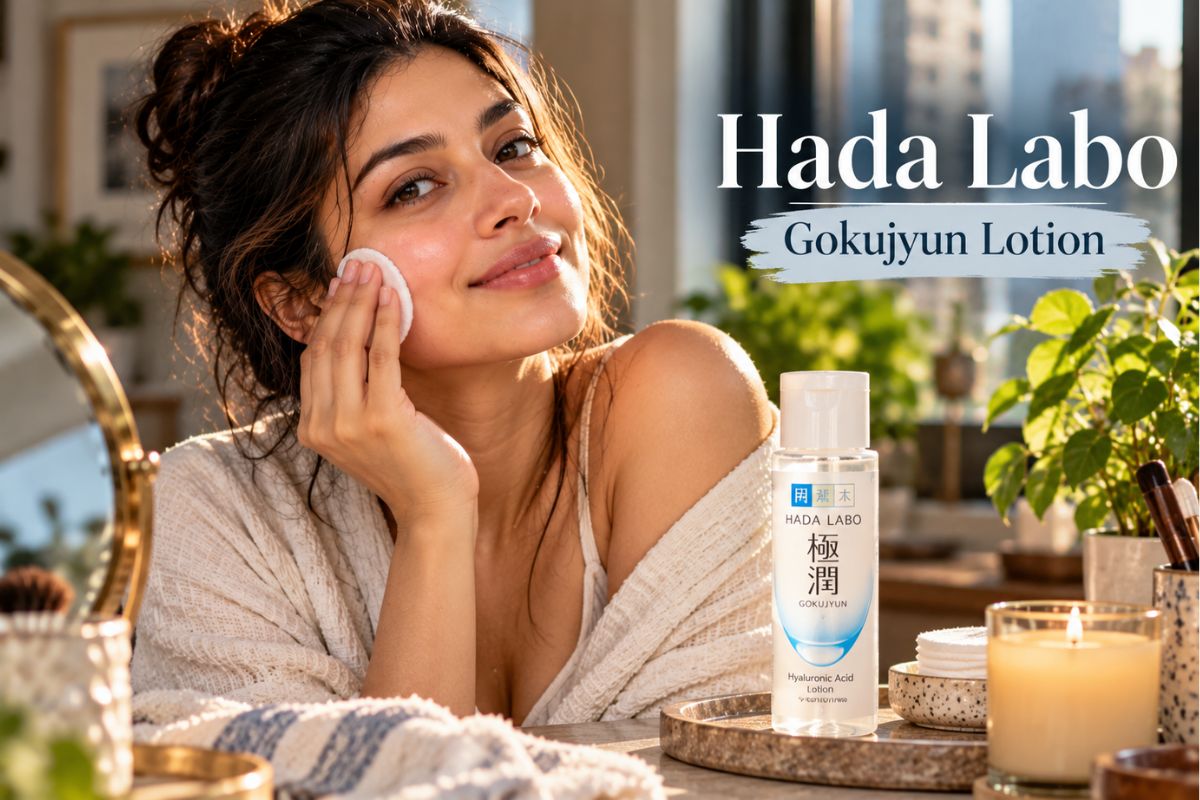 JAPANESE SKINCARE
Hada Labo Gokujyun Lotion Review: Is This Japanese Skincare Favourite Worth Buying?
Is this cult-favourite Japanese hyaluronic acid lotion worth the hype? Explore its ingredients, hydration benefits, suitability for Indian skin and weather, and how it compares with the Premium version. Plus, discover the Real SHEE Power verdict before you spend your money.
READ THE FULL REVIEW3. Pollution Doesn’t Mean You Should Wash Your Face Five Times a Day
It is understandable to want to wash your face immediately after spending time outdoors in polluted conditions.
But excessive cleansing can create problems of its own.
Frequent washing, especially with harsh cleansers or hot water, may worsen dryness and irritation.
For most people, gentle cleansing in the evening and an appropriate morning routine are sufficient.
Additional cleansing may be necessary after heavy sweating or significant dirt exposure, but there is no universal rule requiring repeated face washing simply because the AQI is high.
If you wear sunscreen or makeup, remove it gently at the end of the day.
Avoid scrubbing until your skin feels squeaky clean.
That sensation is not proof that your skin is healthier.
Sometimes it simply means you have removed too much of its natural protective oil.
4. Vitamin C Is Useful, but It Isn’t an Invisible Pollution Shield
Vitamin C is a well-studied skincare ingredient with antioxidant properties.
Certain topical formulations may help address uneven pigmentation and aspects of photodamage.
But that does not mean a vitamin C serum creates a physical barrier that prevents polluted air from affecting the skin.
The effectiveness of a formulation depends on factors such as concentration, stability, packaging and the specific form of vitamin C used.
Some formulations can also irritate sensitive skin.
If your skin is already inflamed or uncomfortable, introducing a strong active serum may not be the best first step.
A simple routine focused on cleansing, moisturising and sun protection may be more appropriate until the irritation settles.
Vitamin C can be an optional addition.
It is not a compulsory winter survival product.
5. The ₹5,000 Detox Facial Question
Professional facials can provide cosmetic benefits such as temporary hydration, cleansing and improvements in how the skin looks and feels.
Some people enjoy them as part of their self-care routine.
There is nothing inherently wrong with that.
The problem begins when cosmetic treatments are marketed as essential protection against pollution-related damage.
A November 2026 Economic Times report cited clinic-based treatments marketed for skin and scalp concerns, including services priced in the thousands of rupees.
But a facial cannot remove polluted air from the environment.
Nor should temporary improvements in skin appearance be confused with proven protection against long-term environmental exposure.
Before booking a treatment, ask what it is intended to achieve.
Does it moisturise? Exfoliate? Treat a diagnosed skin condition? Improve the temporary appearance of the skin?
Those are more useful questions than whether it promises to detoxify your face.
6. Pollution and Hair Fall: Don’t Blame the Air for Everything
Hair and scalp complaints are also entering the pollution conversation.
People report itching, flaking, oily roots, dryness and increased hair shedding.
Air pollution may contribute to scalp irritation and oxidative stress, but hair loss is a complex medical issue.
Common causes include genetic factors, hormonal changes, nutritional deficiencies, illness, certain medications and scalp disorders.
It would be misleading to assume that every episode of increased hair shedding is caused by smog.
Similarly, there is no strong evidence that a shampoo marketed as a scalp detox can reverse all pollution-related hair damage.
If your scalp feels uncomfortable, use a suitable shampoo and avoid harsh scratching.
If you have persistent dandruff, a medicated anti-dandruff shampoo may be appropriate.
Sudden, patchy or prolonged hair loss deserves assessment by a dermatologist.
A bottle labelled anti-pollution is not a diagnosis.
7. What Actually Belongs in a Winter Pollution Skincare Routine?
A practical skincare routine does not need to be complicated.
Morning:Cleanse gently if needed, apply a suitable moisturiser and use broad-spectrum sunscreen with SPF 30 or higher when appropriate for your exposure.
Evening:Remove sunscreen, makeup and accumulated dirt using a gentle cleanser. Apply moisturiser afterward.
Optional:Introduce an antioxidant serum such as vitamin C or a niacinamide product if your skin tolerates it and you have a specific reason to use it.
Avoid:Frequent harsh scrubs, aggressive exfoliation, unnecessary combinations of strong active ingredients and products that repeatedly cause burning or irritation.
For very dry skin, a richer moisturiser may be helpful.
For acne-prone skin, choose products suited to your skin type rather than assuming that heavier products are always better.
People with eczema, rosacea or other diagnosed conditions may need an individual treatment plan.
The best routine is not necessarily the most expensive.
It is the one that supports your skin without creating additional problems.
8. The Most Important Anti-Pollution Product Isn’t a Skincare Product
Here is the uncomfortable truth that beauty marketing rarely places at the centre of its campaigns.
Reducing pollution exposure matters more than purchasing cosmetic products that claim to neutralise its effects.
When outdoor air quality is poor, practical precautions may include checking reliable AQI information, reducing unnecessary strenuous outdoor activity, and using a properly fitting particulate respirator such as an N95 when appropriate.
Indoor air filtration may also help reduce particulate exposure when correctly selected and used.
These measures are especially important for people with respiratory or cardiovascular conditions.
A serum cannot substitute for clean air.
A charcoal mask cannot compensate for prolonged exposure to dangerous pollution levels.
And no moisturiser can solve the broader public-health problem created by emissions, traffic, industrial pollution and seasonal atmospheric conditions.
Skincare can help manage the skin’s condition.
It cannot make polluted air safe.
9. Why the Anti-Pollution Beauty Industry Needs More Scrutiny
There is a familiar commercial pattern here.
First, a genuine environmental problem creates public anxiety.
Then, consumers begin searching for personal solutions.
Finally, an expanding collection of products promises protection, repair and recovery.
Some of these products may contain useful ingredients.
Others may rely heavily on marketing language.
The phrase anti-pollution does not, by itself, establish that a product has been clinically shown to prevent pollution-related skin damage.
Consumers should look for specific claims supported by appropriate testing rather than relying on vague promises about detoxification.
The distinction between cosmetic improvement and medical prevention matters.
A moisturiser may improve skin hydration.
A sunscreen may protect against ultraviolet radiation when used correctly.
A gentle cleanser may remove surface dirt and product residue.
These are meaningful benefits.
But none should be exaggerated into a claim that the product completely protects the skin from urban air pollution.
10. Your Skin Doesn’t Need to Be Perfect During a Pollution Crisis
Perhaps the most frustrating aspect of the anti-pollution beauty conversation is how quickly a public-health issue becomes another personal appearance problem.
The air is polluted, but the marketing conversation shifts toward whether women have dull skin.
The environment is deteriorating, but the proposed solution becomes a more expensive serum.
A person develops irritation, and the immediate question is which facial will restore her glow.
There is nothing wrong with wanting healthy, comfortable skin.
But women should not be made to feel that environmental exposure is another beauty failure they must personally correct.
Skin can have texture.
It can experience occasional breakouts.
It can become dry during winter.
And it does not need to look flawless to be healthy.
The priority should be protecting health, managing genuine symptoms and seeking appropriate care when necessary.
Not purchasing an endless series of products to maintain an unrealistic appearance.
Frequently Asked Questions
Can air pollution cause acne?
Air pollution may contribute to inflammation and oxidative stress, which can aggravate certain skin conditions. However, acne has multiple causes, and pollution is not responsible for every breakout.
Does washing your face remove pollution?
Gentle cleansing can remove dirt, oil, makeup and particles deposited on the skin’s surface. It cannot reverse all biological effects of environmental pollution.
Is vitamin C good for pollution-exposed skin?
Vitamin C has antioxidant properties and may provide skincare benefits in suitable formulations. However, it does not create complete protection against air pollution.
Do charcoal masks remove pollution from skin?
There is insufficient clinical evidence that ordinary charcoal masks prevent or reverse pollution-related skin damage. Excessive use may worsen dryness or irritation.
Can pollution cause hair loss?
Air pollution has been investigated as a possible contributor to scalp and hair problems, but hair loss has many potential causes. Persistent or sudden shedding should be evaluated rather than attributed automatically to pollution.
What is the best skincare routine during Delhi winters?
A gentle cleanser, suitable moisturiser and broad-spectrum sunscreen form a practical foundation. Additional products should be selected according to individual skin concerns.
Final Word from Real SHEE Power
India’s worsening air pollution is a serious environmental and public-health concern.
It deserves scientific attention, effective policy and meaningful action to reduce emissions.
It should not become another excuse to convince women that their skin is inadequate.
There is room for good skincare products, thoughtful formulations and genuinely useful beauty innovation.
But there is also a need for honesty.
Your skin does not need to be punished because the air is polluted.
It needs appropriate care, protection from unnecessary irritation and realistic expectations.
The next time a beauty advertisement tells you that your face needs detoxifying, ask a more useful question: Is this product actually helping my skin, or is it simply selling me another reason to worry about it?
Medical disclaimer: This article is intended for general educational purposes. It does not replace professional dermatological advice. Persistent rashes, severe irritation, sudden hair loss or worsening skin conditions should be evaluated by a qualified healthcare professional.