Why Qazi Touqeer Has Always Been a Sensation: Decoding the Real Momentum Behind the Enigma
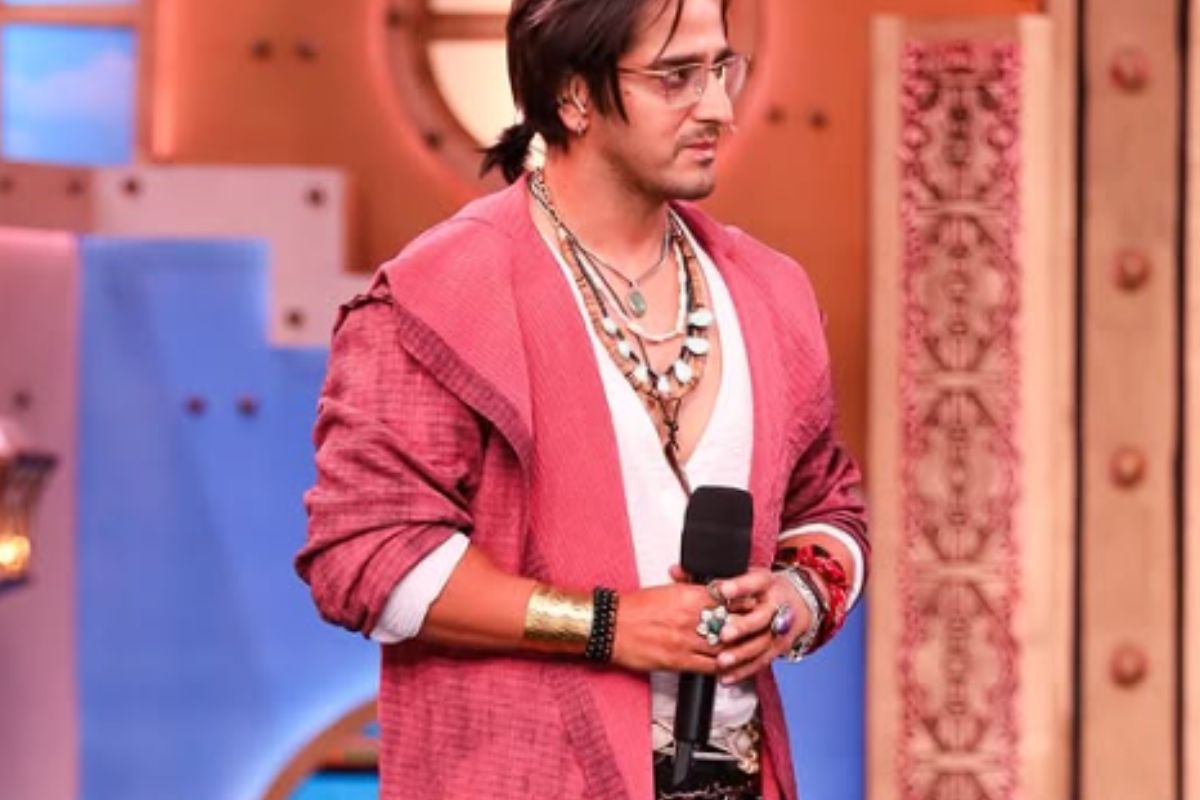
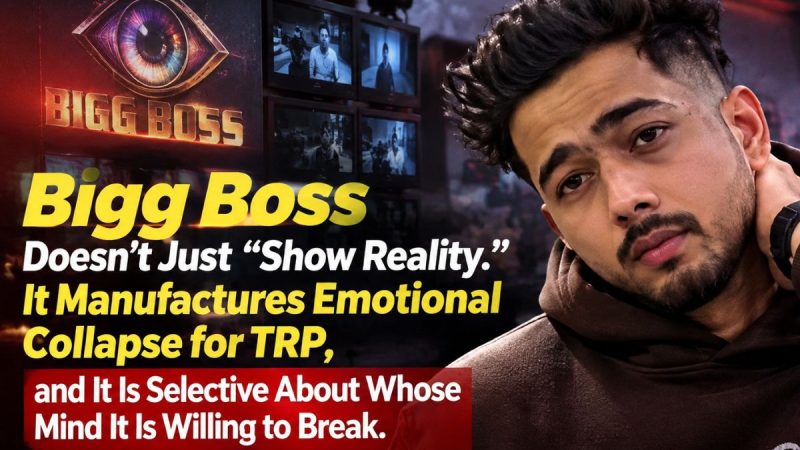
I have watched enough reality television and followed enough Kashmir stories to know when something is manufactured hype and when something is organic fire. Qazi Touqeer is the latter. The man who jointly won Fame Gurukul in 2005, the same season where a young Arijit Singh finished sixth, is back on Bigg Boss 20 more than two decades later and once again sitting at the centre of the conversation. Salman Khan himself called him the only rockstar in the house. Clips of his antics, mood swings, and that signature “I’m a rockstar baby” line keep going viral. In Srinagar, murals of him have appeared on walls. His songs are being played at Kashmiri weddings. Kashmiris are rallying behind him online and offline.
So what exactly is going on? Is this pure Kashmiri pride? Is it Muslim solidarity of the kind many claimed powered MC Stan and Munawar Faruqui to their Bigg Boss trophies? Or is there something more specific and more interesting about Qazi himself that keeps making him a sensation whenever he steps into the national spotlight?
I decided to dig past the surface noise and look at the facts, the history, and the current behaviour inside the Bigg Boss house. Here is what I found.
The 2005 Blueprint: How a Kashmiri Boy First Conquered India
In 2005 Qazi Ahmad Touqeer, then barely twenty, walked into Fame Gurukul from Srinagar. The show was one of the biggest singing competitions of its time. He and Ruprekha Banerjee eventually shared the trophy. Reports from that period put his final SMS vote count in the region of 2.5 crore, an extraordinary number for the pre-smartphone era when every vote cost money. Families in Kashmir were spending hard-earned rupees to keep him in the competition. President A.P.J. Abdul Kalam met the finalists and reportedly called him a hero of Kashmir.
That win was never just about singing ability. Judges often criticised him. He spent time in the danger zone. Yet the public refused to let him go. For many young Kashmiris in the mid-2000s, seeing one of their own on national television in a positive light felt rare and powerful. The Valley was still heavily associated with conflict in the national imagination. Qazi offered a different image: long hair, dramatic presence, rockstar energy, and unapologetic Kashmiri identity. He sang in Kashmiri, Hindi, Urdu and English. He looked and sounded like home.
After the win the industry moved on, as it often does with reality show winners. He released music, did live shows, and landed a memorable uncredited appearance in the Afghan Jalebi song from Phantom featuring Katrina Kaif. The massive mainstream stardom that later came to Arijit Singh did not come to him. Yet Kashmir never fully forgot the boy who once made the entire country vote for a Srinagar singer.
Bigg Boss 20: The Second Coming and the Instant Rockstar Tag
When Qazi entered Bigg Boss 20 in September 2026 he was forty years old. He arrived with the same theatrical energy that defined him twenty-one years earlier. Within days Salman Khan singled him out on Weekend Ka Vaar and declared him the rockstar of the house. The host compared his long struggle and refusal to quit with the career dips of Bobby Deol and even John Travolta. The catchphrase stuck. Clips of him explaining Gen Z dating terms to Mary Kom, dramatic reactions, claims about coffee tanks at home in Kashmir, and high-energy performances flooded social media.
He is not playing the classic calculated Bigg Boss game of strategic alliances and quiet survival. He is loud, emotional, sometimes self-centred, sometimes surprisingly soft, and constantly performing. Viewers either find him exhausting or magnetic. Both reactions keep him in the conversation. That is the first part of the momentum: pure entertainment value. In a house full of calculated players he is the unpredictable element.
The second and more powerful part is the Kashmir connection. Reports from Srinagar show murals going up near Amar Singh College and at cafes in Wazir Bagh. Young people pose with his portraits. Wedding singers have started performing his Bigg Boss versions of songs. Local voices describe him as the personification of Kashmiri “raw madness, creativity and resilience.” Hina Khan, herself of Kashmiri origin, publicly expressed pride. Arijit Singh, his old Fame Gurukul competitor and friend, said he would watch Bigg Boss for the first time because “apna rockstar” was inside.
Is It the Same as MC Stan and Munawar Faruqui?
People keep drawing the parallel, so let us address it directly. MC Stan won Bigg Boss 16. Munawar Faruqui won Bigg Boss 17. Both are Muslim. Both had strong community backing. In both cases critics claimed the winners “did nothing” in terms of classic game strategy yet still walked away with the trophy because of organised voting.
There is some truth in the observation that community solidarity can amplify votes. Munawar’s win carried clear pride in Dongri and among sections of the Muslim community who saw his journey from legal troubles to mainstream success as meaningful. MC Stan brought a young, urban, music-driven fanbase that crossed into community support. Voting numbers in Bigg Boss finales can be heavily influenced by organised campaigns, and both men benefited from that.
But reducing those wins, or Qazi’s current popularity, to “Muslim brotherhood” alone is lazy and incomplete. MC Stan had genuine music fame and a cult following among youth before the show. Munawar had comedy skills, resilience narrative, and sharp one-liners that kept audiences engaged even when the house drama was messy. Personality and prior cultural capital mattered.
Qazi’s case is different in important ways. His strongest base is Kashmiri rather than pan-Indian Muslim. The Valley’s population is not large enough on its own to decide a national Bigg Boss winner the way larger demographic blocs sometimes can. The support he receives from Kashmiri Pandits further complicates any pure religious framing. What he carries is nostalgia for millennials who voted for him with paid SMS messages in 2005, combined with the fresh appeal of an unfiltered, high-energy entertainer who still feels recognisably Kashmiri in 2026.
Inside the house he has faced criticism for certain comments and mood swings. Some moments have been called cheap or self-obsessed. That has not stopped the viral clips or the fan campaigns. The same pattern existed in 2005: judges were not always kind, yet public votes kept him alive. The consistency across two decades suggests the appeal is rooted in something deeper than temporary voting arithmetic.
Where the Real Momentum Comes From
After watching the clips, reading the local Kashmir coverage, and tracking the online conversation, I see four clear sources of Qazi’s lasting ability to create sensation.
First, authenticity of performance. He does not dial down the eccentricity. The rockstar persona is not a calculated Bigg Boss strategy. It is how he has always presented himself. In an era of polished content and carefully managed personal brands, that unfiltered quality still cuts through.
Second, regional representation that feels genuine. He keeps Kashmir present in his speech, stories, and energy without turning it into a political speech. For many viewers outside the Valley this is simply entertaining. For people from Kashmir it is validation.
Third, the nostalgia factor. Millennials who spent money voting for him in 2005 are now adults with purchasing power and social media reach. Seeing him back on a massive platform triggers both fondness and a protective instinct.
Fourth, the underdog-comeback narrative. He had the early win, then years of relative quiet, then a return at forty that Salman Khan himself framed as a story of not giving up. Indian audiences love that arc when it feels earned.
Is there community voting involved? Of course. Reality shows run on votes and organised support exists across communities, regions, and fandoms. But the reason the support activates so strongly around Qazi is that the personal brand was already there. The Kashmiri connection amplifies it. The entertainment value sustains it. The nostalgia deepens it.
I do not believe Qazi is simply coasting on identity politics the way some online commentators claim about previous winners. He is a specific kind of performer whose particular mix of flamboyance, regional rootedness, and refusal to become ordinary keeps finding an audience whenever the national spotlight returns to him. That is why he became a sensation in 2005 and why he is one again in 2026.
The enigma is not that mysterious once you look closely. Qazi Touqeer has always been himself at high volume. In a country that often prefers its stars carefully packaged, that alone is still enough to make noise.
Key Takeaways
- Qazi Touqeer first became a national sensation by winning Fame Gurukul in 2005 with massive public votes and strong Kashmiri support that crossed community lines.
- His Bigg Boss 20 popularity is driven by high-energy entertainment value, the “rockstar” persona endorsed by Salman Khan, and deep regional pride in Kashmir.
- Comparisons with MC Stan and Munawar Faruqui highlight community voting power, but Qazi’s case rests more on nostalgia, authenticity, and Kashmiri identity than on pan-Indian religious solidarity alone.
- The lasting formula is consistent across twenty-one years: unfiltered personality plus genuine regional representation continues to cut through national television noise.