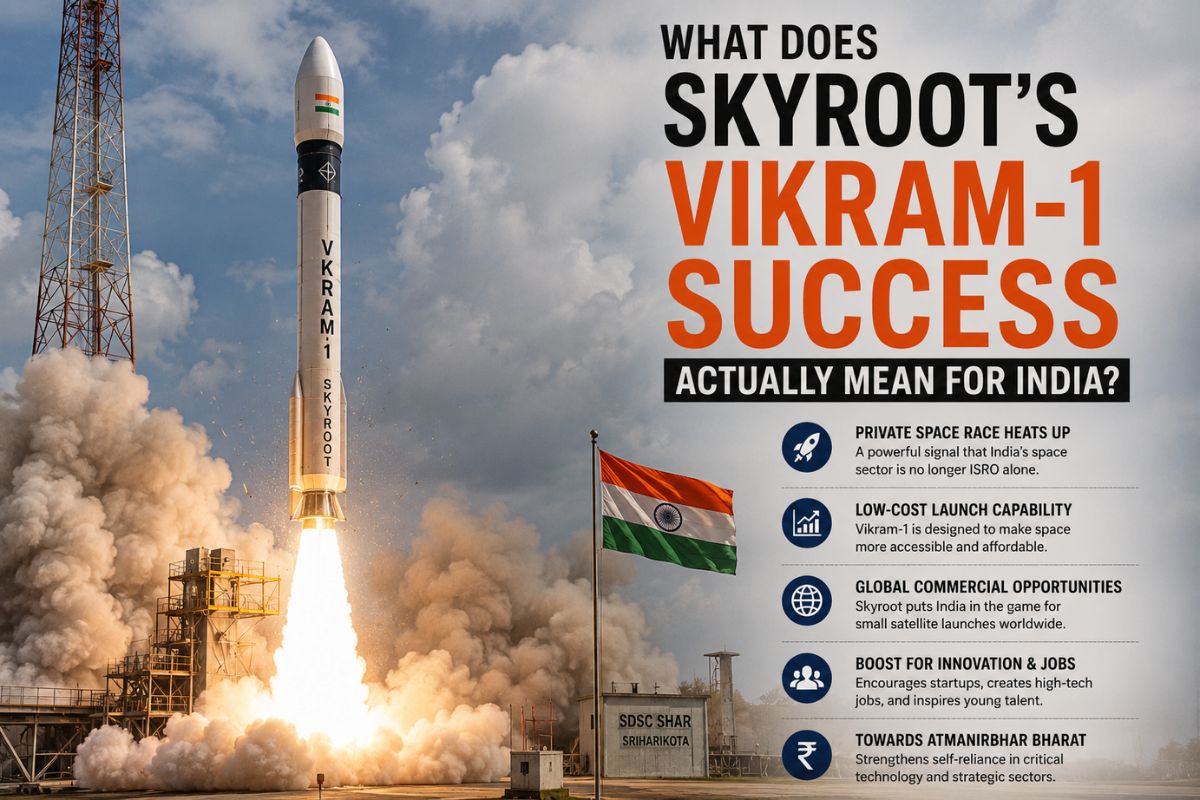
What Does Skyroot’s Vikram-1 Success Actually Mean For India?
Real Shee Power’s Real Talk is where we cover the stories that matter, without spin and without softening them.
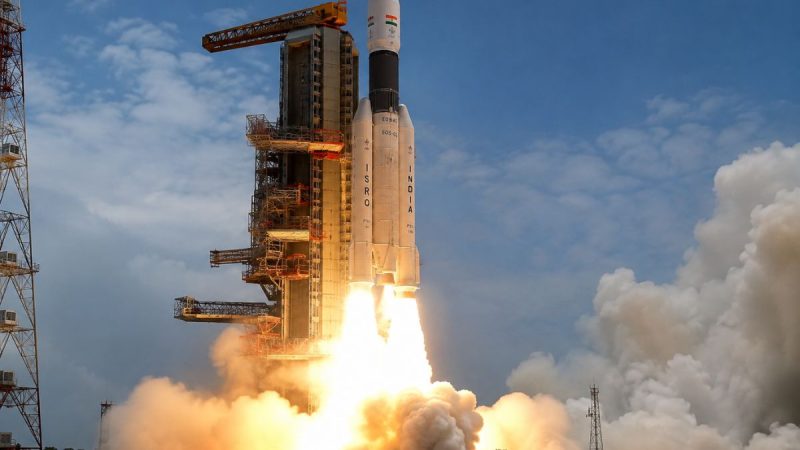
On July 18, 2026, a seven-story rocket built entirely by a Hyderabad startup lifted off from Sriharikota at 2:35 a.m. and reached a 450-kilometre orbit just 17 minutes later. That short flight, called Mission Aagaman, Sanskrit for “the arrival,” did more than put a few payloads into space. It marked the first time a privately built Indian rocket has ever reached orbit, and it moved India into a club of just three countries where that has happened at all. Here is what actually happened, and why it matters more than a single headline can capture.
In Simple Words
A private Indian company built its own rocket and successfully sent it into space, something only the US and China had managed before. It shows India’s private space industry can now build real, working rockets on its own, not just support government missions.
What Skyroot Actually Did
Skyroot Aerospace, founded by former ISRO scientists and based in Hyderabad, built Vikram-1 as a three-stage, 22-metre orbital launch vehicle designed to carry small satellites into low Earth orbit. Unlike the company’s earlier Vikram-S, a smaller suborbital rocket that flew a test mission back in November 2022, Vikram-1 was built to go all the way to orbit on its very first attempt, and it did exactly that, deploying customer payloads at 450 kilometres above Earth.
The rocket carried a genuinely varied set of cargo for a first flight, including a lab-grown diamond, robotic arms designed for space debris removal, and a small 18-karat gold model rocket carrying miniature sculptures of Indian physicists Vikram Sarabhai and C.V. Raman, along with former president and aerospace engineer A.P.J. Abdul Kalam.
Why “Third Country” Is The Number That Matters Most
The single most important fact in this story is the ranking it created. India is now only the third country on Earth, after the United States and China, where a privately built rocket, not a government space agency, has successfully reached orbit. That distinction separates Skyroot from nearly every other private space company in the world, most of which are still working toward this exact milestone.
Former ISRO chairman K. Sivan, who has overseen some of India’s most complex government-led missions, called an orbital rocket one of the most challenging technologies in the entire space industry to build correctly, and said doing it successfully on a first attempt would motivate an entire generation of engineers.
The Business Story Behind The Launch
Vikram-1’s success did not happen in isolation. Just weeks before launch, in May 2026, Skyroot closed a 60 million dollar funding round co-led by Sherpalo Ventures and GIC, Singapore’s sovereign wealth fund, with additional backing from BlackRock-managed funds and Arkam Ventures. That round valued Skyroot at 1.1 billion dollars, making it India’s first space-technology unicorn, a company reaching that valuation before its flagship rocket had even flown its first orbital mission.
This success also sits inside a much bigger shift in Indian industry. As of early 2026, India’s private space sector had grown to more than 400 companies, up from barely five a few years earlier, with cumulative investment crossing 500 million dollars, including nearly 150 million dollars raised in 2025 alone.
Key Points At A Glance
| Detail | Fact |
|---|---|
| Rocket name | Vikram-1, built by Skyroot Aerospace |
| Mission name | Mission Aagaman (“The Arrival”) |
| Launch date | July 18, 2026, 2:35 a.m. |
| Launch site | Satish Dhawan Space Centre, Sriharikota, Andhra Pradesh |
| Orbit reached | 450 kilometres, low Earth orbit |
| Time to orbit | 17 minutes |
| Rocket size | Three-stage, 22 metres tall |
| Global ranking | Third country with private orbital launch capability, after the US and China |
| Company valuation | 1.1 billion dollars, India’s first space-tech unicorn |
| Recent funding | 60 million dollars, closed May 2026 |
| Indian private space companies | Over 400, up from about 5 a few years ago |
| Cumulative sector investment | Over 500 million dollars |
| Payloads carried | Lab-grown diamond, space debris removal robotic arms, gold rocket sculpture tribute |
What This Does Not Mean, At Least Not Yet
It is worth being precise about what one successful flight represents. Vikram-1’s launch was a single test mission carrying a handful of payloads, not the start of a regular commercial launch schedule. Building a reliable, repeatable launch cadence, the kind that lets Skyroot compete for a meaningful share of the global small satellite launch market, is the next and considerably harder phase. Companies like SpaceX took years to move from a first successful orbital flight to routine, frequent commercial launches, and Skyroot’s own journey from here will likely follow a similar multi-year arc.
🧞♀️ Real Shee Power Genie Takeaway
The real story here is not just one rocket, it is the 400 companies behind it. Vikram-1 proves the model works, an Indian startup can build and fly its own orbital rocket. What happens over the next few years, as that same playbook gets repeated across the sector, is where the bigger transformation actually happens.
Why This Matters Beyond Space Enthusiasts
India opened its space sector to private players only a few years ago, a policy shift that many were watching cautiously to see whether it would actually produce results or simply generate announcements. Vikram-1’s successful orbital flight answers that question with results rather than promises. It also has real economic weight, the global small satellite launch market is growing quickly, and a credible Indian private launch provider gives the country a genuine seat at that table, rather than relying solely on ISRO’s government-run launch capacity for every mission, commercial or otherwise.
FAQs
Is Skyroot a government company or a private one? Fully private. Skyroot Aerospace is an independent startup founded by former ISRO scientists, and Vikram-1’s flight was entirely privately funded and built, launched from ISRO’s Sriharikota facility under India’s opened-up private launch framework.
How is Vikram-1 different from Vikram-S? Vikram-S was a smaller, single-stage suborbital rocket that flew a test flight in November 2022, reaching an altitude of about 88.8 kilometres without entering orbit. Vikram-1 is a larger, three-stage rocket specifically designed to reach and sustain orbit, which it did successfully on its first attempt.
What countries had private orbital launch capability before India? The United States and China. Companies like SpaceX in the US pioneered private orbital launches, and several Chinese private companies have since achieved similar milestones, making India the third country in this specific category.
Does this mean India can now compete with SpaceX? Not yet, and not for some time. SpaceX has years of launch history, a much larger rocket fleet, and a proven commercial cadence. Vikram-1’s success is a critical first step for Skyroot, comparable to where SpaceX itself was after its earliest orbital flights, not an immediate rival to its current scale.