Gandhari on Netflix is a self-important, half-blind mess that mistakes loud maternal fury and cheap mythology cosplay for actual cinema.
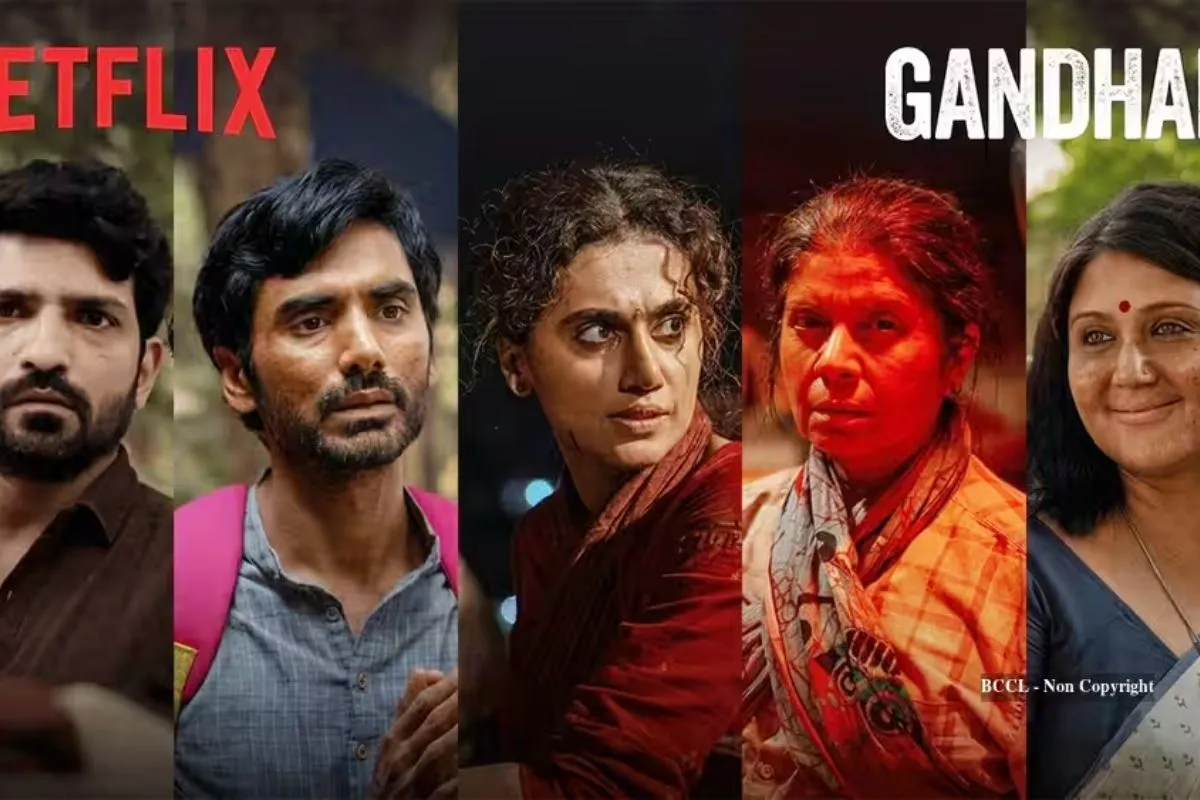
Released September 3, 2026, this 115-minute Hindi action-thriller Gandhari is directed by Devashish Makhija (who has done sharper, leaner work likeJoram) and written/produced by Kanika Dhillon (whose track record swings between interesting messes and pure artifice). It stars Taapsee Pannu as Bani, a mother whose young daughter Mishty is snatched at a busy train station in the fictional West Bengal town of Joypurra. In the chaos of chasing the kidnappers, Bani takes a brutal hit that temporarily blinds her. What follows is her descent into a child-trafficking network run by a gang called Blackhole, complete with behrupiyas (traditional mask performers/impressionists), local legends, indifferent cops, and a heavy-handed parallel to the Mahabharata’s Gandhari—who blindfolded herself out of solidarity. Bani decides to lean into the blindness (or fake it once she recovers) while transforming into a one-woman wrecking crew of maternal rage.
On paper it sounds like it could work: a grimy, rooted thriller about the absolute horror of losing a child to trafficking, filtered through a mother’s refusal to stay helpless. Netflix and the makers sold it hard as “emotionally charged,” “physically demanding,” and a fierce reinterpretation of mythology where this Gandhari actually fights. Taapsee has built a career on these intense, “complex women” roles, and the premise has real-world ugliness behind it. Child trafficking is not abstract; it is a real, rotting wound. A film that stared into that without blinking could have been devastating.
Instead,Gandhariblinks hard, looks away, and starts waving mythology, training montages, and twist-for-twist’s-sake around like a drunk uncle at a wedding who thinks he’s profound.
The first stretch has atmosphere. The station chaos, the sudden loss, the panic, the useless police station scenes—they land with some weight. Joypurra is sketched as a place of masks, silence, fear, and quiet complicity. Mita Vashisht as the weary Jhunu Amba brings a lived-in exhaustion that the film barely earns. Ishwak Singh as the husband Gokul is sincere even if the script keeps sidelining a father’s grief as somehow secondary. Taapsee commits. She is physical, she is furious, she sells the desperation. You believe this woman would crawl through hell for her kid.
Then the movie decides it needs to beimportant. The temporary blindness becomes a gimmick and a symbol. The Mahabharata parallel is spelled out so bluntly it might as well come with a PowerPoint. Local goddess lore about Chaumukhi rescuing children from a demon gets grafted on so Bani can have her subterranean “paatal lok” moment and her modern Mahishasura-vadha sequence. The behrupiyas start as eerie texture and end up as undercooked narrative padding. Supporting women—Chhaya Kadam, Swastika Mukherjee, others—are introduced as if they might matter, then reduced to props whose sole function is to elevate Bani as the singular savior. Their agency is sacrificed so the lead can stay pure and uncompromised. Classic savior-complex writing: everyone else exists to make the protagonist look harder and more righteous.
The second half is where it fully collapses. The transformation from grieving, half-blind mother into relentless vigilante is not earned; it is asserted. Timeline jumps, flashbacks of training that feel like they were shot for a different movie, convenient allies, police who exist mainly to be ineffective so Bani can do their job, a villain kept in partial shots for so long that the eventual full reveal has zero impact. Action has some grit and physicality—Taapsee clearly put in the work—but the emotional register stays stuck on one note of high-intensity rage and anguish until the notes blur. Husband and wife literally beating each other gets scored like toxic romance. Exposition is dumped through off-screen dialogue and characters talking to thin air. Editing and music feel like salvage jobs. Twists pile up because the film is terrified of sitting still with the actual horror of the premise.
This is the problem with a lot of these “women’s empowerment” thrillers that Netflix and certain Bollywood writers keep greenlighting. They want the dark, social-issue cachet of trafficking and maternal trauma, but they also want the catharsis of a superheroine who levels the board single-handedly while the mythology soundtrack swells. The result is neither honest about the systemic rot nor satisfying as pulp. It exoticizes a fictional Bengali town into occult crime stereotype, uses real cultural elements (behrupiyas, local lore) as set dressing, and treats violence against the female lead as both trauma porn and badge of seriousness. “If you can’t watch women get battered like this, you’re part of the problem”—that energy is all over the film, and it is exhausting.
Taapsee is the only reason it is even watchable for stretches. She is all-in, physical, committed to the emotional through-line even when the script abandons it. The rest of the ensemble is wasted. Makhija’s usual interest in uncomfortable, lived-in worlds gets diluted into something more commercial and incoherent. Dhillon’s screenplay has the ambition of her better work and the artificiality of her worse. The whole thing feels compromised: too indie to be pure popcorn, too mainstream and twist-happy to dig into the genuine darkness it pretends to confront.
Is it the worst Hindi film of the year? No. It is not incompetent in every frame. There are moments of tension, a couple of effective set pieces, and a lead performance that refuses to phone it in. But it is one of the more frustrating. It had a clean, brutal idea—a mother, temporary blindness, a trafficking network, a town that looks away—and then buried it under symbolism, unearned empowerment arcs, underwritten supporting characters, and a second half that chooses convenience and mythology over conviction.
If you want a taut, atmospheric thriller about loss and rage, this starts like it might be one and then chickens out. If you want a mythic maternal revenge fantasy, it tries too hard and lands as cosplay. If you just want to watch Taapsee Pannu go feral for her child, you’ll get that in patches. For everyone else,Gandhariis the cinematic equivalent of someone shouting “mother’s love is the strongest force in the universe” while tripping over their own blindfold and calling it profound. Skip it, or watch it with low expectations and a strong drink. The real horror is how much better this could have been.