The Strange Places on Earth Where Humans Almost Never Go
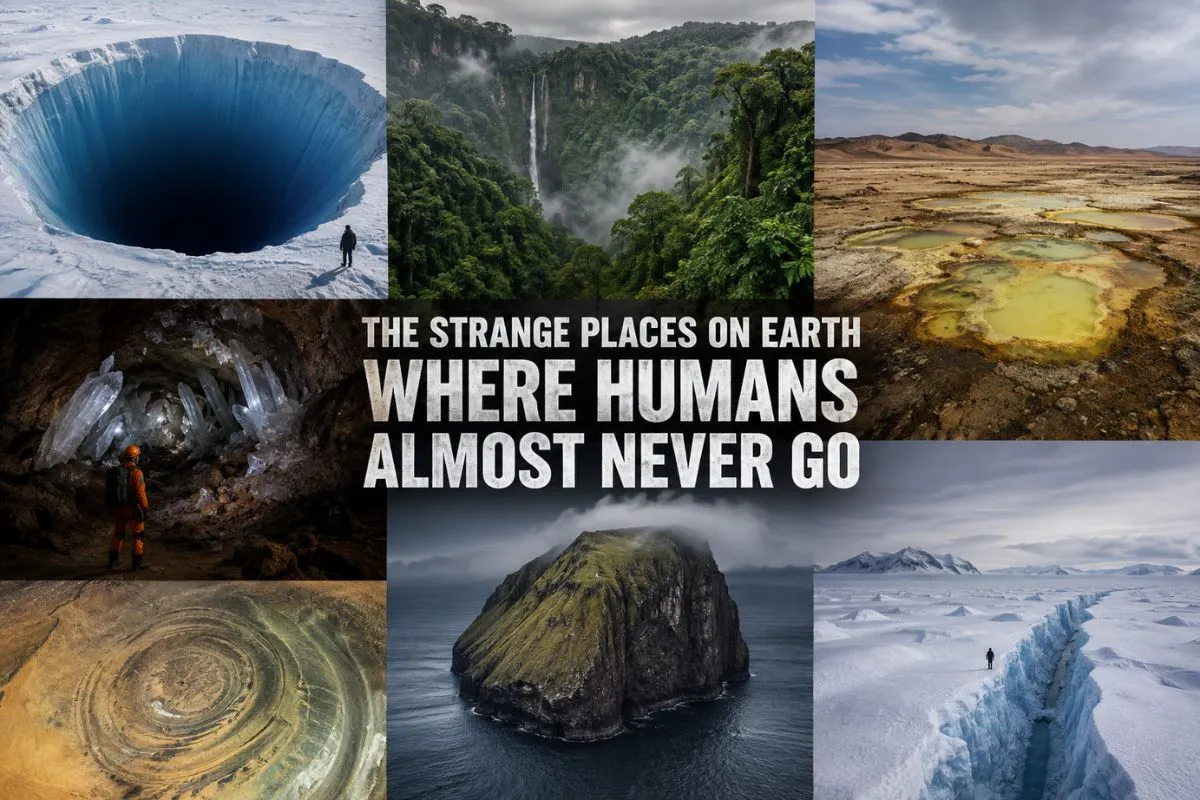
There are places on Earth where roads simply stop.
No hotels. No restaurants. No crowds taking selfies. Sometimes, there isn’t even a permanent human settlement for hundreds of miles.
While much of the planet has been mapped, photographed and connected to the internet, some corners remain extraordinarily difficult to reach. These places are shaped more bygeography, climate and isolationthan by human activity.
And some are so remote that getting there can take days, specialized equipment and a very good reason to go.
Here are some of the most fascinating remote places on Earth.
1. Point Nemo, Pacific Ocean
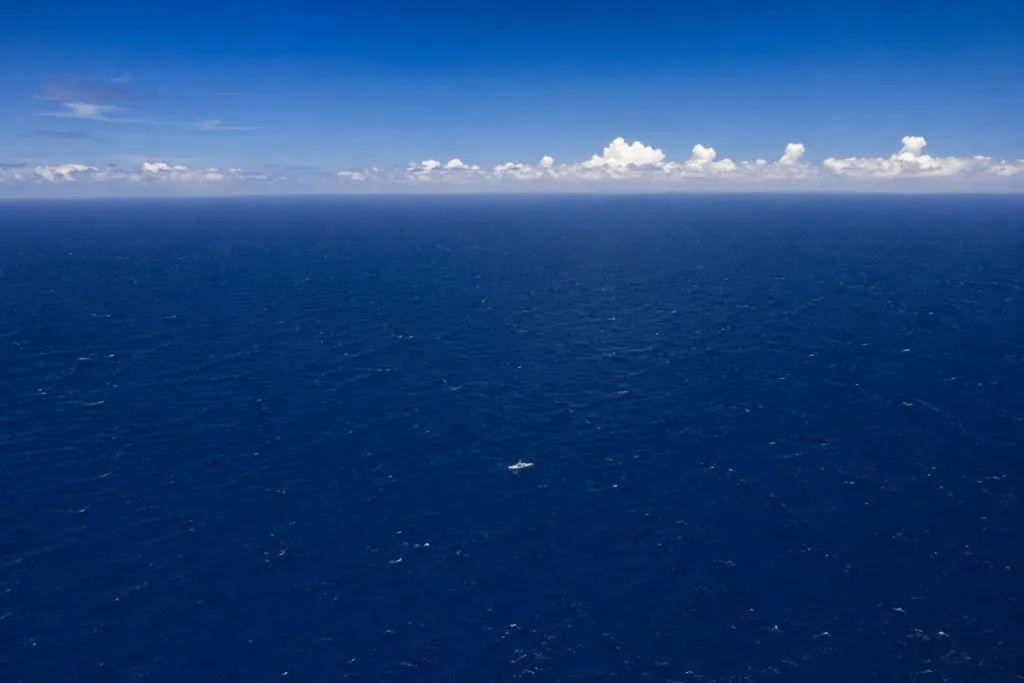
Point Nemo is often described as themost remote point in the ocean.
Located in the South Pacific, it is roughly 2,688 kilometers from the nearest land.
There is no island waiting at the coordinates. No research station. No village.
Just ocean.
The nearest humans may sometimes be astronauts aboard the International Space Station rather than people standing on land.
That strange fact has helped make Point Nemo one of the most fascinating locations on Earth.
Read more on Point Nemo: The Loneliest Place on Earth, Where the Nearest Neighbors Are in Orbit
2. Antarctica’s Interior
Antarctica isn’t simply cold.
Its interior is an environment where temperatures can become brutally low, winds can be severe and distances are enormous.
Unlike the coastal areas, much of the continent’s interior has no permanent civilian population.
Scientists and specialized crews are among the few people who regularly venture into these environments.
For most humans, Antarctica’s interior remains one of the closest things to another planet on Earth.
3. The Atacama Desert, Chile
The Atacama is one of the driest places on Earth.
Some areas can go extraordinarily long periods with virtually no rainfall.
The landscape can look almost extraterrestrial, which is one reason the region has become important for astronomical observatories and Mars-like environmental research.
But its remoteness isn’t the only thing that makes it fascinating.
The desert demonstrates just how dramatically life can adapt to extreme environments.
4. Tristan da Cunha, South Atlantic

Imagine living on an island so remote that reaching the nearest major settlement requires a long ocean journey.
That’s Tristan da Cunha.
The volcanic island is part of a British overseas territory and is widely regarded as one of the most remote inhabited island groups in the world.
Its population is tiny compared with virtually any modern city.
There are no convenient flights from major international airports.
The sea is the highway.
5. The Tibetan Plateau
Known as the“Roof of the World,”the Tibetan Plateau contains some of the highest terrain on the planet.
Its altitude, enormous scale and harsh climate have made large parts of the region difficult to access.
Yet humans have lived and traveled across parts of this landscape for centuries.
That combination is what makes it remarkable.
This isn’t an empty wilderness.
It’s a place where human communities have adapted to an environment that would challenge visitors from lower elevations.
6. The Amazon Rainforest
The Amazon isn’t technically empty or untouched.
Millions of people live throughout the wider Amazon region, including Indigenous communities with deep knowledge of the forest.
But enormous areas remain extremely difficult to access.
Dense vegetation, rivers, seasonal flooding and limited roads make conventional travel difficult.
Some locations can be reached more easily by boat than by road or aircraft.
And the deeper you travel into the forest, the more apparent it becomes how different life can be without modern infrastructure.
7. The Empty Quarter

TheRub’ al Khali, or Empty Quarter, stretches across a huge portion of the Arabian Peninsula.
It is one of the largest continuous sand deserts on Earth.
Massive dunes dominate the landscape, and extreme heat makes travel challenging.
For centuries, crossing parts of this desert required enormous preparation.
Today, modern vehicles and navigation technology have changed that equation, but the scale remains intimidating.
Stand among the dunes and it’s easy to understand why the desert has inspired explorers for generations.
Why Do These Places Matter?
Remote locations aren’t simply interesting because they’re difficult to visit.
They can provide scientists with something increasingly rare:
A chance to study environments with relatively limited human interference.
Remote deserts can help researchers understand climate extremes.
Polar regions preserve clues about Earth’s climate history.
Isolated islands can reveal how species evolve.
The deep ocean can tell us about ecosystems that humans have barely explored.
And places like Point Nemo remind us that despite satellites, smartphones and global travel,Earth is still enormous.
The Last Truly Wild Places?
Perhaps the most fascinating thing about these locations is how little they have changed compared with the rest of the planet.
Modern civilization has reached almost everywhere.
But it hasn’t made everywhere easy.
There are still mountains that take days to cross, deserts where water is the limiting factor, oceans with no land for thousands of kilometers and polar landscapes where survival itself becomes the primary challenge.
And that may be the real lesson.
We haven’t conquered the planet.
We’ve simply become very good at living in the parts that are easiest to reach.
Beyond those familiar boundaries, Earth remains wonderfully, stubbornly wild.