Preparing Traditional Janmashtami Bhog Recipes
Janmashtami marks the divine birth of Lord Krishna, a festival filled with devotion, devotional music, and elaborate culinary offerings. Offering Bhog (sacred food) is a central ritual of Gokulashtami, expressing love and gratitude to the deity. From simple kitchen delicacies like fresh butter to grand royal feasts, these traditional dishes hold deep spiritual significance.
1. Makhan Mishri
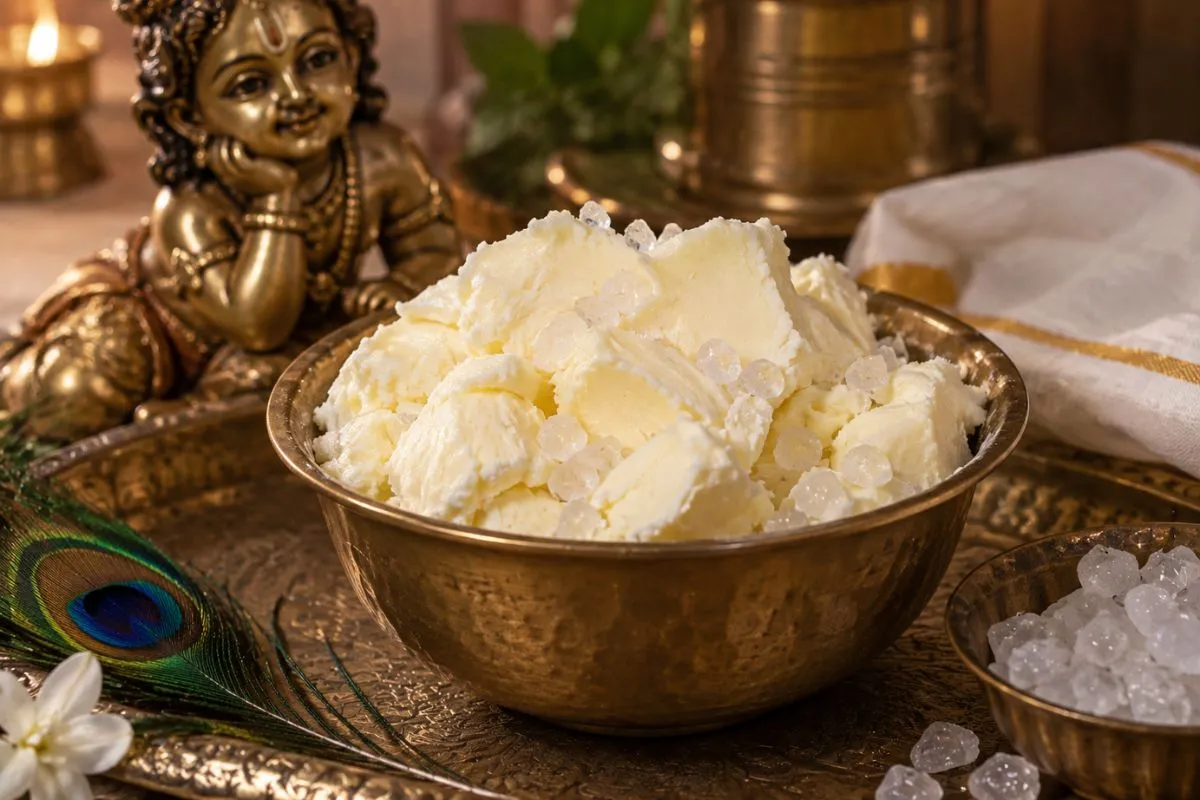
Associated with Lord Krishna’s childhood stories as the “Makhan Chor,” this two-ingredient offering is essential for any Janmashtami puja.
Ingredients:
- Fresh chilled full-fat milk cream (malai) or heavy cream
- Ice water
- Rock sugar crystals (mishri)
- Fresh Tulsi (holy basil) leaves
Steps:
- Collect fresh milk cream over a few days and store it in the refrigerator.
- Pour the chilled cream into a large bowl or blender along with half a cup of ice water.
- Whisk continuously using a traditional wooden churner (mathani) or blend on low speed until the butterfat separates completely from the liquid whey.
- Gather the freshly churned white butter, squeeze out excess whey, and rinse it gently in ice-cold water.
- Place the fresh white butter in a clay bowl, mix in whole or coarsely crushed rock sugar (mishri), and top with a fresh Tulsi leaf before offering.
2. Dhaniya Panjiri
Unlike regular wheat-based panjiri, Dhaniya Panjiri uses coriander seed powder. It is widely preferred during fasts because wheat flour is traditionally avoided during Janmashtami rituals.
Ingredients:
- 1 cup coriander seeds or pure coriander powder
- 1/2 cup ghee (clarified butter)
- 3/4 cup powdered sugar or powdered jaggery
- 1/4 cup chopped nuts (almonds, cashews, pistachios)
- 2 tablespoons chopped foxnuts (makhana)
- 2 tablespoons dry grated coconut
- 1/2 teaspoon cardamom powder
Steps:
- Heat one tablespoon of ghee in a heavy-bottomed pan and lightly fry the chopped almonds, cashews, pistachios, and makhana until crisp and golden. Set aside.
- Add the remaining ghee to the same pan, add the coriander powder, and roast over low flame. Stir continuously until the raw aroma vanishes and the flour turns aromatic.
- Turn off the heat and transfer the roasted coriander powder to a bowl, allowing it to cool down to room temperature.
- Once cooled, add the powdered sugar, fried nuts, grated coconut, and cardamom powder.
- Mix all ingredients thoroughly and store in an airtight container.
3. South Indian Specialties: Seedai and Murukku
In South India, particularly Tamil Nadu, Gokulashtami is celebrated by decorating doorstep paths with tiny rice flour footprints leading toward the altar, welcoming little Krishna. Crisp, savory snacks like Uppu Seedai and Murukku are essential menu items.
Uppu Seedai (Savory Rice Balls)

Ingredients:
- 1 cup processed rice flour
- 1 tablespoon urad dal flour (roast urad dal until fragrant and grind fine)
- 1 tablespoon butter (at room temperature)
- 1 tablespoon grated coconut
- 1/2 teaspoon sesame seeds
- A pinch of asafoetida (hing)
- Salt to taste
- Oil for deep frying
Steps:
- Dry roast the rice flour on low heat for a few minutes without changing its color. Sieve both rice flour and urad dal flour together to avoid lumps.
- Mix the sieved flours, softened butter, grated coconut, sesame seeds, asafoetida, and salt in a mixing bowl.
- Add water gradually to form a smooth, soft dough.
- Pinch tiny amounts of dough and gently roll them into small balls between your palms. Do not press too hard; loose balls prevent cracking or popping while frying.
- Prick each ball with a toothpick or needle to release trapped air. Pricking prevents the balls from bursting in hot oil.
- Heat oil in a deep frying pan over medium heat. Drop the balls carefully and fry on medium-low heat until they turn golden brown and sizzle sound subsides.
- Drain on absorbent paper towels and let cool completely.
Butter Murukku
Ingredients:
- 1 cup rice flour
- 2 tablespoons besan (gram flour) or fried gram flour powder
- 1.5 tablespoons butter (at room temperature)
- 1/2 teaspoon cumin seeds or carom seeds (ajwain)
- Salt to taste
- Oil for deep frying
Steps:
- In a mixing bowl, combine rice flour, besan, salt, cumin seeds, and butter. Rub the butter into the flour until it resembles breadcrumbs.
- Add water gradually to make a smooth, non-sticky dough.
- Fit a star shaped disc into a press (murukku maker). Fill the press with dough.
- Heat oil in a deep pan. Press the dough directly into the hot oil in circular spiral motion or onto small greased spatulas before sliding them into the oil.
- Fry on medium heat until golden and crispy, turning over to cook both sides evenly. Drain off excess oil.
4. Understanding Chappan Bhog
Chappan Bhog translates to a sacred offering of 56 distinct food items. According to Hindu tradition, Lord Krishna protected the inhabitants of Vrindavan from torrential rains by lifting the Govardhan Hill on his little finger for seven straight days. Because he traditionally ate eight meals a day, the residents expressed their devotion by offering him 56 different delicacies once the storm subsided.
The traditional 56 items are classified into structured categories representing a complete, balanced royal feast:
- Dairy Delights:Fresh butter, rabri, kheer, rasgulla, curd, peda, and ghee delicacies.
- Cereals and Savories:Puri, kachori, mathri, pakora, salted snacks, and seasoned pulses.
- Sweets and Confectionery:Malpua, halwa, laddu, imarti, ghevar, and mohanthal.
- Beverages and Cleansers:Panchamrit, almond milk, sherbet, and digestive paan (betel leaf).
- Condiments:Pickles, chutneys, dry fruits, and fresh seasonal fruits.
Preparing these traditional offerings honors ancient culinary customs while creating a joyful festive atmosphere at home.