Authentic Mapo Tofu: The Traditional Sichuan Recipe That Changed Chinese Cuisine
There are Chinese dishes that are famous around the world, and then there are dishes that tell you something about the place they came from.
Mapo Tofu belongs to the second category.
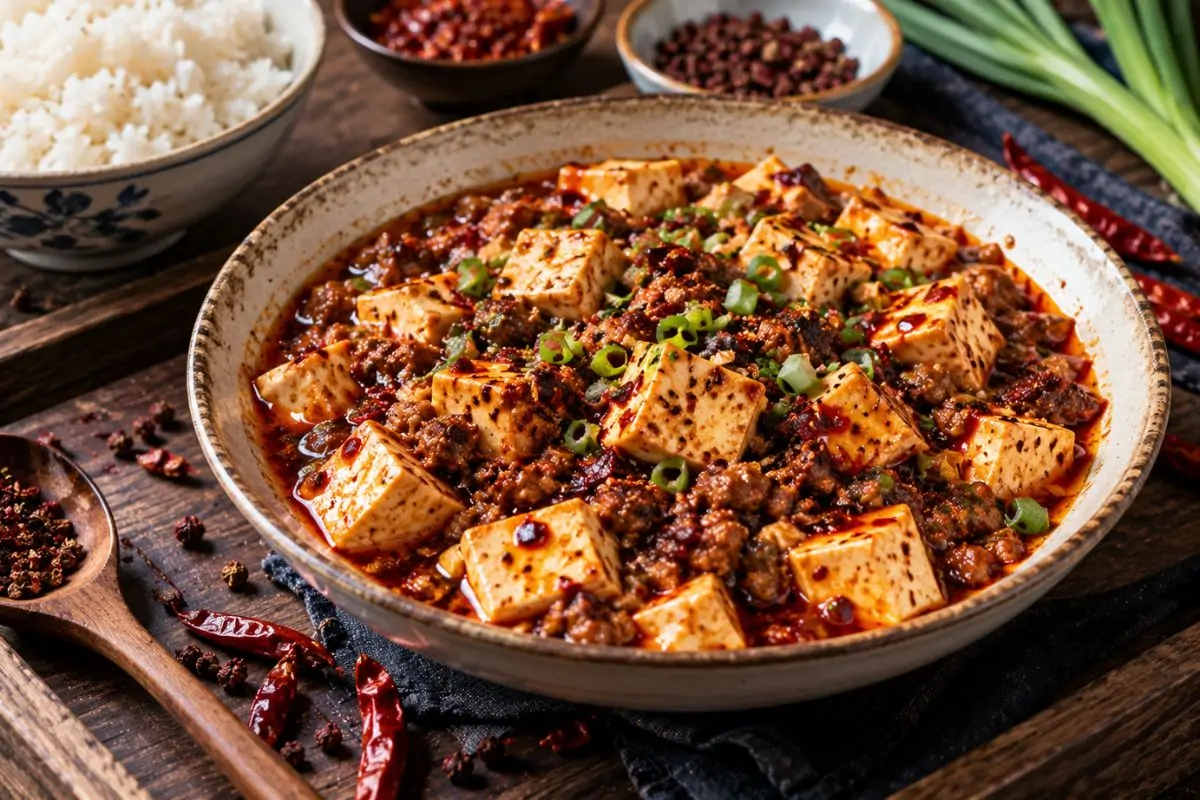
Born in Sichuan, a region famous for bold flavours, fermented ingredients and the unmistakable combination of heat and Sichuan peppercorn, Mapo Tofu is traditionally made with soft tofu, minced meat, fermented broad bean chilli paste and aromatic spices. The result is intensely savoury, spicy and fragrant, with the tofu providing a delicate contrast to the powerful sauce.
The name itself has an interesting story. “Mapo” is traditionally translated as “pockmarked grandmother,” referring to the woman associated with the dish’s origins in Chengdu during the Qing dynasty.
What began as a humble local dish eventually became one of the most recognisable Sichuan preparations in Chinese cuisine.
What Makes Traditional Mapo Tofu Different?
Authentic Mapo Tofu is not simply tofu cooked in chilli sauce.
The defining flavour comes from the combination of doubanjiang, a fermented broad bean and chilli paste, Sichuan peppercorn and aromatic ingredients such as garlic, ginger and scallions. These ingredients create the layered flavour known in Sichuan cuisine as mala, a combination of numbing and spicy sensations.
The dish should be hot, but heat alone is not its purpose. A good Mapo Tofu has fermented savouriness, fragrance, gentle sweetness, spice and the distinctive citrus-like numbing sensation of Sichuan pepper.
“The goal is not simply to make tofu spicy. It is to build layers of flavour around it.”
Traditional Mapo Tofu Ingredients
For approximately 3 to 4 servings, you will need:
- 400 to 450 g soft or medium-soft tofu
- 100 to 150 g minced pork
- 1½ to 2 tablespoons doubanjiang
- 1 tablespoon fermented black beans, finely chopped, optional but traditional in some versions
- 1 teaspoon Sichuan peppercorns
- 2 cloves garlic, finely chopped
- 1 small piece fresh ginger, finely chopped
- 2 scallions, sliced
- 1 tablespoon light soy sauce
- 1 teaspoon dark soy sauce, optional
- 1 teaspoon Chinese rice wine or Shaoxing wine
- ½ teaspoon sugar
- 150 to 200 ml water or light stock
- 1 tablespoon cornstarch mixed with 2 tablespoons water
- 2 to 3 tablespoons neutral cooking oil
For finishing, use additional ground Sichuan peppercorn and sliced scallions.
Step 1: Prepare the Tofu
Cut the tofu into small cubes, keeping the pieces large enough that they do not disintegrate during cooking.
Bring a saucepan of water to a gentle simmer and add a small pinch of salt. Carefully place the tofu into the water and warm it for about one to two minutes.
Drain gently.
This simple step helps warm the tofu and can make it easier to incorporate into the sauce without breaking it apart.
“The tofu should remain tender enough to melt in your mouth but firm enough to survive the wok.”
Step 2: Toast and Grind the Sichuan Peppercorn
Sichuan peppercorn is one of the ingredients that makes Mapo Tofu unmistakable.
Lightly toast the peppercorns in a dry pan over low heat until fragrant. Be careful not to burn them. Once cooled, grind them into a coarse powder.
Freshly toasted Sichuan pepper has a much more pronounced fragrance than pre-ground pepper that has been sitting in a cupboard for months.
Its characteristic sensation is not ordinary chilli heat. It creates a tingling, almost vibrating feeling on the tongue.
Step 3: Build the Aromatic Base
Heat a wok or deep frying pan over medium-high heat and add the oil.
Add the minced pork and cook until lightly browned. Traditional versions generally use pork, although variations exist.
Add the ginger and garlic and stir-fry briefly until aromatic.
Now add the doubanjiang.
This is the point where the dish begins to develop its characteristic red colour and deep fermented aroma. Stir the paste into the oil rather than simply adding it to the liquid. This helps release its flavour and fragrance.
“Doubanjiang is not just seasoning here. It is the backbone of the sauce.”
Step 4: Add the Seasonings
Add the Shaoxing wine, soy sauces and sugar.
If using fermented black beans, add them now.
Stir everything together before adding the water or stock. Let the mixture simmer for a few minutes so that the flavours begin to combine.
The sauce should taste intensely savoury at this stage, with the chilli and fermented flavours clearly present.
Step 5: Add the Tofu
Gently add the tofu cubes to the simmering sauce.
Do not stir aggressively.
Instead, shake the wok gently or use a spatula to move the sauce around the tofu. Soft tofu can break very easily, and part of the charm of Mapo Tofu is the contrast between intact silky cubes and the rich, textured sauce.
Allow the tofu to simmer for several minutes so that it absorbs the flavour.
“Mapo Tofu rewards a gentle hand. The tofu should be coated, not crushed.”
Step 6: Thicken the Sauce
Mix the cornstarch with cold water until smooth.
Add a little of the mixture to the simmering sauce while gently moving the wok. Continue until the sauce reaches a glossy consistency that clings lightly to the tofu.
Do not make it excessively thick. Traditional Mapo Tofu should have enough sauce to mingle with steamed rice.
Step 7: Finish With Sichuan Pepper
Turn off the heat and add freshly ground Sichuan peppercorn.
Scatter sliced scallions over the top.
Taste before adding additional salt because doubanjiang and soy sauce can already provide considerable saltiness.
For extra fragrance, a small drizzle of chilli oil can be added, although the exact finishing style varies between recipes and households.
How Traditional Mapo Tofu Is Served
Mapo Tofu is generally served hot with plain steamed rice.
The rice is not merely a side dish. Its mild flavour and soft texture provide the perfect counterpoint to the intensely seasoned tofu.
Spoon some of the tofu and sauce over freshly steamed rice and let the sauce soak into the grains.
That contrast is part of what makes the dish so satisfying.
What Gives Mapo Tofu Its Authentic Sichuan Character?
Three elements are particularly important: doubanjiang, Sichuan peppercorn and a properly developed aromatic base.
If you remove all three, you may still have delicious tofu, but you are moving away from the defining character of Mapo Tofu.
The dish is also about balance. The chilli should not completely overwhelm the fermented savouriness, and the Sichuan pepper should add fragrance and numbing heat rather than dominate every bite.
“Authenticity is not about making a dish unbearably spicy. It is about preserving its balance.”
Common Mistakes to Avoid
One of the biggest mistakes is using too much liquid. Mapo Tofu should have a rich sauce that coats the tofu rather than becoming a thin soup.
Another mistake is stirring the tofu too aggressively. Soft tofu needs patience.
Using ordinary black pepper instead of Sichuan peppercorn is another major substitution that changes the character of the dish. The two ingredients provide completely different flavours.
Finally, do not rush the doubanjiang. Allowing it to cook briefly in oil helps develop the deep savoury flavour that makes the sauce distinctive.
Can You Make Mapo Tofu Without Pork?
Yes.
Vegetarian and vegan versions are widely made using mushrooms, fermented black beans, textured vegetable protein or other plant-based ingredients in place of pork.
The important thing is maintaining the flavour architecture of the dish: fermented bean paste, aromatics, chilli, Sichuan pepper and a rich savoury base.
A vegetarian Mapo Tofu can be excellent, even though it differs from the traditional pork version.
Frequently Asked Questions
Is Mapo Tofu very spicy?
Traditional Mapo Tofu is generally spicy, but the level can be adjusted. The characteristic Sichuan pepper also creates a numbing sensation that is different from ordinary chilli heat.
What is doubanjiang?
Doubanjiang is a fermented broad bean and chilli paste strongly associated with Sichuan cuisine. It provides saltiness, fermentation, chilli heat and deep savoury flavour.
Can I use firm tofu?
You can, but soft or medium-soft tofu gives the dish its characteristic silky texture. Very firm tofu produces a noticeably different result.
What can I use instead of Sichuan peppercorn?
There is no perfect substitute because Sichuan pepper has a distinctive aroma and numbing quality. If unavailable, you can make the dish with chilli alone, but it will no longer have the same traditional flavour profile.
Can Mapo Tofu be made vegetarian?
Yes. Replace the minced pork with mushrooms, fermented black beans or another savoury plant-based ingredient. Many modern Chinese restaurants serve vegetarian variations.
What should I serve with Mapo Tofu?
Plain steamed white rice is the classic choice. The neutral rice balances the rich, spicy and fermented sauce.
The Dish That Turned Humble Ingredients Into a Classic
Mapo Tofu is a reminder that some of the greatest dishes in Chinese cuisine were not created around luxury ingredients.
Tofu, minced meat, fermented bean paste, spices and aromatics become something far greater when they are handled properly.
The dish is fiery, fragrant, deeply savoury and unmistakably Sichuan. More importantly, it demonstrates why traditional Chinese cooking is so much about technique and balance rather than simply following a list of ingredients.
“Great traditional food does not need expensive ingredients. It needs ingredients that know exactly what they are supposed to do.”