Wazwan: Inside Kashmir’s 36-Course Feast That Takes Two Days to Cook
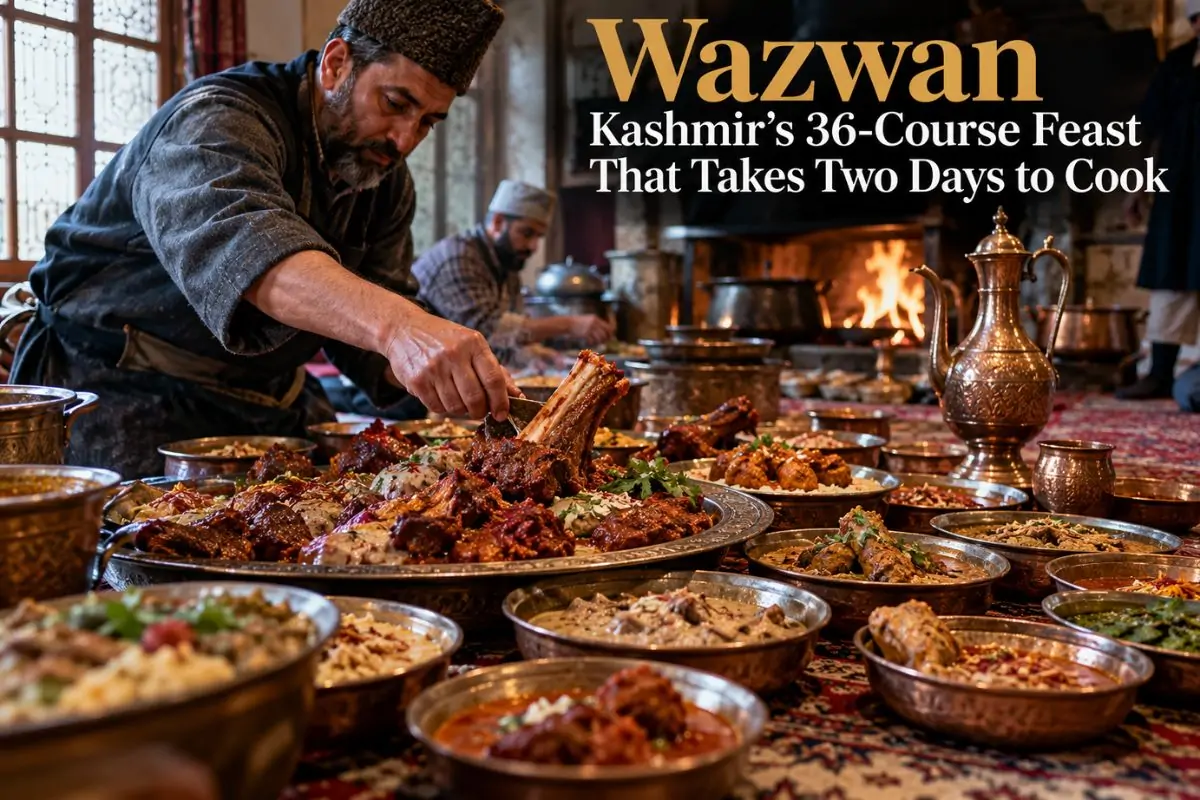
There’s a meal in Kashmir that isn’t really a meal at all. It’s an event, a two-day production involving copper cauldrons, wood fires, a small army of cooks, and a menu so long that most people can’t finish it. It’s called Wazwan, and if you’ve never heard of it, you’re not alone, because outside of Jammu and Kashmir and a handful of Kashmiri diaspora restaurants abroad, almost nobody has tried it.
- Wazwan is a 36-course, largely mutton-based Kashmiri feast traditionally served at weddings and major life events
- Its roots trace back to the 14th and 15th centuries, brought to Kashmir by cooks migrating from Samarkand and Persia
- The feast is prepared by a head chef called the Vasta Waza, whose availability can determine wedding dates
- Diners eat from a shared copper platter called a tarami, symbolising unity rather than convenience
- Signature dishes include Tabakh Maaz, Rista, Rogan Josh, Gushtaba and Methi Maaz
- Preparation begins up to two days in advance, cooked overnight in copper cauldrons over wood fires
- The tradition is genuinely difficult to find outside the Kashmir Valley, and is slowly dwindling as fewer wazas are trained
Where the Name Actually Comes From
Wazwan comes from two words, waza, meaning cook, and wan, meaning shop or place, so the name essentially translates to “the cook’s craft” or “the art of the feast.” The person running the entire operation carries the title Vasta Waza, the master chef, and in Kashmiri weddings this person is treated with a level of importance usually reserved for the couple themselves. Families have been known to actually postpone a wedding date if their preferred master chef isn’t available.
A Feast Born From an Invasion
The story of how Wazwan reached Kashmir traces back to the 14th and 15th centuries, and most historians point to the same event: the Turco-Mongol conqueror Timur’s invasion of the region, which brought with it a wave of skilled artisans and cooks from Samarkand, in what’s now Uzbekistan. Some accounts add that the Persian Sufi saint Mir Sayyid Ali Hamadani also played a role in bringing refined Persian and Central Asian cooking techniques into the valley around the same period.
These visiting cooks blended their own Turkish, Afghan and Persian techniques with Kashmiri ingredients, and the fusion eventually crystallised into something entirely new. The tradition was later elevated to full royal status under Sultan Zain-ul-Abidin, Kashmir’s eighth ruler, popularly remembered as Badshah, who is widely credited with turning Wazwan into a feast fit for kings rather than just a wedding custom. Even the Mughals are said to have been served the feast after annexing the region in 1586, with Emperor Jehangir famously naming Kashmir as his only dying wish.
How Many Courses, Exactly
Most sources put Wazwan at 36 courses, though the exact number shifts depending on who’s telling the story, with some describing anywhere from 15 to over 30 meat dishes rounding out the full spread, and one older account claiming the original royal version stretched to 52 dishes, an extravagance that made it prohibitively expensive to prepare regularly. Whatever the exact count, mutton is the backbone of almost every version, and the meat has to be freshly slaughtered for the dish to taste right, which is why preparation often begins the night before a wedding.
Eating From One Shared Plate
Perhaps the most distinctive part of the entire experience isn’t the food itself, it’s how it’s served. The whole spread is arranged on a large communal copper platter called a tarami or traemi, and diners sit in small groups of four, eating together with their hands from the same plate. It’s not considered a quirky detail, it’s the actual point. Sharing one plate is meant to symbolise unity and togetherness among guests, which is why Wazwan traditionally accompanies major life events, weddings, engagement ceremonies known as devgan, and even the 40th day of mourning after a death.
The Seven Dishes Everyone Talks About
Out of the full spread, a handful of dishes tend to get singled out as the true stars of the meal:
- Tabakh Maaz, ribs of lamb deep-fried until crisp after being slow-cooked in a yoghurt-based mixture
- Rista, hand-pounded meatballs simmered in a fiery red gravy, traditionally coloured using the indigenous Mawal flower rather than red chilli
- Rogan Josh, the aromatic, deep red lamb curry that’s now famous worldwide, though rarely in its authentic form
- Gushtaba, considered the grand finale of the meal, delicate minced meatballs served in a rich yoghurt gravy, traditionally the dish that signals the feast is coming to a close
- Methi Maaz, a fenugreek-infused mutton curry with a distinct bitterness that cuts through the richness of everything else on the plate
- Yakhni, a lighter, yoghurt-based curry that offers a brief break from the heavier preparations
- Koshur Kabab, simply seasoned, slow-roasted kebabs
Why You Can’t Just Walk In and Order It
Here’s the catch for anyone hoping to try Wazwan on a whim while visiting Srinagar: you generally can’t, at least not on short notice. The dish demands specialised skill, expensive ingredients, and enormous advance planning, which is why it’s traditionally reserved for major occasions rather than offered on a regular restaurant menu. Cooking begins under the direct supervision of the Vasta Waza a full day or more in advance, with the meat tenderised, cut and marinated by hand before it ever touches the large copper degs, which sit over wood fires fuelled specifically by hardwoods from fruit trees.
That same complexity is part of why the tradition has become increasingly rare, with fewer trained wazas passing the craft down to the next generation, leading Kashmiris both in the valley and abroad to actively campaign to keep the practice alive.