10 Home Remedies for Hair Fall That Women Are Trying in 2026: What Actually Works?

Finding more hair than usual on your pillow, in the shower drain or tangled in your hairbrush can be unsettling. And if your hair seems thinner every time you look in the mirror, chances are you have already searched for a natural way to stop it.
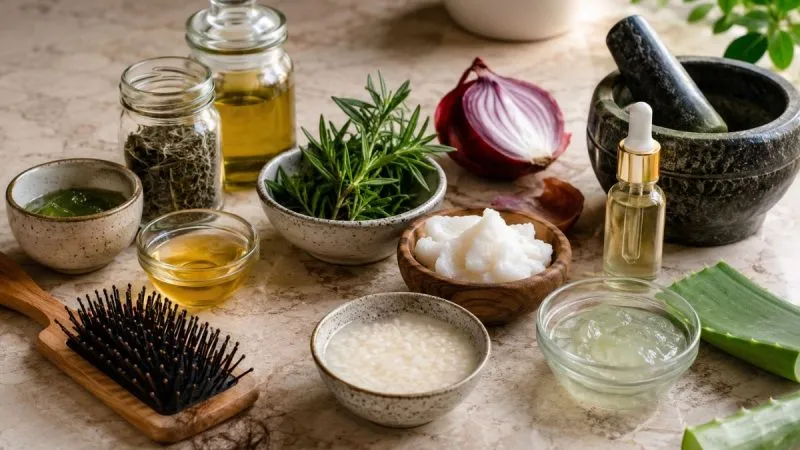
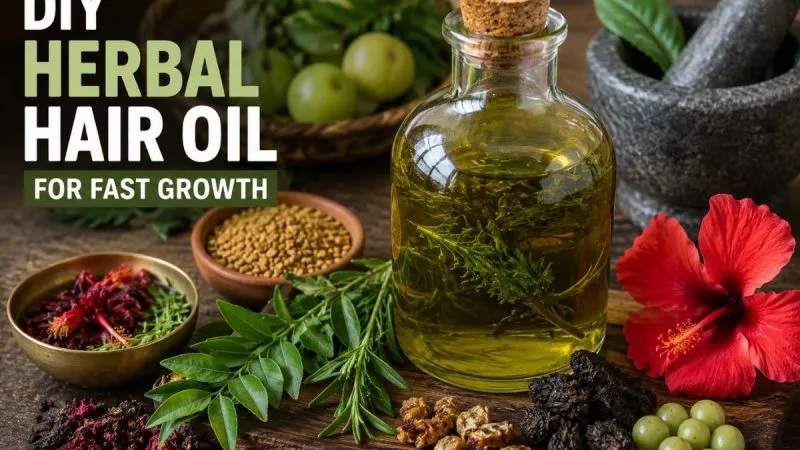
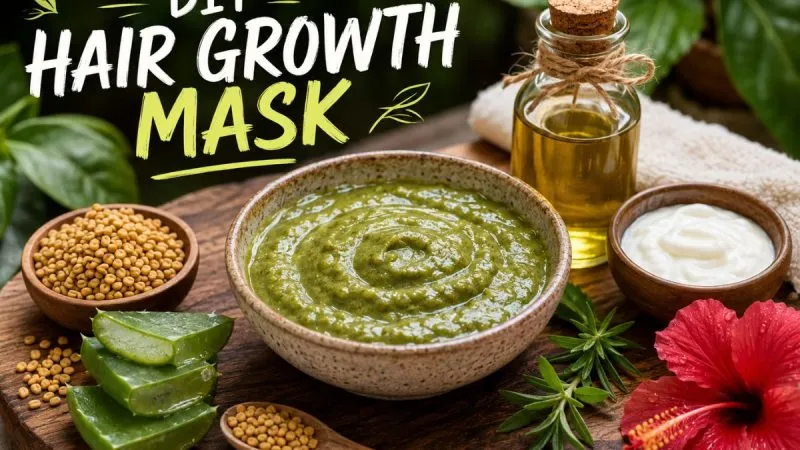
From onion juice and rosemary oil to rice water, coconut oil and homemade herbal masks, social media is overflowing with hair-growth remedies. Some have traditional uses, a few have limited scientific evidence, and others are simply beauty myths that refuse to disappear.
But here is something worth understanding:not all hair fall has the same cause, so not every remedy can work for every woman.
Hair shedding can be linked to nutritional deficiencies, hormonal changes, thyroid disorders, stress, illness, genetic hair thinning, scalp conditions and even aggressive hairstyling.
The good news is that certain home-care habits can reduce breakage, protect fragile hair and support a healthier scalp. The important thing is knowing which remedies are worth trying and which ones deserve a place in the dustbin.
Here are 10 popular home remedies and hair-care practices, examined through the lens of available scientific evidence.
Table of Contents
Why Is Your Hair Falling So Much?
Before trying any home remedy, it helps to understand what is happening.
Hair naturally goes through a growth cycle involving three main stages:
- Anagen: The active growth phase.
- Catagen: A short transitional phase.
- Telogen: The resting phase, after which the hair eventually sheds.
Losing approximately 50 to 100 hairs daily is generally considered normal. However, shedding can increase temporarily after illness, fever, childbirth, major stress, surgery or rapid weight loss.
Women may also experience hair thinning due to:
- Iron deficiency or low iron stores.
- Inadequate protein intake.
- Thyroid disorders.
- Polycystic ovary syndrome (PCOS).
- Female-pattern hair loss.
- Hormonal changes during menopause.
- Scalp inflammation and dandruff.
- Excessive heat styling and chemical treatments.
The first step is to understand whether you are experiencing excessive shedding, hair breakage or gradual thinning. These are different problems and may require different approaches.
1. Coconut Oil: The Traditional Remedy That Has Some Scientific Support
Coconut oil has been used in Indian households for generations. Mothers and grandmothers have recommended it for dry hair, split ends and breakage, and there is a scientific reason why it can be useful.
Research published in theJournal of Cosmetic Sciencefound that coconut oil could reduce protein loss from hair when used before or after washing.
Its ability to penetrate the hair shaft and reduce protein loss makes it a useful conditioning ingredient.
However, there is an important distinction.
Coconut oil may help protect the hair shaft and reduce breakage. It does not have convincing evidence that it can reverse genetic hair loss or stimulate new hair growth from inactive follicles.
How to use it:
- Take a small quantity of coconut oil.
- Apply it gently to the lengths and ends of dry hair.
- Leave it for approximately 30 to 60 minutes.
- Wash with a mild shampoo.
Avoid aggressive scalp massage, particularly if your hair is fragile.
Verdict: A useful conditioning treatment for dry, breakage-prone hair, but not a proven hair-growth treatment.
2. Rosemary Oil: The Natural Ingredient Getting Attention
Rosemary oil has become one of the most discussed natural hair-care ingredients.
It contains aromatic compounds that have attracted scientific interest, and a small clinical study published in 2015 examined its potential for treating androgenetic alopecia, a common form of hereditary hair thinning.
The study involved 100 men and compared rosemary oil with 2% minoxidil over six months. Both groups showed an increase in hair count at the six-month assessment, with no statistically significant difference between them.
However, the study had limitations. It did not include a placebo group, and its results cannot automatically be applied to women or every type of hair loss.
This is promising preliminary evidence, not proof that rosemary oil is a natural replacement for established hair-loss treatments.
How to use it more safely:
- Never apply undiluted rosemary essential oil directly to the scalp.
- Use a properly formulated, diluted product.
- Perform a patch test before wider application.
- Stop if you experience redness, burning or itching.
People who are pregnant, breastfeeding or have sensitive skin should seek appropriate professional advice before using essential oils.
Verdict: Interesting preliminary research, but stronger studies are needed. Do not treat it as a guaranteed hair-growth solution.
3. Onion Juice: The Viral Hair Fall Remedy
If you spend enough time watching homemade hair-care videos, you will probably encounter onion juice.
The idea comes partly from a small 2002 study involving people with alopecia areata, an autoimmune condition that causes patchy hair loss.
Researchers observed hair regrowth in some participants who applied crude onion juice to affected areas.
However, this study was small and examined a specific medical condition. It does not establish onion juice as an effective treatment for common hair shedding, female-pattern hair loss or nutritional hair loss.
Onion juice can also cause irritation, unpleasant odour and allergic contact dermatitis.
Should you try it?
There is insufficient evidence to recommend onion juice as a routine hair-growth treatment. If you have an itchy, inflamed or sensitive scalp, avoid experimenting with it.
Verdict: A popular remedy with limited evidence from one small study, not a scientifically established solution for ordinary hair fall.
4. Rice Water: Does This Traditional Hair Rinse Really Work?
Rice water has become particularly popular among women interested in long, shiny hair.
It is made by soaking or cooking rice in water and using the resulting liquid as a hair rinse.
Rice water contains starch and small amounts of other compounds. Some people find that it makes their hair feel smoother temporarily.
However, there is not enough good-quality clinical research to establish that rice water prevents hair loss or accelerates hair growth.
In fact, excessive use may leave some hair feeling stiff or coated, particularly if it is already dry or damaged.
How to try it cautiously:
- Wash a small quantity of rice thoroughly.
- Soak it in clean water for approximately 20 to 30 minutes.
- Strain the water.
- Apply it briefly to the hair lengths after shampooing.
- Rinse thoroughly.
Avoid storing homemade rice water for long periods, as contaminated preparations may irritate the scalp.
Verdict: It may temporarily improve how hair feels, but there is no convincing evidence that it regrows hair.
5. Aloe Vera: A Soothing Option for Some Scalp Concerns
Aloe vera is widely used in skincare because of its moisturising properties. It is also found in numerous shampoos, conditioners and scalp products.
Its gel contains several compounds with potential soothing and moisturising properties.
Some people find aloe vera useful when their scalp feels dry or uncomfortable. However, strong clinical evidence that aloe vera prevents hair fall or stimulates hair growth is lacking.
How to use it:
- Choose a clean, fragrance-free aloe vera gel.
- Apply a small amount to a limited area of the scalp.
- Leave it for 10 to 15 minutes.
- Rinse thoroughly.
Avoid applying it to irritated or broken skin without medical advice. Natural aloe preparations can also cause allergic reactions in some individuals.
Verdict: May provide a soothing or moisturising effect, but it is not a proven treatment for hair loss.
6. A Protein-Rich Diet: One of the Most Important Hair-Care Habits
Sometimes the most effective hair-care remedy has nothing to do with applying something to your scalp.
Hair is primarily made of a protein called keratin. Your body needs adequate protein and nutrients to maintain normal hair growth.
If your diet is consistently inadequate, hair growth may be affected.
Women who follow restrictive diets, skip meals or lose weight rapidly may be particularly vulnerable to nutritional deficiencies.
Include protein-rich foods such as:
- Eggs.
- Milk and yoghurt.
- Paneer.
- Dal and lentils.
- Chickpeas and beans.
- Soy products.
- Fish and chicken.
Iron is another important nutrient. Low iron stores can contribute to hair shedding in some women.
Vitamin B12, vitamin D and zinc may also be relevant when a deficiency is present.
However, taking supplements without establishing a deficiency is not necessarily helpful. Excessive intake of certain nutrients, including vitamin A and selenium, can actually contribute to hair loss.
Verdict: Adequate nutrition supports normal hair health. Correcting a genuine deficiency is more useful than randomly taking hair supplements.
7. Gentle Scalp Massage: Relaxing, But Does It Grow Hair?
Scalp massage is often recommended as a way to improve blood circulation and encourage hair growth.
There is some preliminary research, but the evidence is limited.
A small 2016 study involving nine men examined the effects of regular scalp massage over 24 weeks. It reported an increase in hair thickness, but did not establish a reliable treatment for hair loss.
Scalp massage may feel relaxing, but there is no strong evidence that it reverses hereditary thinning.
How to massage your scalp:
- Use the pads of your fingertips.
- Apply gentle pressure.
- Avoid scratching with your nails.
- Do not pull or twist the hair.
- Stop if the scalp feels painful.
If you have an inflamed scalp, active infection or severe dandruff, avoid vigorous massage.
Verdict: A pleasant self-care habit, but not a proven hair-regrowth method.
8. Hibiscus and Amla: Traditional Indian Hair-Care Ingredients
Hibiscus and amla have a long history in traditional Indian hair-care practices.
Hibiscus flowers and leaves are often used in homemade hair masks, while amla is traditionally associated with stronger-looking hair and scalp care.
Amla contains vitamin C and plant compounds, while hibiscus contains various phytochemicals.
However, traditional use does not automatically establish clinical effectiveness. There is insufficient high-quality human research to confirm that applying hibiscus or amla directly to the scalp prevents hair loss or stimulates new growth.
A simple conditioning mask:
- Take a small quantity of hibiscus powder.
- Mix it with plain water to form a smooth paste.
- Apply it to the hair lengths rather than aggressively rubbing the scalp.
- Leave it for approximately 15 minutes.
- Rinse thoroughly.
You can also include amla as part of a balanced diet.
Patch-test homemade preparations first, as plant ingredients may cause irritation or allergic reactions.
Verdict: Traditional conditioning ingredients with limited clinical evidence for hair growth.
9. Reduce Heat Styling: The Hair Fall Prevention Step Many Women Ignore
Straighteners, curling irons, blow dryers and chemical treatments can make hair look beautifully styled, but excessive use can damage the hair shaft.
Heat can weaken hair fibres, increase dryness and contribute to breakage.
This is particularly relevant if you already have fragile, chemically treated or colour-damaged hair.
Try these simple changes:
- Reduce the temperature of styling tools.
- Avoid using straighteners on wet hair.
- Use a heat-protectant product.
- Limit frequent rebonding and chemical treatments.
- Avoid tight hairstyles that pull continuously on the roots.
- Use a wide-tooth comb on wet hair.
- Pat hair dry rather than rubbing it aggressively.
Remember, breakage is not the same as hair shedding from the follicle. Both can make your hair look thinner, but they have different causes.
Verdict: One of the most practical ways to reduce preventable hair damage.
10. Better Sleep and Stress Management: Taking Care of Hair From Within
Stress can influence the hair growth cycle.
A significant physical or emotional stressor may trigger a condition called telogen effluvium, in which more hair follicles than usual enter the resting phase and shed later.
This can happen after severe illness, surgery, childbirth, major emotional stress or rapid weight loss.
The shedding may not become noticeable immediately. It often appears around two to three months after the triggering event.
What can help?
- Maintain a consistent sleep schedule.
- Eat regular, balanced meals.
- Avoid crash dieting.
- Try gentle yoga or walking.
- Make time for relaxation.
- Seek help for prolonged stress or anxiety.
Stress management cannot treat every type of hair loss, but it can support overall wellbeing and may help address one possible trigger.
Verdict: Good sleep and stress management support general health and recovery, although they are not standalone treatments for genetic hair thinning.
What About Overnight Oiling? Is It Actually Good for Hair?
Overnight oiling is a traditional practice, but leaving oil on your scalp for many hours is not essential.
For some people, especially those with oily scalps or seborrhoeic dermatitis, excessive oiling may aggravate dandruff or scalp discomfort.
Hair oil is mainly useful for conditioning and reducing friction. It does not automatically stimulate the hair follicles.
A shorter pre-wash oiling routine may be sufficient for dry hair lengths.
If you notice increased itching, flaking or irritation after oiling, stop the practice.
5 Hair Fall Myths Women Should Stop Believing
Myth 1: Cutting your hair makes it grow faster.
Trimming removes damaged ends and makes hair appear healthier, but it does not change the rate at which follicles produce hair.
Myth 2: Brushing your hair 100 times a day makes it stronger.
Excessive brushing can create friction and breakage. Gentle detangling is better.
Myth 3: More oil means more hair growth.
Oil can condition the hair shaft, but applying larger quantities does not guarantee stronger roots or new growth.
Myth 4: Natural ingredients are always safe.
Onion juice, essential oils and herbal preparations can cause irritation or allergic reactions.
Myth 5: Hair fall is always caused by stress.
Stress is one possible cause, but nutritional deficiencies, hormonal conditions, thyroid disorders and genetic factors may also contribute.
When Should You Stop Trying Home Remedies and See a Dermatologist?
Home care is useful for maintaining hair health, but it cannot treat every form of hair loss.
Consult a dermatologist if you notice:
- Sudden or severe hair shedding.
- Circular or clearly defined bald patches.
- A widening parting or progressively thinner ponytail.
- Scalp pain, redness, scaling or persistent itching.
- Hair loss accompanied by irregular periods or other hormonal symptoms.
- Hair fall that continues or worsens over several months.
Depending on your symptoms, a doctor may recommend tests for iron deficiency, thyroid problems or other possible causes.
For female-pattern hair loss, treatments such as topical minoxidil have substantially stronger clinical evidence than most kitchen remedies. Treatment should be chosen with medical guidance, especially if you are pregnant, breastfeeding or planning pregnancy.
A Simple Weekly Hair-Care Routine
You do not need ten different oils, expensive masks or complicated rituals.
| Day | Simple hair-care habit |
|---|---|
| Monday | Gentle shampoo and conditioner |
| Tuesday | Avoid heat styling and tight hairstyles |
| Wednesday | Short pre-wash oiling if your hair is dry |
| Thursday | Gentle detangling and scalp care |
| Friday | Protein-rich meals and adequate hydration |
| Saturday | Wash hair as needed and condition the lengths |
| Sunday | Rest, relaxation and a little time for yourself |
Adjust the routine according to your scalp type, hair texture and washing needs. There is no scientifically established universal weekly schedule for preventing hair loss.
Frequently Asked Questions
1. What is the best home remedy for hair fall?
There is no single home remedy that treats every type of hair loss. Gentle hair care, adequate nutrition, reducing heat damage and correcting nutritional deficiencies are practical starting points.
2. Can onion juice regrow hair?
One small study found benefits in people with patchy alopecia areata, but evidence is insufficient to recommend onion juice for common hair fall. It may also irritate the scalp.
3. Does rosemary oil really work?
A small clinical study showed promising results in men with hereditary hair loss. However, stronger studies are required, particularly in women.
4. Is coconut oil good for hair fall?
Coconut oil may reduce protein loss and breakage. It does not have convincing evidence of preventing follicle-related hair loss.
5. How long does it take to see improvement?
Hair growth is slow. Depending on the cause and treatment, visible improvement may take several months. If hair fall persists, identifying the underlying cause is more important than repeatedly changing home remedies.
6. Can vitamin deficiencies cause hair fall?
Yes. Iron deficiency and certain nutritional deficiencies can contribute to hair shedding. Testing and correcting a confirmed deficiency is preferable to taking supplements without guidance.
The Bottom Line: Stop Experimenting With Every Viral Hair Remedy
Hair fall can be frustrating, especially when you feel that your hair is losing its volume, shine and thickness.
But applying every trending ingredient you see online is unlikely to solve the problem.
Coconut oil can condition hair. A balanced diet supports normal growth. Gentle handling can reduce breakage. Rosemary oil has some preliminary research behind it, while onion juice and rice water remain far less convincing.
The most important thing is to understand why your hair is falling.
Sometimes the solution is as simple as reducing heat damage or improving nutrition. In other cases, it requires medical evaluation and evidence-based treatment.
Real SHEE Power Takeaway:Beautiful hair does not come from blindly following every viral beauty hack. It comes from understanding your hair, caring for your scalp, nourishing your body and knowing when science offers a better answer than another homemade mixture.
Medical disclaimer
This article is for general educational purposes and is not a substitute for medical advice, diagnosis or treatment. Persistent, sudden or patchy hair loss should be assessed by a qualified dermatologist. Natural ingredients can cause allergic reactions and are not automatically safe for everyone.