The Quiet Revolution of Urban Rewilding: How Cities Are Learning to Share Space with Nature
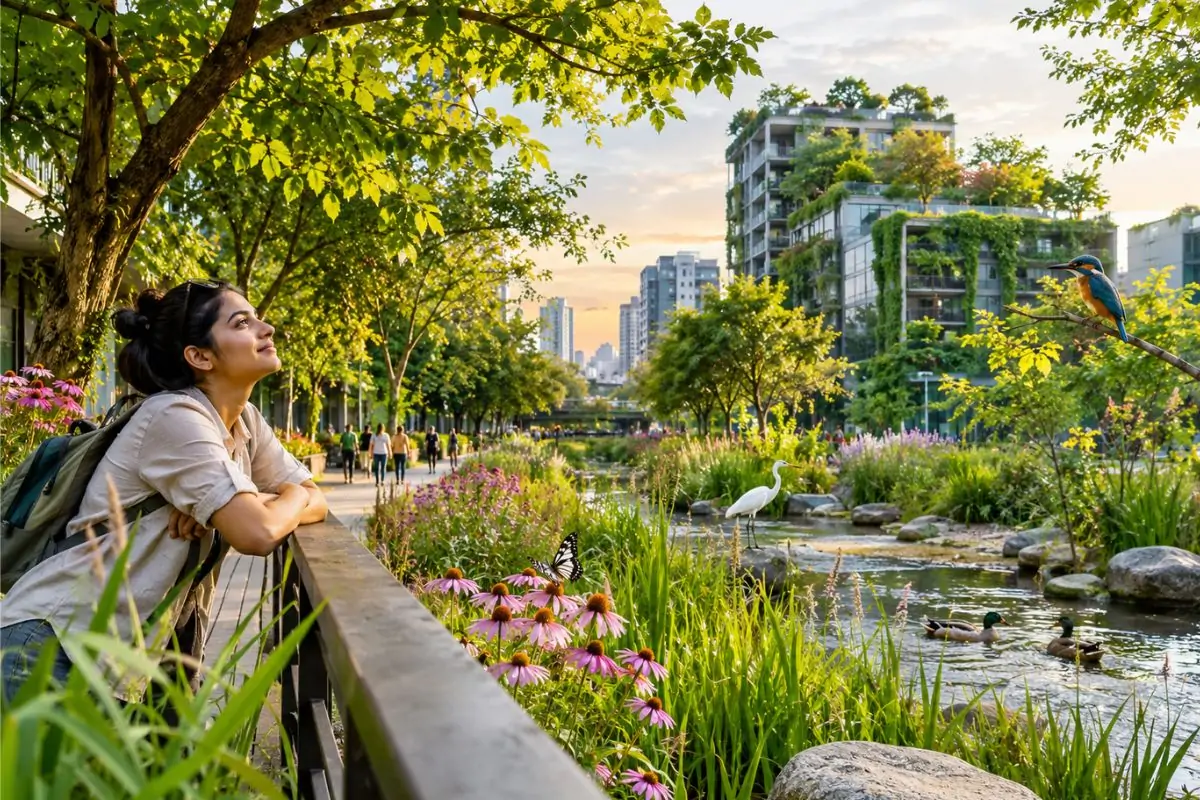
In the middle of the 21st century, a subtle but profound shift is taking place in the world’s densest human habitats. Cities that once prided themselves on conquering nature—paving over wetlands, channeling rivers into concrete, and filling every vacant lot with asphalt—are now deliberately inviting wildness back in. This movement, known as urban rewilding, is neither pure nostalgia nor pure ecology. It is a pragmatic response to climate stress, biodiversity collapse, public health crises, and the growing recognition that sterile cities make sterile people.
Table of Contents
From Control to Coexistence
For most of modern urban history, the dominant philosophy was control. Parks were designed landscapes, rivers were engineered drainage systems, and “weeds” were enemies. The result was functional but impoverished environments: heat islands, flash floods, depleted soils, and a quiet epidemic of disconnection. Children growing up in many cities today can name more corporate logos than native birds.
Rewilding flips the script. Instead of asking how nature can be made to fit human plans, it asks how human settlements can leave room for ecological processes to resume. This does not mean abandoning cities to jungle. It means creating conditions under which spontaneous ecological succession, native species recovery, and natural water and soil cycles can reassert themselves within the urban fabric.
The difference between a conventional park and a rewilded space is instructive. A traditional park is mowed, planted with ornamental species, and managed for visual order and recreational predictability. A rewilded site may look messy to some eyes: tall grasses, fallen wood left in place, seasonal flooding zones, and a mix of plants that change year to year. Yet that messiness is the point. It supports insects, birds, amphibians, and the soil microbiome in ways that clipped lawns cannot.
Early Experiments and Scaling Up
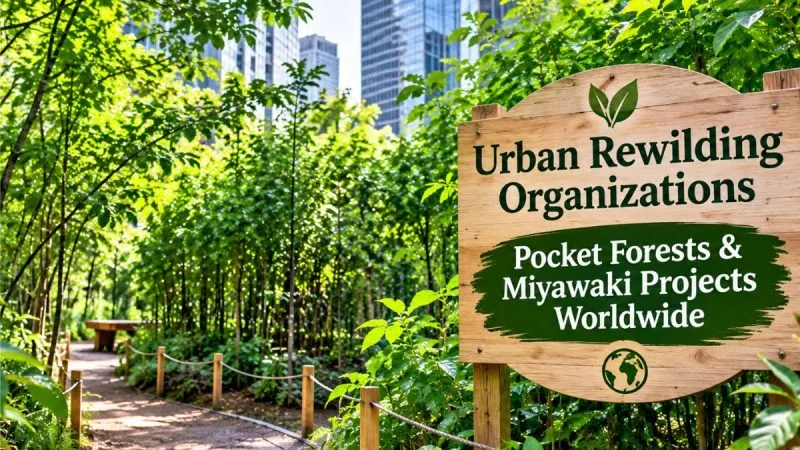
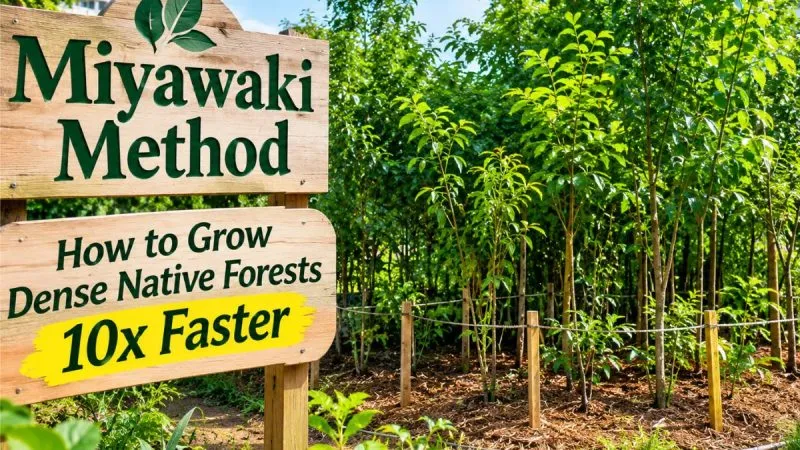
Some of the earliest deliberate urban rewilding efforts appeared in Europe. In the Netherlands, the concept of “nature-inclusive cities” gained traction after researchers demonstrated that even small, connected patches of habitat dramatically increased insect and bird diversity. Cities began converting underused roadside verges, former industrial lots, and the edges of canals into semi-wild corridors. In the United Kingdom, projects such as the transformation of former railway land and the creation of “mini-forests” using the Miyawaki method (dense planting of native species in small plots) showed that meaningful ecological recovery could happen on the scale of a city block.
In North America, the approach has taken different forms. Cities with large post-industrial landscapes—Detroit, Pittsburgh, parts of the Rust Belt—have experimented with letting certain vacant parcels return to meadow or early-successional forest while still maintaining public access and safety. In more constrained dense cities, rewilding often focuses on green roofs, living walls, daylighted streams (bringing buried waterways back to the surface), and the strategic removal of invasive species so that native plants can reclaim space.
Singapore offers a striking tropical example. Long known for its meticulously managed “garden city” aesthetic, it has gradually shifted toward a “city in a garden” and then a “city in nature” vision. This includes extensive park connectors, the restoration of mangrove edges, and the protection of residual forest fragments within the urban matrix. The results are measurable: higher biodiversity indices, better stormwater management, and cooler microclimates in treated neighborhoods.
The Practical Benefits
Critics sometimes dismiss rewilding as romantic or impractical. Data increasingly suggests otherwise.
Climate resilience.Vegetation and permeable soils reduce urban heat island effects. A single mature tree can provide the cooling equivalent of several air-conditioning units. Wetlands and floodplain reconnection absorb stormwater that would otherwise overwhelm drainage systems. In an era of more intense rainfall and heat waves, these functions are infrastructure, not amenities.
Biodiversity.Cities are not ecological deserts by necessity. Studies in multiple countries show that well-designed urban habitat networks can support surprising numbers of species, including some that are declining in surrounding agricultural landscapes. Pollinators, in particular, benefit from the continuous flowering resources that diverse urban plantings can provide.
Human health and well-being.Access to more naturalistic green space correlates with lower stress markers, better mental health outcomes, and increased physical activity. The sensory richness of a semi-wild space—birdsong, the smell of soil after rain, the visual complexity of layered vegetation—appears to offer benefits beyond those of highly manicured parks. For children, unstructured natural play environments support cognitive development and risk assessment skills that formal playgrounds do not fully replicate.
Economic and social dimensions.Rewilded spaces can be cheaper to maintain over the long term than intensive horticultural landscapes once establishment costs are absorbed. They also create opportunities for community stewardship, citizen science, and environmental education. In some cities, former vacant lots turned into community meadows or food forests have strengthened neighborhood ties.
Tensions and Trade-offs
Rewilding is not without friction. Residents sometimes complain about “untidiness,” perceived safety risks (tall vegetation reducing sightlines), or the presence of insects and small animals. Property values and development pressures create constant tension between leaving land wild and converting it to housing or commercial use. Invasive species management remains a persistent challenge; simply stopping maintenance does not automatically produce a desirable native ecosystem.
There are also questions of equity. Wealthier neighborhoods often receive higher-quality green investments first. Successful rewilding programs must deliberately prioritize underserved areas and involve local residents in design and ongoing care rather than imposing ecological ideals from outside.
Cultural attitudes matter as well. In some societies, the ideal of a neat, controlled landscape is deeply held. Shifting public perception requires education, demonstration projects, and time. What looks like neglect to one generation can look like ecological health to the next.
Principles for Effective Urban Rewilding
From the growing body of practice, several principles emerge:
- Connectivity over isolation.Individual green patches are valuable, but ecological function improves dramatically when they form networks that allow species to move.
- Process over appearance.Prioritize soil health, natural hydrology, and successional dynamics rather than a fixed visual endpoint.
- Native and climate-appropriate species.Favor plants and animals adapted to local conditions, while remaining realistic about climate change and urban microclimates.
- Layered use.Design spaces that serve ecological functions while remaining accessible and safe for people. Boardwalks, selective mowing of paths, and clear sightlines in key areas help reconcile the two.
- Long-term stewardship.Initial planting or passive restoration is only the beginning. Monitoring, adaptive management, and community involvement determine whether gains persist.
- Integration with gray infrastructure.Rewilding works best when coordinated with stormwater systems, transportation corridors, and building design rather than treated as a separate green add-on.
Looking Ahead
The most interesting question is not whether cities can rewild, but how far they are willing to go. Some visionaries imagine entire districts where buildings are nested within continuous ecological matrices, where rivers run free within urban floodplains, and where the soundscape includes more birds than traffic. Others see more modest but still transformative goals: every neighborhood with accessible semi-wild space, every major road buffered by living systems, every new development required to leave a meaningful portion of its site to ecological processes.
Technology will play a role—sensors for monitoring biodiversity and soil moisture, AI-assisted design tools, better methods for tracking species movement—but the core work remains ecological and social. It requires patience. Ecosystems do not assemble on political or funding cycles. A meadow may take several years to stabilize; a woodland longer still.
What is becoming clear is that the old model of the city as a machine for living, sealed against the messiness of nature, is reaching its limits. Climate change, biodiversity loss, and human psychological needs are all pushing in the same direction: toward cities that function as living systems rather than against them.
Urban rewilding is not a return to a pre-urban past. It is an attempt to invent a different urban future—one in which human density and ecological vitality are no longer assumed to be opposites. The cities that learn this lesson earliest may prove the most livable, resilient, and interesting places to be in the decades ahead.
The quiet revolution is already underway in scattered lots, restored stream banks, and experimental green corridors around the world. The question now is how widely and how thoughtfully it will spread.