The Georgian Supra: The Feast Where the Table Disappears Under the Food
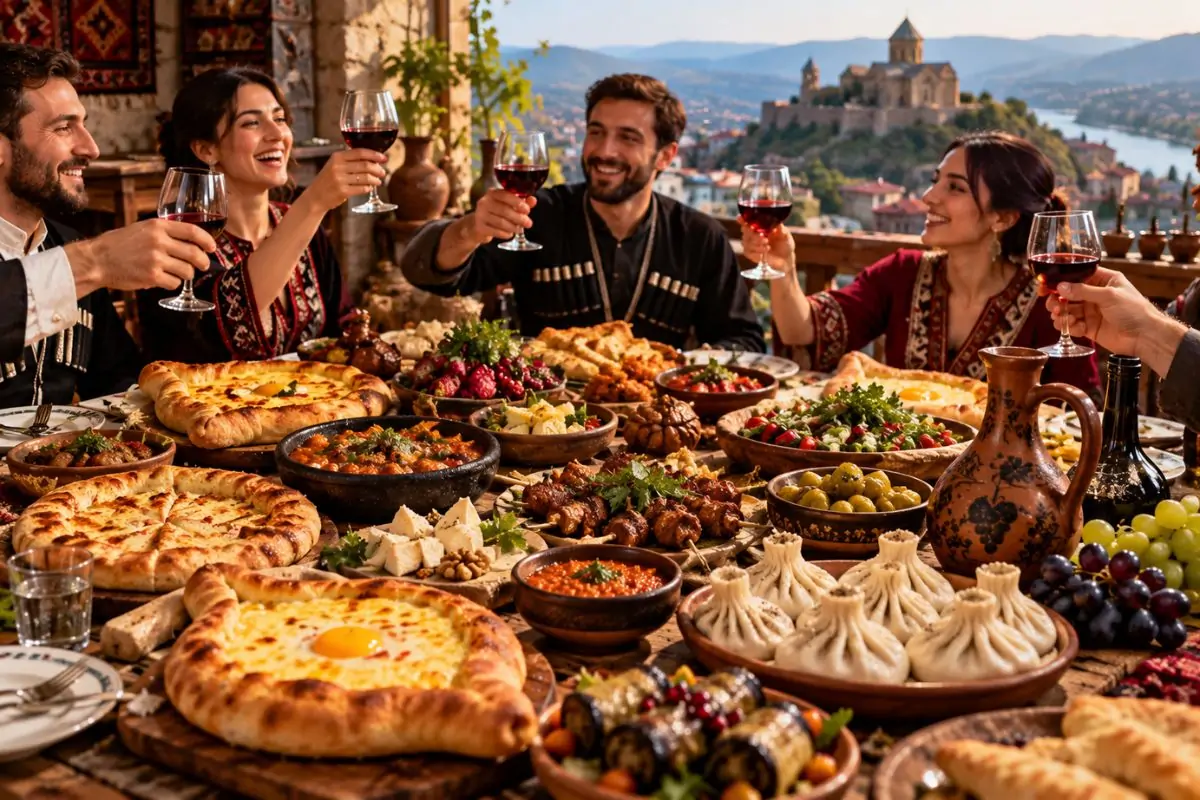
Most countries invite you to dinner. Georgia stages an event. It’s called a supra, it lasts for hours, and the one thing you cannot do is leave hungry, thirsty, or without having toasted your host’s grandmother.
The word itself means “tablecloth,” and it’s a literal description. The dishes are laid out so densely that no fabric is visible. One travel writer lost count of the plates at her first supra and later learned there had been 42.
If you want to understand what a country values, look at how it feeds a stranger. Georgia’s answer is simple: guests are treated like gods.
Why Guests Come First
Georgian folklore holds that a stranger at your door might not be what they seem, so guests are treated as potential divinities. That belief is the engine behind everything that follows. Hospitality is not a courtesy here. It’s a code.
“No guest should ever be left wanting.”
That’s how one food guide summarises the rule, and it explains why your plate refills the moment it looks half empty. Refusing is not really an option. Pacing yourself is.
A supra isn’t staged for tourists. It’s how Georgians celebrate birthdays, weddings, farewells and ordinary Saturdays. You’re simply being let into something that already exists.
Georgia Did Not Make It Onto Your Radar By Accident: The Complete Women’s Guide to Tbilisi and the Caucasus
The Tamada: Poet, Philosopher, Referee
Every supra has a tamada, the toastmaster. Traditionally this is the oldest or most respected man at the table, and his job is serious. He proposes toast after toast, usually at least ten and sometimes twenty over the course of an evening, each one a small speech on friendship, family, ancestors, peace, or the person sitting across from you.
Nobody drinks until the tamada gives the word. He also signals the kitchen when to refresh plates and open more bottles. Think of him as part host, part poet, part comedian, and part traffic controller.
Rule of thumb:Follow the tamada’s lead on drinking, and never sip a toast you haven’t been invited to join.
The Dishes That Fill the Table
Khachapuri.Georgian cheese bread, and the single dish you should not skip. It comes in regional styles. Imeruli has the cheese baked inside the bread. Megruli has cheese inside and more melted on top. Adjarian, from the Black Sea coast, is shaped like a boat and filled with molten cheese, butter, and a raw egg. The move is to tear off the crust, stir everything together, and dip.
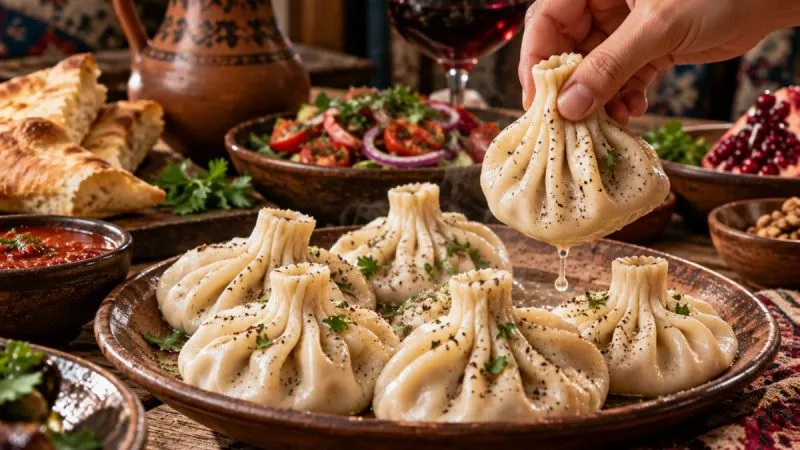
Khinkali.Twisted knots of dough filled with spiced meat and hot broth. They originated in the mountain regions of Pshavi, Mtiuleti, Tusheti and Khevsureti. Unlike xiao long bao, they’re boiled, not steamed, and the skin is thicker.
Mtsvadi.Grilled meat on skewers, usually with tkemali, a tart plum sauce that plays the role ketchup plays elsewhere, only far better.
Badrijani nigvzit.Fried aubergine rolls with walnut paste and pomegranate seeds.
Pkhali and lobio.Spiced vegetable pâtés and a rich kidney bean stew, both staples for vegetarians.
Churchkhela.Walnuts threaded on a string and dipped in thickened grape juice. A candle-shaped snack you’ll see hanging at roadside stalls.
Nuts are everywhere in Georgian cooking. Walnut sauces and pastes turn up in dishes you’d never expect, which gives the cuisine its signature richness.
How to Eat Khinkali Without Embarrassing Yourself
This is the test every first-timer fails in public, and locals enjoy watching.
- Pick it up by the top knot, the doughy stem.
- Sprinkle a little black pepper on top.
- Bite a small hole in the side and slurp the broth first.
- Eat the rest, but leave the stem on your plate.
Etiquette note:Eating the stem is considered impolite. Many Georgians even count the leftover stems at the end of the meal to see who ate the most dumplings.
Don’t Fill Up Too Early
Khachapuri is served at nearly every meal, often after several courses, and it’s absurdly easy to overdo. The grilled meats arrive late, usually with a plate of golden, thick-cut chips, just when you think you’ve reached your limit.
“Wear trousers with an elastic waistband.”
That’s one food magazine’s friendly advice, and it’s the best preparation tip you’ll find.
Where to Experience It
You don’t need to be invited to someone’s home to taste a supra. Restaurants across Georgia offer supra-style set menus, and food tours in Tbilisi often include one. If you do get a home invitation, accept it. Bring a small gift, arrive hungry, and expect to stay for hours.
For the full experience, aim for a table of friends, a good tamada, and some live polyphonic singing, a Georgian tradition that often joins the toasts as the evening goes on.
FAQ
What does “supra” mean?
It means “tablecloth,” a nod to how densely the dishes cover the table.
What is a tamada?
The toastmaster who leads the feast and decides when and what to toast. Traditionally the oldest or most respected man present.
How do you eat khinkali?
Hold it by the top knot, bite a small hole, slurp the broth, then eat the rest and leave the stem.
Is Georgian food good for vegetarians?
Yes. Pkhali, lobio, badrijani nigvzit, and cheese-based khachapuri give vegetarians plenty to eat.
Can I refuse a toast?
It’s better to take part, even with a small sip. Declining entirely can feel dismissive.