The 800 Year Pivot of Tikuli Art
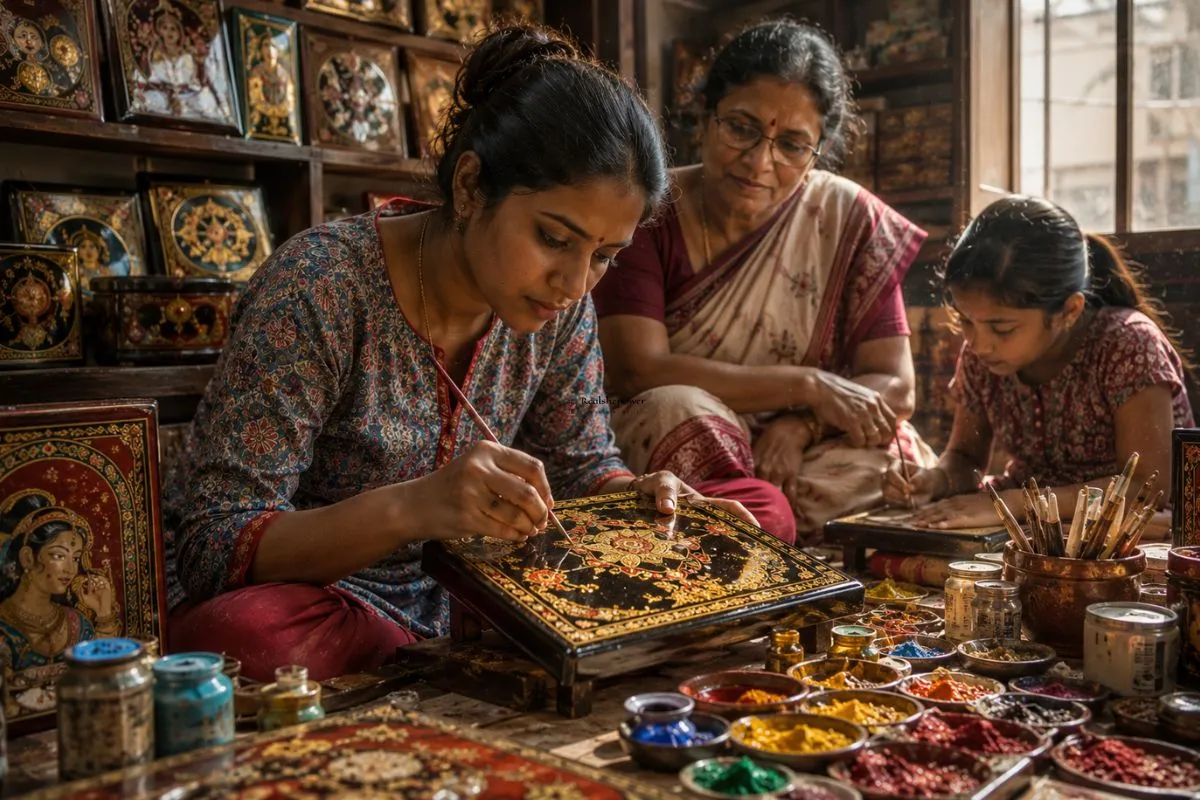
While modern fashion constantly chases the “next big thing,” the RealShePower Culture Genie is looking at Tikuli Art from Bihar a craft that survived by executing one of the most successful strategic pivots in art history. It is a story of how a 2cm cosmetic accessory evolved into a 2ft global fine art masterpiece.
The Origin: The Art of the Ornate Bindi
The word “Tikuli” is derived from Tikli, which locally means a bindi. Originally, this was a highly specialized craft practiced in Patna. Artisans used melted glass, which was then blown into thin sheets and backed with gold foil. These were then hand-decorated with intricate patterns using natural colors. For centuries, these glass Tikulis were the ultimate symbol of status for women across India, valued for their shimmering gold and deep pigments.
The Survival Story: Scaling for the Modern Era
With the advent of the Industrial Revolution and the mass production of cheap, plastic, self-adhesive bindis, the traditional Tikuli industry faced an existential threat. The craft almost vanished.
The revival of Tikuli is a masterclass in Strategic Scaling. Artisans, led by visionaries like Upendra Maharathi, realized that while they couldn’t compete with the machine-made bindi market, their technique was priceless. They shifted the canvas from tiny glass circles to large hardboards and wood. By scaling the intricate patterns onto larger surfaces, they transformed a dying cosmetic product into a premium interior décor and fine art segment.
The Technique: Gold Foil and Mineral Science
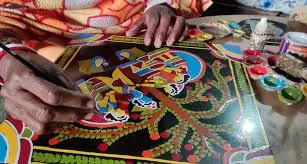
Tikuli art today is famous for its labor-intensive process. It involves several layers of enamel coating on wood, followed by meticulous drawing and the application of gold foil. The themes usually revolve around the life of Lord Krishna, Madhubani-inspired motifs, and scenes from rural Bihar.