You Are Not Burned Out Because You’re Weak. You’re Burned Out Because You’ve Been Carrying Too Much for Too Long.
The Moment She Finally Stopped
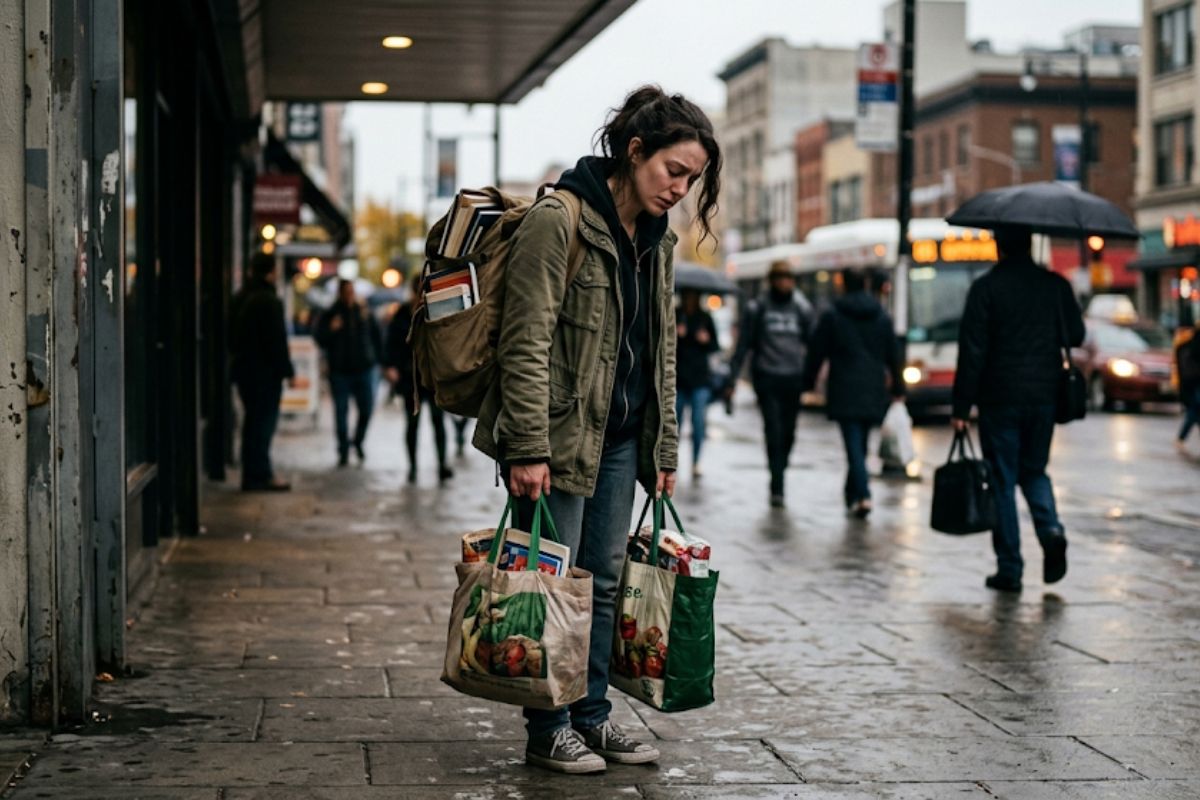
She didn’t crash dramatically. There was no single breaking point, no movie-worthy breakdown. She just woke up one Tuesday morning and couldn’t get out of bed. Not because she was sick. Not because she was sad, exactly. She simply had nothing left. The drive, the discipline, the relentless forward motion that had defined her for years, it was gone. Like a phone that had been running at 1% for months and finally, quietly, died.
If you’ve felt that or something close to it this article is for you.
Burnout among women is not a weakness. It is not a productivity problem. It is not something that can be fixed with a face mask, a weekend away, or a motivational quote. It is a systemic, physiological, and emotional response to a life that has been demanding too much for too long often without rest, without recognition, and without anyone asking if you’re okay.
And in India, where women are expected to excel at work, manage the home, show up for the family, maintain their appearance, support their communities, and do it all with grace and gratitude? Burnout is practically a rite of passage.
It doesn’t have to be.
Part One: What Burnout Actually Is (And What It Isn’t)
The Clinical Reality
Burnout is not just tiredness. The World Health Organization officially classifies burnout as an occupational phenomenon — a syndrome resulting from chronic workplace stress that has not been successfully managed. Its three defining features are exhaustion, increasing mental distance or cynicism toward one’s work, and reduced professional efficacy.
But here’s what the clinical definition misses: for women, burnout rarely lives only at work. It spills. Into relationships. Into parenting. Into the way you speak to yourself in the mirror. Into the hobbies you once loved and haven’t touched in a year. Women don’t burn out in one lane, they burn out across their whole life simultaneously, because that’s how they’ve been expected to live.
There are different flavors of burnout too, and knowing yours matters:
Overload burnout is the classic version — working harder and harder, sacrificing health and happiness in pursuit of success, feeling like there’s always more to do and never enough time.
Under-challenged burnout is sneakier. This is the woman who is bored, underutilized, and unchallenged — her skills are wasted, her ideas are ignored, and she slowly loses all motivation not because she’s done too much but because she’s been allowed to do too little.
Neglect burnout happens when a woman feels helpless — when effort doesn’t translate into outcomes and she stops believing that anything she does matters.
All three are real. All three are valid. And all three require different responses.
The Signs You’re Telling Yourself Are “Just Life”
The problem with burnout is that it masquerades so well as personality. By the time most women recognize it, they’ve normalized it for months, sometimes years. They’ve rebranded exhaustion as “being driven,” cynicism as “being realistic,” and emotional flatness as “being mature.”
Here are the signs most commonly dismissed:
Waking up tired despite getting enough sleep. Dreading things you once looked forward to. Struggling to feel joy even in good moments. Snapping at people you love and feeling immediate guilt. Feeling like a fraud even when you’re succeeding. Constant low-grade anxiety that nothing is ever enough. Physical symptoms like headaches, gut issues, frequent illness with no clear medical cause. The creeping sense that you’ve lost yourself somewhere along the way.
If several of these feel uncomfortably familiar, you are not broken. You are burned out. And there is a difference.
Part Two: Why Women Burn Out Differently
The Double Shift That Never Ends
Research consistently shows that women around the world including in dual-income households carry a disproportionate share of domestic and emotional labor. The cooking. The cleaning. The school schedules. The doctor appointments. The remembering of birthdays and the managing of everyone’s feelings.
This is the “second shift” the unpaid, invisible labor that begins the moment a woman’s paid workday ends. For many Indian women, it’s not even a second shift. It runs parallel to the first.
She attends the 9 AM meeting and simultaneously sends a message to the maid about tonight’s dinner. She meets the project deadline and remembers her mother-in-law’s medication refill. She gives a presentation to senior leadership and wonders if she left enough food out for lunch. The mental load never fully offloads.
The cumulative cost of carrying this invisible weight day after day, year after year is not just tiredness. It is the slow erosion of a woman’s sense of self. Her needs become invisible to her too, because she’s been trained to see herself last.
The Emotional Labor Tax
Women are socialized to manage everyone else’s emotional world. To soothe, to mediate, to anticipate, to smooth. At work, this shows up as being the team’s unofficial counselor, the person who notices who is struggling and does something about it, the one who holds the morale of a group together without anyone calling it a job.
It is unpaid. It is unrecognized. And it is exhausting.
The emotional labor tax compounds over time. A woman who is constantly attuned to everyone else’s emotional needs and consistently deprioritizes her own becomes emotionally depleted in ways that are difficult to articulate, because the work itself is invisible.
Here’s what makes this particularly damaging: when women try to stop, when they set a boundary, when they don’t answer the message at 11pm, when they say “I can’t take that on right now” they are frequently labelled as cold, unhelpful, or difficult. The penalty for stopping is social and professional.
So they don’t stop. They just get more tired.
The Perfectionism Trap
Somewhere between childhood conditioning and workplace pressure, many women have internalized a belief that they must be flawless to be valued. That a single mistake will undo everything they’ve built. That they need to work twice as hard to be taken half as seriously.
And so they never hand in work that is “good enough.” They reread the email five times. They apologize before they even make the request. They don’t raise their hand for the opportunity because they don’t yet tick every box on the requirements list (while their male colleague raises his hand having ticked three).
Perfectionism is not a high standard. It is fear wearing the costume of discipline. And it is one of the most efficient engines of burnout there is because perfectionists are never done. There is always more to polish, more to prove, more to protect.
Part Three: The Burnout–Identity Crisis Connection
When Your Work Becomes Your Worth
One of the most underexplored dimensions of burnout is what it does to a woman’s sense of identity. For women who have tied their worth to their productivity their output, their achievements, their usefulness, burnout isn’t just an energy crisis. It’s an identity crisis.
If I am what I produce, and I can no longer produce, then who am I?
This question can be terrifying. And it often goes unasked, because asking it means sitting with an answer that the busy, achieving, always-moving version of yourself has been running from.
The truth is: you are not your productivity. You are not your job title. You are not your ability to hold everything together for everyone else. You are a full, complex, worthy human being whose value does not fluctuate with your output and burnout, as brutal as it is, sometimes forces the kind of stillness in which that truth can finally be heard.
At realshepower, we’ve written extensively about women who have rewritten the rules of who they’re allowed to be. Women who stepped away from definitions that no longer fit and built new ones. That is not weakness. That is the deepest kind of courage.
Burnout as a Signal, Not a Sentence
Here is the reframe that changes everything: burnout is not telling you that you failed. It is telling you that the way you have been living is not sustainable. It is a signal that something needs to change, not that you need to give up.
The women who recover from burnout most powerfully are the ones who treat it not as an interruption to their lives but as information about what their lives need to become. They use the crash to examine what they were chasing and why. They come out the other side having let go of the things that were never theirs to carry, and with a much clearer sense of what actually matters.
Part Four: Real Recovery — What Actually Works
First: Rest Is Not Laziness. It Is Biology.
Your nervous system is not a metaphor. When you are burned out, you are physiologically dysregulated — your stress hormones are chronically elevated, your sleep architecture is disrupted, your immune system is suppressed. This is not a mindset problem. It is a biological one.
Which means the first step in recovery is not a productivity hack or a new morning routine. It is rest. Real, unstructured, unproductive rest.
This is uncomfortable for high-achieving women. Rest feels like falling behind. It feels like giving up. It can even feel dangerous because the anxiety that has been driving you is still there, and without motion to channel it into, it just… sits with you.
Sit with it anyway. The anxiety will not kill you. The burnout, if left unaddressed, is doing more damage than the discomfort of stillness ever will.
Practical, non-negotiable rest habits:
Sleep as a sacred priority. 7-9 hours, consistent schedule, no screens in the hour before bed. Not a suggestion. A requirement. Chronic sleep deprivation is physiologically identical to being mildly drunk and you are trying to rebuild yourself while impaired.
Permission to do nothing without justification. Sit in the garden. Watch the clouds. Let a weekend afternoon pass without a to-do list. This is not wasted time. This is your nervous system healing.
Physical rest vs. mental rest. You can sleep for eight hours and still wake up mentally exhausted if you spent those hours with your mind running. Mental rest means disconnecting from cognitive load — no planning, no problem-solving, no consuming content that requires processing. Silence. Nature. Movement without purpose.
The Boundaries That Will Save Your Life
This is the part most women resist the longest: they know they need boundaries, they even know what those boundaries should be — they just struggle to enforce them without guilt.
Boundaries are not walls. They are not punishment. They are not about making other people’s lives worse. They are a statement about what you are able to give sustainably, and what you need to function as a healthy human being.
Here is how to build them:
Start small and internal. You don’t need to announce a revolution. Start by noticing where you are giving without consent, where you are saying yes when every part of you is screaming no. Just notice it first.
Choose one boundary and practice it. “I don’t answer work messages after 8pm.” “I don’t offer to help unless I genuinely have capacity.” “I don’t apologize for having a different opinion.” Pick one. Practice it for a month.
Expect discomfort — from yourself and others. New boundaries are not immediately comfortable for anyone. People who have benefited from your lack of boundaries will push back. Your own guilt will be loud. This is normal. It does not mean the boundary is wrong.
Separate the boundary from the explanation. You do not owe a detailed justification for every limit you set. “I can’t take that on right now” is a complete sentence.
The self-sabotaging behaviors women mistake for self-love article on realshepower explores how women often confuse people-pleasing with generosity and how that confusion slowly destroys them. If that feels familiar, it’s worth a read.
The Conversation You Need to Have With Yourself
Burnout recovery requires a level of self-honesty that is deeply uncomfortable. It requires asking questions you’ve been avoiding:
What am I doing that I resent doing and keep doing anyway? What am I not doing that I deeply need? Whose expectations am I living by? What would I be doing with my time if no one was watching and no one was keeping score? What do I actually want?
That last question is the one most women cannot answer immediately because they’ve spent so long being attuned to what everyone else wants that their own desires have gone quiet. They haven’t been suppressed, exactly. They’ve just not been spoken to in so long that they don’t immediately answer.
Write in a journal. Sit in silence. Walk without your phone. Ask the question, then wait. The answer will come.
Community as Medicine
There is something that no self-care routine, no boundary, and no amount of rest can fully replace: the experience of being known by other women.
Women’s friendships and community have long been undervalued — treated as social niceties rather than the survival infrastructure they actually are. But research is unambiguous: women with strong social support systems are more resilient, recover from hardship faster, and report higher life satisfaction across every domain.
Find your women. Not the women who will tell you everything is fine. The women who will look you in the eye and say “I see that you’re not okay, and I’m not going anywhere.” The women who will sit with you in the messy middle without trying to fix it. The women who celebrate your wins as if they are their own.
The stories of women who have rebuilt after falling apart — the women change makers featured on realshepower — almost universally point to community as a turning point. The moment when someone saw them, and they stopped hiding.
You don’t have to do this alone.
Part Five: Rebuilding — Not Back to Where You Were, But Forward to Where You Belong
The Trap of “Getting Back to Normal”
One of the most common recovery pitfalls is aiming to get back to your pre-burnout life as quickly as possible. The same pace. The same commitments. The same way of operating that led you here.
But here’s the thing: your pre-burnout life was the problem. Getting back to it is not recovery. It is a countdown to the next crash.
Recovery is not a return. It is a rebuild. And rebuilds, done well, produce something better than what was there before — a life that is more intentional, more sustainable, and more authentically yours.
What does a rebuilt life look like? It looks different for every woman. But some common elements appear across those who come out of burnout stronger:
They have dropped at least one obligation that was never really theirs. They have claimed at least one thing that brings them genuine joy. They have learned to tolerate the discomfort of other people’s disappointment without collapsing. They have built some kind of non-negotiable practice — physical, creative, spiritual — that returns them to themselves regularly. And they have accepted that they are allowed to take up space.
Reclaiming Your Career on Your Own Terms
For women who burned out at work, who gave everything to their career and found the career taking more than they had — the rebuild often requires a fundamental renegotiation of the relationship between identity and profession.
This might look like: scaling back to a sustainable pace and refusing to feel guilty about it. Changing roles, companies, or entire industries. Starting the business you’ve been too afraid to start. Choosing a slower, quieter version of success that the world won’t applaud but that actually fits your life.
Read our deep-dive into women in business for stories of women who restructured their entire careers around their lives — rather than structuring their lives around their careers. It is possible. It requires courage. And it is almost always worth it.
The hidden curriculum of power, the unwritten rules women are never taught about how workplaces actually work is something we’ve explored in detail here. If you’re navigating a career rebuild, understanding the landscape is half the battle.
A Note on Professional Help
Let’s say this clearly: therapy is not a last resort. It is not something you pursue only when everything else has failed, when the crisis is acute, when you can’t function. It is a tool — a powerful, evidence-based tool — for doing the kind of self-examination and healing that is very difficult to do alone.
If you can access therapy, do. Not because something is wrong with you. Because you are worth the investment, and because some conversations are best had with someone trained to hold them safely.
In India, therapy is increasingly accessible — in-person, online, and at a range of price points. Platforms like iCall, Vandrevala Foundation, and The iCall Helpline (9152987821) offer free or low-cost mental health support. The conversation has started. Step into it without shame.
Part Six: The Bigger Picture — A Culture That Creates Burnout
It’s Not Just Personal. It’s Structural.
We would be doing you a disservice if we ended this article without naming the truth: burnout in women is not just a personal problem requiring personal solutions. It is a structural problem.
The workplaces that don’t provide adequate parental leave, flexible working, or mental health support. The homes where unpaid labor is unevenly distributed. The culture that rewards overwork and calls it dedication. The systems that give women more responsibilities without more resources, more visibility without more power, more scrutiny without more support.
Your burnout is partly personal. And it is also the entirely predictable outcome of a society that has asked women to do too much with too little for too long.
This matters because it means the solution is not just individual healing though that is where it starts. It is also collective action: workplaces that change policies, families that redistribute labor, communities that normalize boundaries, women who tell the truth about what they are experiencing so that other women know they are not alone.
Women like Rekha Patra, the fearless voice of Sandeshkhali, remind us what is possible when a woman refuses to be silent about systemic injustice. Her courage begins with the same thing recovery from burnout begins with: the decision to stop pretending everything is fine.
What You Owe the Next Generation
There is one more reason to take your recovery seriously — to insist on your right to rest, to set limits, to build a life that is sustainable and joyful rather than impressive and exhausting:
The women coming after you are watching.
Your daughter, your niece, your younger colleague, they are learning what it looks like to be a woman in the world by watching you. If what they see is a woman who never stops, who never says no, who runs on empty and calls it strength that is what they will inherit.
But if what they see is a woman who knows her worth, who rests without guilt, who asks for help, who says “that’s not mine to carry” they learn that too.
Your healing is a radical act. Not just for you. For every woman who will come after you and take her first permission from watching you take yours.
The Invitation
You’ve been strong for a very long time. You’ve carried things no one saw and absorbed pressures no one acknowledged. You’ve shown up, kept going, and found more when you thought there was nothing left.
You don’t have to keep performing that strength.
You are allowed to rest. You are allowed to fall apart a little, to not have the answer, to say “I don’t know” and “I need help” and “this isn’t working for me anymore.”
You are allowed to be a full human being — not just the most functional version of yourself.
Start there. Come home to yourself. Build something quieter, something more honest, something more yours.
She power is not the power of a woman who never breaks. It is the power of a woman who breaks, examines the pieces, decides what to keep, and builds something better.
That woman is you. She’s been waiting.
Explore more from realshepower:
- Women Change Makers: Stories of Women Rewriting the Rules
- Self-Sabotaging Behaviors Women Mistake for Self-Love
- Women in Business: Real Stories, Real Strategies
- The Hidden Curriculum: What Women Are Never Taught About Power
- EriWeave: When Women Change Makers Transform Communities
- Saalumarada Thimmakka: Proof That One Woman’s Purpose Can Change the World
realshepower — In Women, We Believe.