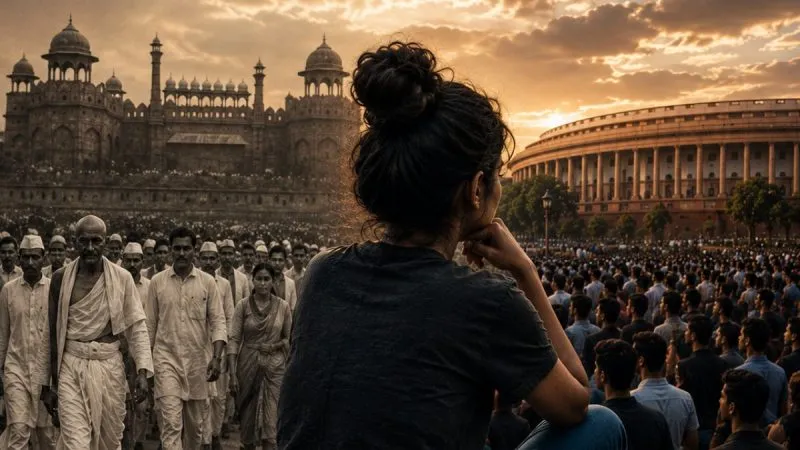
The Cockroach Janta Party: When Satire Stings Harder Than Serious Politics
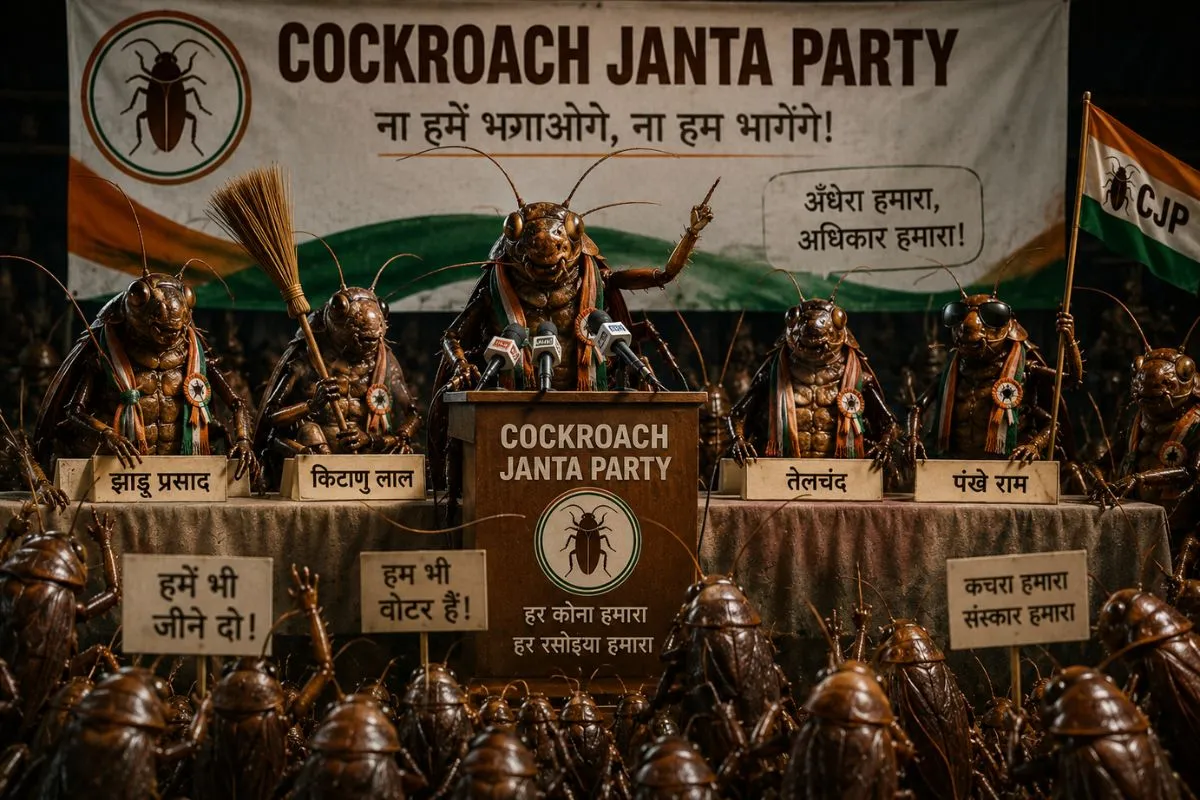
In May 2026, India’s Chief Justice Surya Kant made remarks during a Supreme Court hearing that compared certain unemployed youth activists—particularly those with dubious credentials—to “cockroaches” and “parasites.” What could have been another fleeting controversy instead birthed one of the most potent cultural phenomena in recent Indian politics: the Cockroach Janta Party (CJP). Founded by Abhijeet Dipke, a political communications strategist and former AAP volunteer then studying in the US, this self-described satirical movement has exploded into a voice for frustrated Gen Z, amassing millions of followers and spilling into real-world protests at places like Jantar Mantar in Delhi.
The name is pure genius as political theater. It directly reclaims the insult while parodying the ruling Bharatiya Janata Party (BJP). “Janta” for the people, cockroaches for the resilient, scuttling survivors of a system that grinds down the ambitious. Their slogan—”Voice of the Lazy & Unemployed”—is dripping with self-deprecating humor that lands because it contains uncomfortable truth. India’s youth bulge faces sky-high competitive exam pressures, repeated paper leaks (NEET and others), delayed results, job scarcity despite degrees, and a sense that the economy’s much-touted growth leaves many behind. Cockroaches, after all, survive nuclear winters and bureaucratic apathy alike.
Why It Resonates
CJP’s strength lies in its format. It doesn’t pretend to be a conventional party—no ECI registration, zero corporate sponsors, just memes, a mock manifesto with five demands on exam reforms and accountability, and a “swarm” mentality. Membership is open to anyone who can rant professionally while being chronically online. This low-barrier, high-virality approach captured something mainstream parties missed: genuine alienation mixed with dark humor. When institutions lecture struggling young people about laziness while exam scandals erode merit and post-retirement sinecures reward the connected, satire becomes therapy—and mobilization.
The movement highlights real governance failures. Persistent leaks in national exams destroy trust. Unemployment statistics and underemployment among graduates tell a story of policy shortcomings, skills mismatch, and regulatory capture in education. Protests demanding the Education Minister’s resignation or systemic fixes aren’t baseless; they’re pressure valves. In a democracy, youth disengagement is dangerous. CJP has activated them, turning passive scrolling into petitions and street presence. That’s a net positive for civic energy.
The Limits of the Swarm
Yet, as a writer, I must note the caveats. Satire excels at diagnosis but falters at prescription. Reclaiming “cockroach” is empowering, but romanticizing victimhood or laziness as identity risks entrenching resentment over agency. Not every frustrated graduate is a systemic victim; India’s challenges also stem from population scale, regulatory overload, and cultural factors around risk-taking and vocational training. Blaming everything on “the system” while demanding more from it can become circular.
There’s also the political subtext. Founder links to AAP and the manifesto’s targets—echoing standard opposition critiques of the Modi government on press freedom, judge appointments, and electoral integrity—invite skepticism. Critics rightly question if this is pure grassroots or astroturf with opposition backing. Endorsements from figures like Akhilesh Yadav or Mahua Moitra fuel suspicions of it serving as a Trojan horse. Genuine youth anger shouldn’t be a rent-a-mob for legacy parties facing their own credibility crises.
Moreover, resilience is admirable, but cockroaches thrive in filth. India’s youth deserve better than mere survival—they need an environment where hard work and talent reliably yield mobility. Protests are fine; sustained policy focus on education integrity, labor market flexibility, ease of doing business for small enterprises, and curbing credential inflation would be superior.
A Mirror to India
The CJP phenomenon is less about cockroaches and more about India’s democratic immune system. It shows social media’s power to amplify the marginalized, the creativity of Indian youth, and the ruling dispensation’s struggle to connect with aspirational demographics beyond welfare schemes and cultural messaging. Governments that dismiss such movements as mere “parasites” or foreign-influenced miss the signal: legitimacy requires delivering tangible progress on jobs and fairness, not just narratives.
In the end, I applaud the CJP for its audacity. Satire that forces uncomfortable conversations is healthy. Whether it evolves into a lasting force, fizzles as a meme, or gets co-opted will depend on its ability to move beyond jokes to constructive ideas—and on whether India’s political class treats the underlying grievances with seriousness rather than condescension. For now, the swarm is watching. And in politics, as in pest control, ignoring resilient critics is rarely wise.
The cockroaches aren’t going away. The question is whether India builds a system where they don’t need to scuttle quite so desperately.