
Cockroach Janta Party (CJP): Chronology of Events
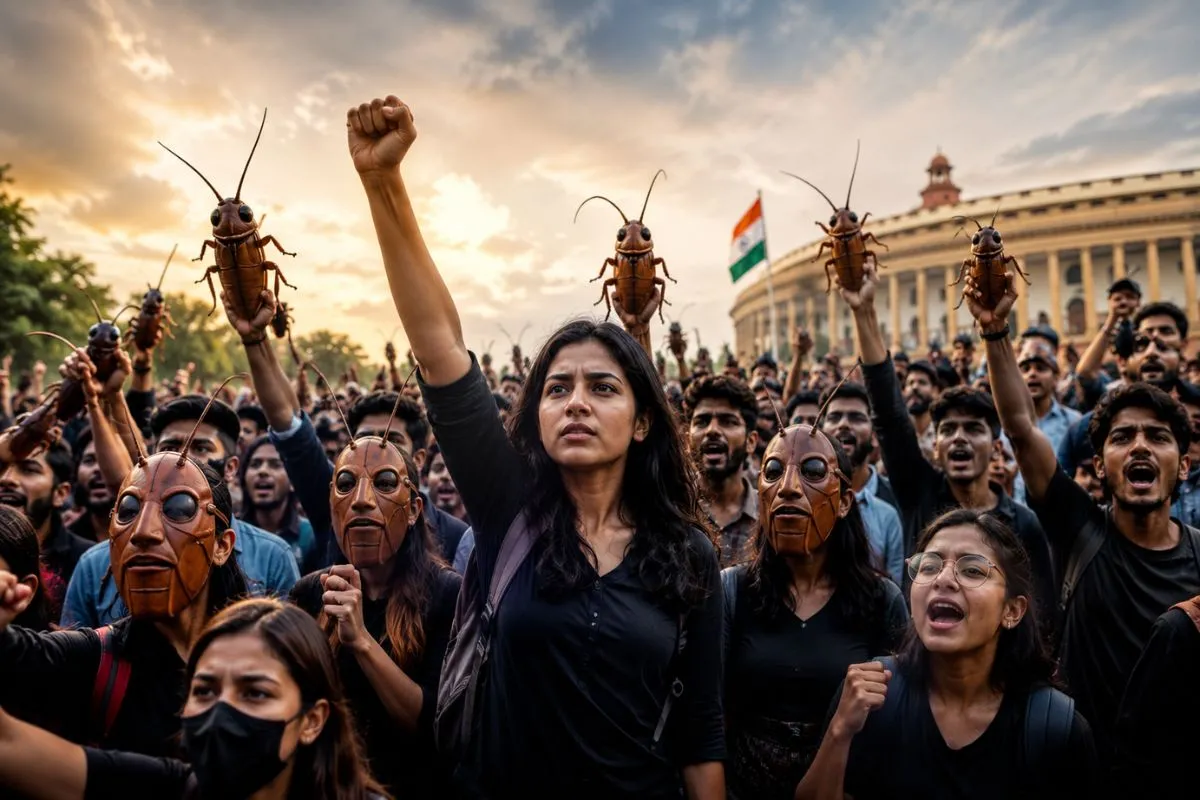
Note: The “Cockroach Janta Party” (CJP) is a satirical, youth-led protest movement, not a registered political party. It emerged in 2026 as an online campaign before evolving into nationwide protests focused on youth unemployment, examination paper leaks, and demands for greater accountability in India’s education system.
May 2026: The Trigger
- During a court hearing, remarks attributed to the Chief Justice of India comparing unemployed youth to “cockroaches” sparked widespread outrage on social media.
- The comment quickly went viral, with thousands of young Indians reclaiming the term “cockroach” as a symbol of resilience and collective protest.
- Political strategist Abhijeet Dipke responded online with the question: “What if all cockroaches came together?”
- This led to the creation of the satirical Cockroach Janta Party (CJP).
Late May 2026: Viral Growth
- What began as satire rapidly gained momentum across Instagram, X, and other platforms.
- Millions of young users joined or followed the movement.
- Memes, digital posters, and symbolic cockroach imagery became central to its online identity.
- The movement increasingly focused on concerns over unemployment, competitive examinations, and opportunities for young people.
June 2026: From Online Campaign to Street Movement
- CJP organized its first major public demonstrations in Delhi.
- The protests centered on repeated allegations of leaks in competitive examinations, including NEET and government recruitment tests.
- Protesters demanded accountability and reforms in the education system.
- Activist Sonam Wangchuk publicly associated himself with the movement, increasing national attention.
July 2026: Nationwide Expansion
- Demonstrations spread to cities including Mumbai, Chennai, Hyderabad, Nagpur, Bengaluru, and others.
- Protesters adopted cockroach masks and slogans emphasizing resilience despite attempts to suppress dissent.
- Women, students, professionals, and families joined the demonstrations.
- The movement became one of the largest youth mobilizations in recent years.
July 20–23, 2026: Delhi Protest Intensifies
- Thousands gathered near Jantar Mantar and Parliament in New Delhi.
- Police imposed restrictions and used crowd-control measures, including tear gas and baton charges in some areas.
- Organizers maintained that their movement would remain peaceful despite confrontations.
Core Demands
The movement’s principal demands included:
- Resignation of Union Education Minister Dharmendra Pradhan.
- Independent investigation into examination paper leaks.
- Reforms to recruitment and examination systems.
- Accountability for officials involved in alleged irregularities.
- Support for families affected by student suicides linked to exam-related stress and controversies.
Government Response
- Prime Minister Narendra Modi announced plans for fast-track courts to deal with examination leak cases.
- Protest leaders argued that judicial fast-tracking alone was insufficient without broader accountability and structural reforms.
- The government initiated dialogue with representatives of the movement, although disagreements over the venue delayed formal talks.
Political Reactions
- Opposition parties expressed support for the protesters’ demands for accountability.
- Several public figures commented on the issue, while others faced criticism for delayed responses.
- The movement remained officially non-partisan, though it attracted attention across the political spectrum.
Current Status (as of July 2026)
- The Cockroach Janta Party continues to describe itself as a peaceful youth movement rather than a conventional political party.
- It has announced plans for further nationwide demonstrations while maintaining demands for education reforms and accountability.
:%20Chronology%20of%20Events)