India’s SCO Engagement: Strategic Autonomy in a Crowded Eurasian Table
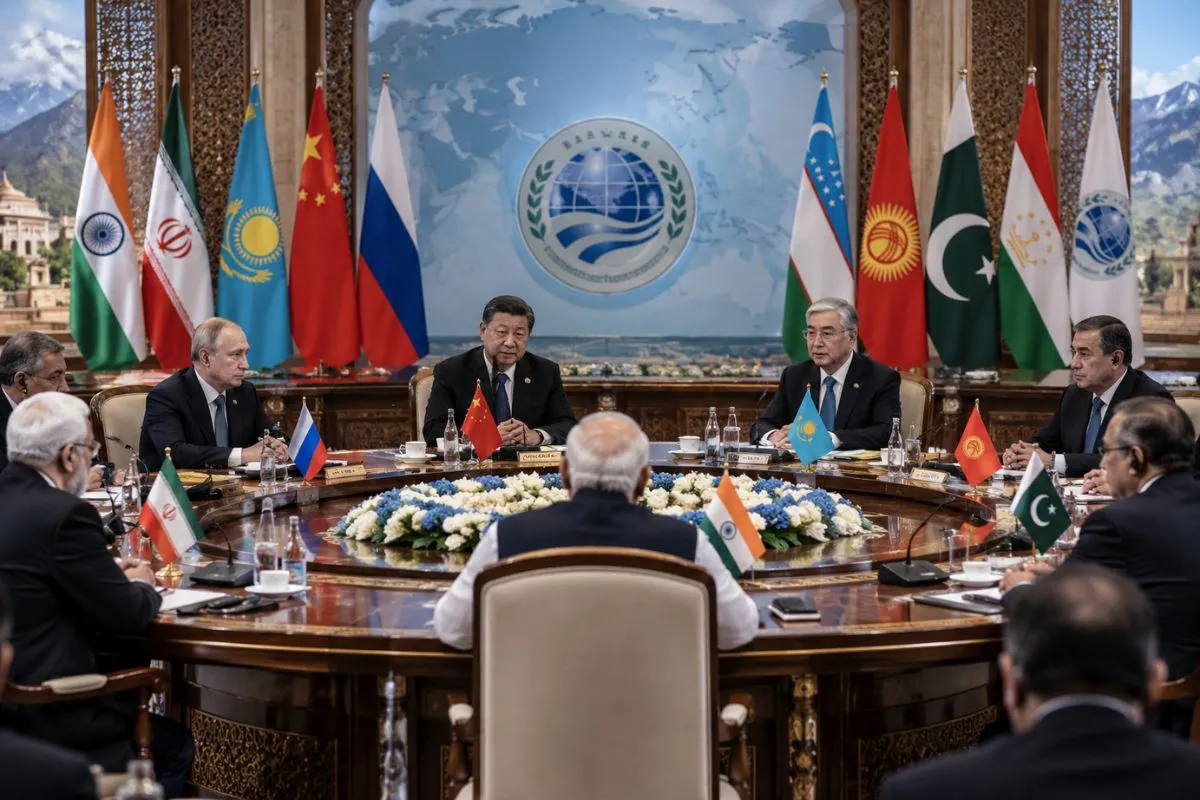
India’s participation in the Shanghai Cooperation Organisation (SCO) is one of the clearest illustrations of New Delhi’s doctrine of multi-alignment. It is neither a full embrace of a China-Russia-centric Eurasian order nor a purely transactional presence. India uses the forum to protect core security interests, expand limited economic options in Central Asia, and keep channels open with both Beijing and Moscow while simultaneously deepening ties with the United States, the Quad, and Indo-Pacific partners. The result is pragmatic, often awkward, and deliberately non-committal.
SCO as a Platform, Not a Pillar
The SCO, founded in 2001 and expanded to include India and Pakistan as full members in 2017, is dominated by China and Russia. Its official priorities—counter-terrorism, connectivity, and economic cooperation—overlap with Indian interests in principle. In practice, the organisation reflects Beijing’s preference for Eurasian integration that elevates Chinese influence and Moscow’s desire for a post-Western security architecture.
India has never treated the SCO as a primary security alliance. Official statements emphasise “sovereign equality” and “non-interference,” language that doubles as a quiet rejection of any hierarchical order led by China. New Delhi has repeatedly used SCO summits and meetings of the Regional Anti-Terrorist Structure (RATS) to highlight cross-border terrorism originating from Pakistan-based groups—an issue that receives polite but limited traction because Pakistan is a full member. India’s refusal to endorse the Belt and Road Initiative (BRI) inside SCO documents is consistent and public; it cites sovereignty concerns over the China-Pakistan Economic Corridor (CPEC) running through Pakistan-occupied Kashmir.
This selective engagement allows India to extract intelligence cooperation on terrorism and narcotics while blocking language that would legitimise Chinese infrastructure projects or dilute its position on territorial integrity.
Security Priorities: The China and Pakistan Constraints
Regional security for India remains defined by the Line of Actual Control with China and the unresolved dispute with Pakistan. The 2020 Galwan clash and subsequent military standoffs have not been resolved through SCO mechanisms. Disengagement talks continue bilaterally and through other channels; the SCO’s consensus-driven structure makes it unsuitable for adjudicating bilateral military crises involving two of its members.
India therefore treats the SCO as a secondary venue. It continues to modernise its border infrastructure, expand defence partnerships with the United States, France, and others, and participate in the Quad—none of which are compatible with a deeper SCO security commitment. Simultaneously, defence and energy cooperation with Russia remains robust. Russian platforms still form a large share of Indian inventories, and discounted oil imports after 2022 have helped manage current-account pressures. The SCO provides cover for maintaining that relationship without appearing to endorse a formal anti-Western bloc.
Pakistan’s presence inside the organisation further limits ambition. Joint military exercises under SCO auspices are carefully calibrated; India has at times opted for limited or symbolic participation when the optics risk domestic backlash. Counter-terror cooperation is pursued where interests converge (e.g., Afghanistan-related threats), but New Delhi does not expect the SCO to pressure Islamabad on groups that target India.
Trade and Connectivity: Modest Gains, Structural Limits
Trade is the weakest link in India’s SCO strategy. China is India’s largest trading partner by volume in many years, yet the relationship is marked by a large and persistent deficit, restricted market access for Indian goods, and strategic distrust. SCO economic initiatives have not altered this imbalance. India’s resistance to BRI connectivity projects has left it outside major regional infrastructure corridors that China is building through Central Asia and Pakistan.
Engagement with Central Asian republics through the SCO has produced limited but tangible results: energy exploration talks, potential uranium supplies, and modest increases in pharmaceutical and IT exports. The International North-South Transport Corridor (INSTC), which India supports independently of the SCO, remains a parallel priority because it offers access to Eurasia while avoiding Chinese-dominated routes. Progress has been slow due to geopolitical friction (Iran sanctions, regional instability) and infrastructure gaps.
India’s broader trade strategy prioritises free-trade agreements with partners that do not present the same security externalities—Australia, UAE, and ongoing talks with the EU and UK—over SCO-driven economic integration. The organisation functions more as a diplomatic hedge than an economic engine.
Nuanced Reality and a Clear Assessment
India’s approach is coherent if judged by outcomes rather than rhetoric. It has preserved strategic autonomy: it criticises Chinese assertiveness without walking out of the SCO, buys Russian energy and weapons without joining a formal axis, and expands Indo-Pacific partnerships without formally abandoning Eurasian forums. This is classic hedging.
The costs are real. Consensus rules dilute India’s ability to shape outcomes on terrorism and connectivity. Persistent China-Pakistan alignment inside the organisation constrains ambition. Economic dividends remain marginal compared with bilateral and other multilateral tracks. Yet the alternative—withdrawal or purely adversarial posturing—would forfeit intelligence channels, Central Asian access, and the ability to engage Russia and China in a structured setting at a time when both remain important, if complicated, partners.
India’s SCO policy succeeds precisely because it is limited. It treats the organisation as one table among many rather than the central one. That posture reflects a realistic reading of power realities in Eurasia: China is the rising economic and military weight, Russia is a declining but still relevant security partner, and India’s core interests lie in securing its periphery, diversifying supply chains, and avoiding exclusive alignment. Multi-alignment is not elegant, but it remains the most rational response available.