What’s Happening in Europe: Protests Explained Simply (October 2026)
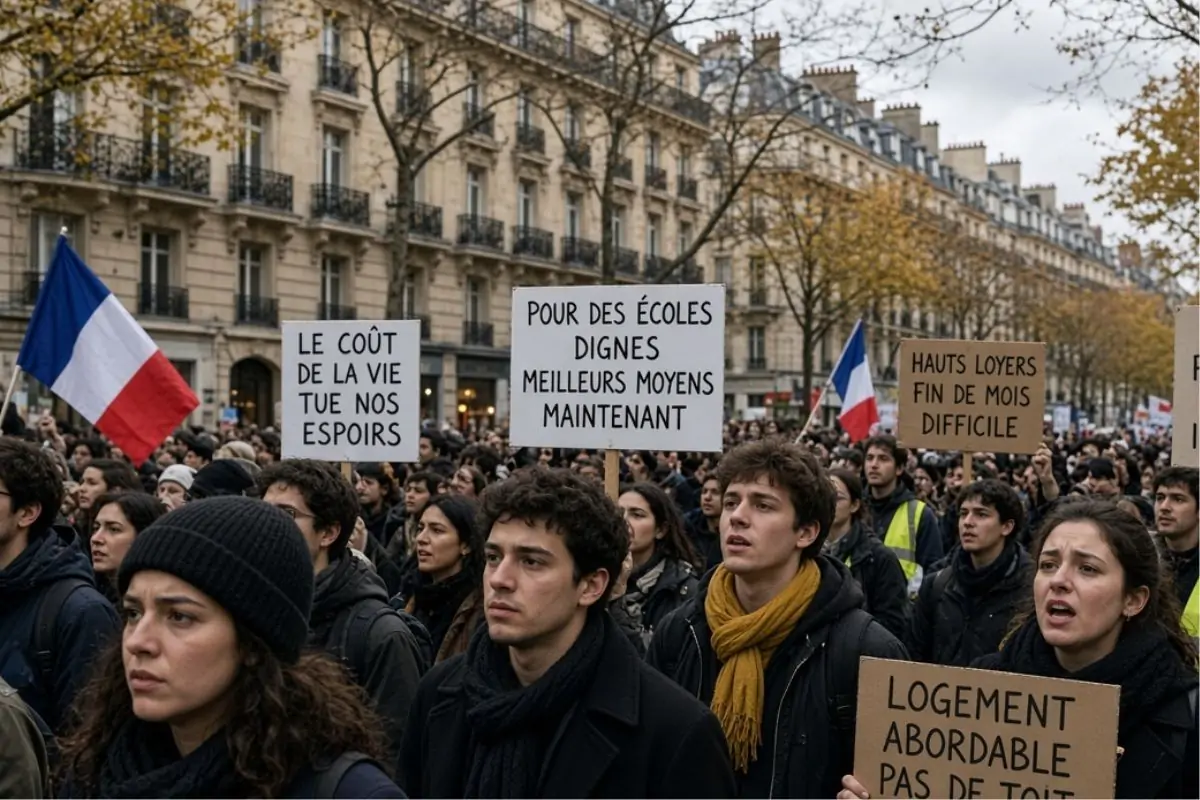
Europe is experiencing a wave of protests and social unrest in autumn 2026. People in several countries are taking to the streets over the rising cost of living, housing crises, and declining public services, particularly education. While the demonstrations are largely unconnected, they share common economic frustrations.
Why Are People Protesting Across Europe?
The core issues driving theEurope protests 2026include:
- High fuel and energy prices
- Soaring rents and house prices
- Overcrowded schools and teacher shortages
- Wages that are not keeping up with inflation
- A general sense among young people that their future looks harder than previous generations
These pressures have created what many call a perfect storm for discontent.
- Main causes: Rising fuel prices, unaffordable rents, teacher shortages, and inflation
- Biggest protests: France (550,000+ on 17 October)
- Other hotspots: Italy, Spain, Portugal, Belgium, Albania
- Who started them: Mostly students and young people
- Nature: Mostly peaceful marches mixed with riots and looting in some cities
Country-by-Country Breakdown
France
The protests began in September 2026 with high school students blocking schools and demanding better resources. They quickly grew. On 17 October, a major national day of action drew around 550,000 people according to official figures (organisers claimed up to 800,000). Students, teachers, unions, and a revived Yellow Vest movement joined forces. While most protests were peaceful, some cities saw serious violence, looting, fires, and clashes with police. Nearly 2,400 people were arrested and hundreds of officers injured.
Italy
Demonstrators under the banner “Italia in Piazza” protested rising living costs, low wages, and housing problems. Peaceful marches in cities like Milan later turned violent, with clashes, fires, and arrests (many involving young people).
Spain and Portugal
Housing is the dominant issue. Rents and property prices have risen sharply in recent years. Protesters set up tent camps in central squares in Madrid, Lisbon, and Porto to demand affordable housing. Large marches took place, and police later cleared some encampments.
Belgium
Students protested against rising education costs and cuts to school funding, partly inspired by events in France. Some demonstrations in Brussels involved clashes with police.
Albania
Students and citizens have been protesting poor university conditions, high tuition fees, corruption, and the long-serving government of Prime Minister Edi Rama. The protests have lasted several days and included violent confrontations.
Who Started the Protests?
In most countries,young people and studentsinitiated the movement. High school and university students were the first to organise blockades and marches. Later, trade unions, workers, and older groups (such as France’s Yellow Vests) joined, turning local student actions into broader cost-of-living protests.
There is no single organiser or European-wide coordination. Each country’s protests have local roots, even if the timing overlaps.
What’s Next?
Further demonstrations are expected in the coming weeks. France is preparing large security operations for additional protests, while groups in Italy have called for weekly mobilisations. Governments face growing pressure as several major European countries approach elections.
The 2026 European unrest highlights deep public frustration with economic insecurity and the quality of everyday life. While most participants want better wages, affordable housing, and improved schools, some protests have been overshadowed by violence and property damage.