Japan Has Millions of Vending Machines, and Crime Is Only Half the Reason
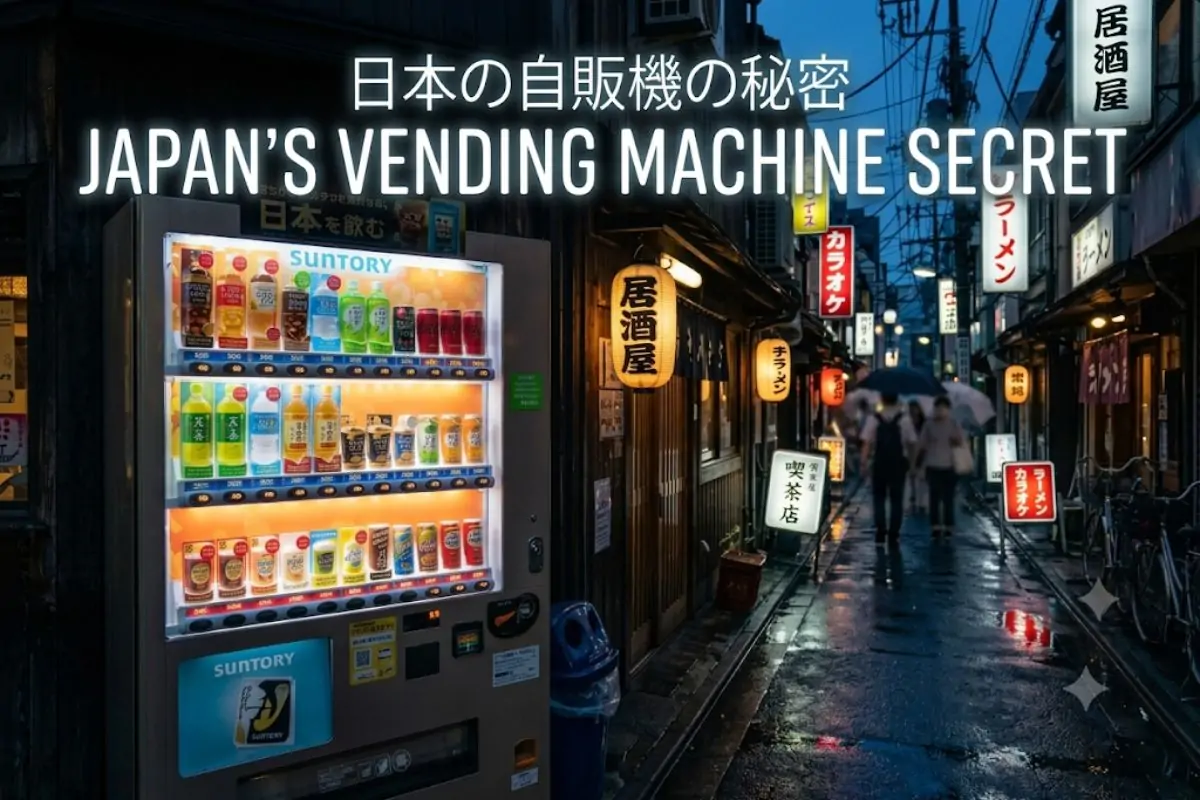
Stand on almost any street in Japan and a glowing machine is within sight. Beside a rice field. Outside a shrine. Near the summit of Mount Fuji. They sell hot coffee in winter, cold tea in summer, and, depending on where you are, anything from noodles to charms to fortunes.
At its peak, Japan had around 5.5 million of them, roughly one for every 23 people, the highest density on earth. Most explanations stop at “Japan has low crime.” That’s true, and it’s only the surface.
“Vending machines didn’t take over Japan because people love gadgets. They took over because the country made them cheap, safe, and sensible.”
Reason One: Nobody Breaks Them
Property crime and vandalism are rare in Japan, which means machines can sit outside unattended, day and night. In most countries, they’d be bolted inside shops or behind security. Here, many carry cameras and a direct line to the police in case anyone tampers with one.
One operator running about 2,000 machines reportedly logged only five vandalism incidents in a whole year in the 1990s, a rate of roughly 0.25 percent. That kind of record changes the business case completely.
“A vending machine is only as safe as the street it stands on. Japan’s streets made them a safe bet.”
Reason Two: Labour and Land Cost a Fortune
Economist Robert Parry of Kobe University pointed to high labour costs as a driving factor. Hiring someone to staff a tiny shop around the clock is expensive. A machine never takes a break and needs almost no floor space, which matters in cities where land is brutally pricey.
Add the fact that setting one up involves far fewer permits than opening a shop, and the owner of a small plot of land can turn an empty corner into steady income.
“For a small landowner in Japan, a vending machine is a shop that costs almost nothing to run.”
Reason Three: Technology Kept Raising the Bar
Vending machines started appearing in Japan in the early 1900s, selling things like stamps, postcards and sake. The real boom came after the 1964 Tokyo Olympics, as the country’s passion for mechanical convenience met new technology.
One of the biggest breakthroughs was a machine that could keep hot and cold drinks in the same unit. Suddenly, a single machine could do what once needed two, and installing one became far more attractive. Newer models even feature touch screens and facial recognition.
“Each technical leap gave machines a bigger job, until they stopped being novelties and became infrastructure.”
Reason Four: It Fits the Culture
Japan has a long tradition of “unmanned sellers,” roadside stands where you leave money for vegetables and walk away. A vending machine is the high-tech version of that same trust.
Cultural writers also point to Japan’s love of automation, a fast-paced working life that demands round-the-clock convenience, and the fact that machines require no conversation or language skills at all. For visitors, that’s a gift.
“Vending machines feel like a public amenity.”
That’s how one coffee writer summed up the attitude. People treat them less like a shop and more like a utility, something that’s simply there when you need it.
Not Just Drinks
Yes, the weird stuff exists, including machines at shrines that dispense fortunes and charms, and one famously selling smaller vending machines. But the reality is more ordinary than the internet suggests. Most machines sell drinks, cigarettes or tickets. The strange ones just make better headlines.
There’s also a serious side. Japan has begun installing machines that dispense food and drinks for free in the event of a natural disaster, turning a convenience into a lifeline.
“In a country that lives with earthquakes, a vending machine can double as emergency relief.”
The Machines Are Starting to Disappear
The golden age is fading. After the peak of over five million, the number had dropped to about 3.93 million by 2023. The reasons are practical:
- Rising operating costs
- Competition from convenience stores, which now sell better coffee and hot food
- A shrinking population
- The expense of updating machines for new banknotes and cashless payments
As one commentator put it, Japan has more vending machines per person than almost anywhere on earth, but the numbers are slowly shrinking.
“Japan’s vending machines were never about novelty. They’re about economics, and economics is quietly changing.”
Highlights
- Japan peaked at around 5.5 million machines, about one per 23 people
- Low crime lets machines sit outdoors unattended, even on Mount Fuji
- High labour and land costs make machines cheaper than staffed shops
- Hot and cold machines in one unit helped drive the boom
- Numbers have fallen to about 3.93 million as convenience stores and cashless payments take over
FAQ
How many vending machines does Japan have?
Around 5.5 million at its peak. Figures have fallen to roughly 3.93 million as of 2023.
Why are there so many vending machines in Japan?
Low crime, high labour and land costs, easy setup, and a culture that loves convenience and automation.
Are the strange vending machines real?
Some are, but most machines sell ordinary things like drinks, cigarettes and tickets.
Why are they disappearing?
Rising costs, competition from convenience stores, a shrinking population, and the cost of upgrading for new banknotes and cashless payment.