CAQM Directs Delhi-NCR Schools to Reschedule Physical Sports Events for November and December
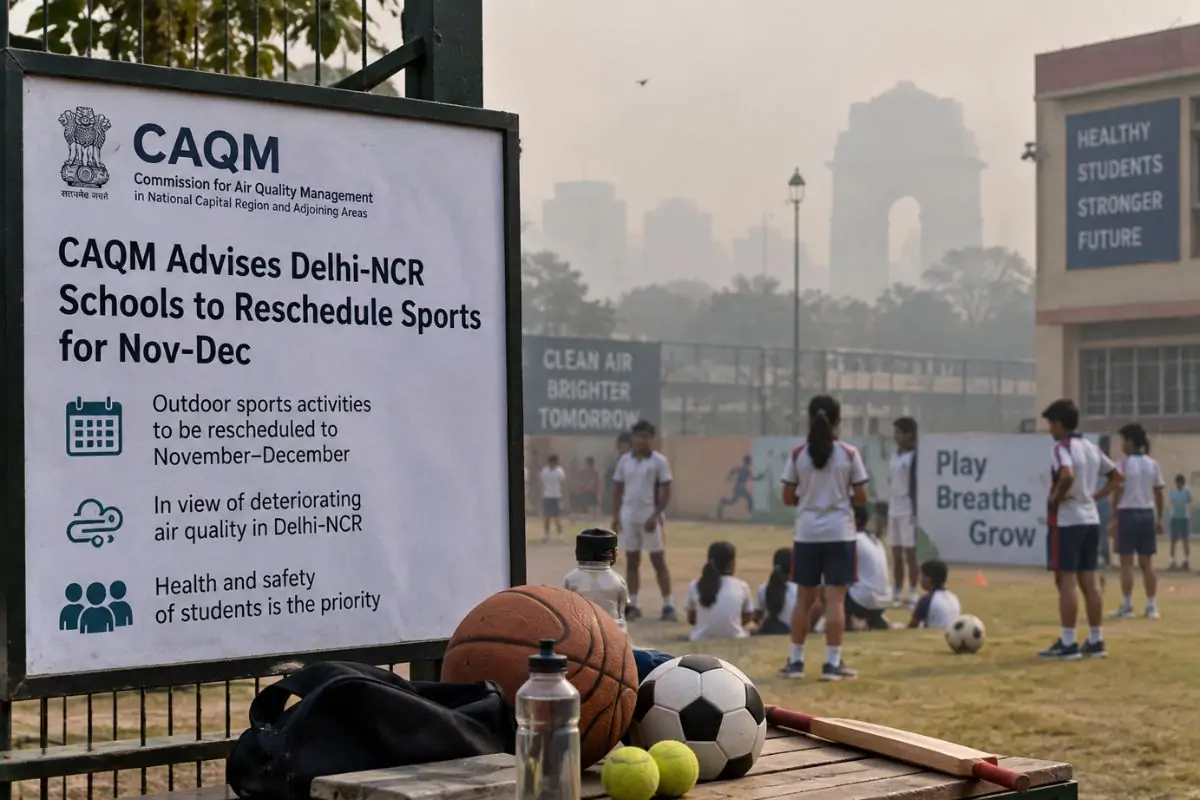
In response to recurring severe winter air pollution concerns, the Commission for Air Quality Management (CAQM) has issued a strict advisory to authorities across Delhi, Haryana, Rajasthan, and Uttar Pradesh.The directive instructs educational institutions and sports bodies to avoid scheduling outdoor physical sports activities and competitive events during November and December. The move aims to protect school-aged children from the well-documented health hazards of prolonged exposure to hazardous ambient air during the peak winter smog season.
The proactive communication builds directly upon observations and legal interventions previously initiated by the Supreme Court of India. While reviewing long-standing matters concerning capital region air quality, the apex court expressed deep concern over children being thrust into rigorous outdoor athletic events when air quality indexes regularly slide into “poor” or “severe” categories. Last year, the court formally directed the Commission to institute preventative measures ensuring that large-scale children’s sporting events are not hosted during the most polluted months of the year.
Contextual Flexibility and Localized Trends
Rather than enforcing a blanket, region-wide absolute ban on all school physical activities, the latest CAQM advisory emphasizes a structured, localized approach.The guidelines specify that scheduling decisions should closely factor in prevailing air quality trends and real-time environmental metrics specific to the exact micro-locations where events are proposed.
Competitions that have already been embedded into academic or athletic calendars for November and December are strongly advised to be postponed or relocated.Furthermore, the Commission has urged state education departments to ensure that students whose schedules are disrupted by these necessary shifts are provided alternative opportunities to showcase their talents, ensuring no academic or athletic penalty falls upon them.
Safeguarding Student Health and Long-Term Welfare
Public health experts and pediatricians have overwhelmingly lauded the advisory, noting that children breathe at a faster rate than adults and possess narrower airways, making them significantly more vulnerable to the toxic particulate matter that blankets the northern plains every winter. Strenuous outdoor exertion during high-pollution episodes can trigger acute asthma attacks, reduce lung function development, and cause long-term respiratory complications.
As educational institutions across the National Capital Region begin reviewing their winter athletic calendars, state governments, the Sports Authority of India, and various school boards are moving swiftly to circulate compliance protocols, prioritizing child health over seasonal sporting traditions.
Do you think schools should move permanently toward hosting major athletic competitions during the spring or monsoon months to avoid winter pollution spikes?