
The Ancestral Smokehouse: A Culinary Journey Deep Into Coorg’s Coffee Estates
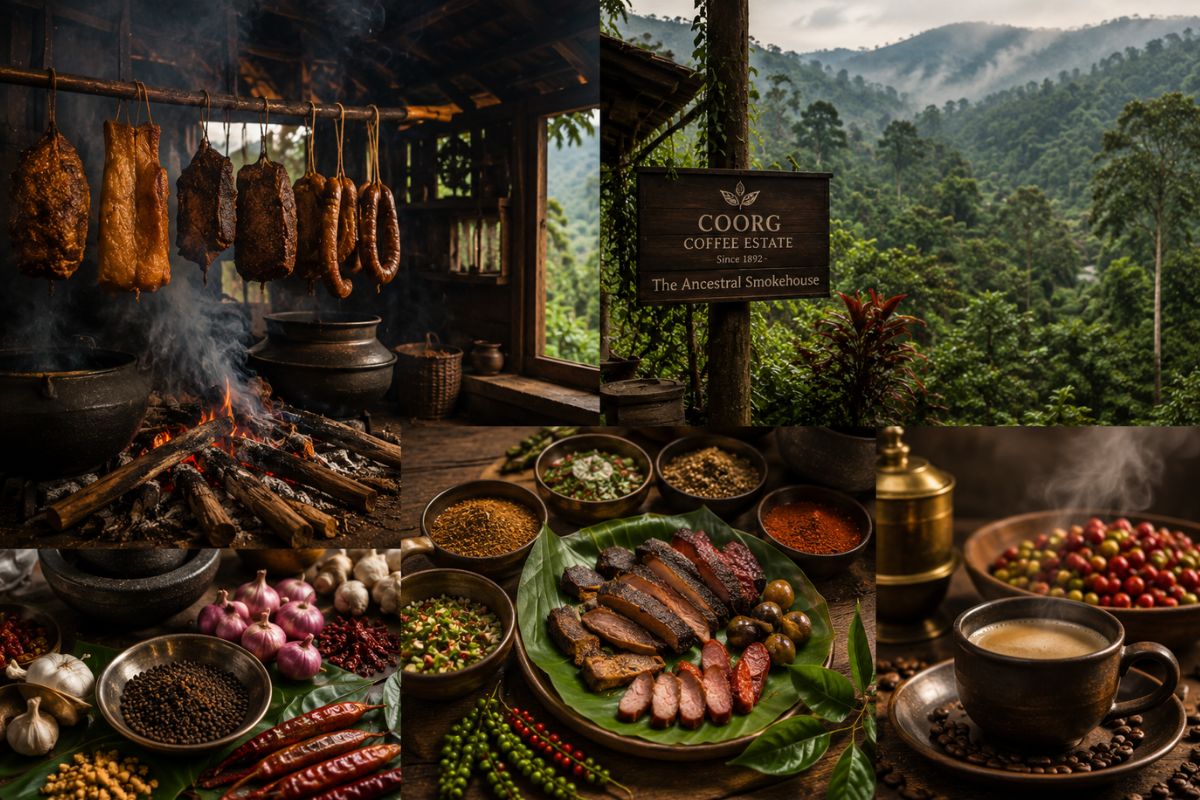
To truly understand Coorg (Kodagu), you have to leave the manicured tourist viewpoints behind and follow the heavy, intoxicating aroma of woodsmoke and roasting coffee berries deep into the valleys.
Here, shielded by towering silver oak trees and tangled pepper vines, lies one of India’s most fiercely guarded culinary micro-cultures. Born from the traditions of the indigenous Kodava people—a proud community of warriors, hunters, and agriculturists—the food of Coorg is a striking departure from the standard coconut-heavy palettes of South India. It is rustic, deeply elemental, and profoundly tied to the seasons of the forest.
This is a curated guide to a 5-day culinary road trip through the plantation belts of Kodagu, designed to take you from hidden urban smokehouses to the hearths of ancestral estate homes.
The Master Ingredients of the Hills
Before starting up the winding roads of the Western Ghats, it helps to understand the three cornerstones that define every authentic Coorgi kitchen:
- Kachampuli: The undisputed soul of Kodava cooking. This thick, glossy, near-black vinegar is extracted by slow-reducing the juice of the wild Garcinia gummi-gutta fruit. It delivers a sharp, fruit-forward, mouth-puckering sourness that perfectly cuts through rich fats.
- Black Pepper: Long before the chili arrived on Indian shores, Coorg relied entirely on the native black pepper climbing up their coffee shade trees. It provides a slow, warming, architectural heat rather than an instant burn.
- Wild Seasonality: The menu changes drastically with the weather. The monsoon brings Baimbale (tender bamboo shoots) and Kumm (wild, forest-foraged mushrooms), while winters lean heavily into preserved meats and robust wild greens.
The 5-Day Itinerary
Day 1: The Gateway to Malnad & Authentic Kodava Introduction
As you ascend into the cooler, mist-laden elevations of Madikeri, establish your flavor baseline at the town’s core.
Where to Stay: Holidayincoorg Leisure Homes
Check into a welcoming property that bridges local warmth with seamless accessibility. It serves as an ideal base for your first two days of urban exploration.
- Culinary Perk: The hosts provide an excellent, customized breakfast. Request the traditional Akki Roti (flaky flatbreads made from leftover cooked rice and rice flour) served with a dollop of fresh butter and a fiery coconut chutney.
The Lunch Stop: Coorg Cuisine (Madikeri)
For your first afternoon, head straight to this legendary establishment located opposite the post office. It is a straightforward, no-frills family restaurant completely dedicated to serving unapologetic Kodava food.
- The Order: Pandi Curry paired with soft, pillowy Kadambuttu (steamed rice balls). This pork curry is a masterclass in slow cooking: coated in roasted spice powders and finished with a dark swirl of Kachampuli, the meat is incredibly tender and intensely savory.
Day 2: Hidden Spice Blends & Heritage Dining
Spend the day diving into Madikeri’s tucked-away spots to sample the contrasting ways local spice profiles are utilized.
The Hidden Gem: Thaliya – Traditional Kodava Restaurant
Tucked away in Brahmins Valley, this cozy, culturally resonant kitchen focuses strictly on authentic preparation methods without modern fusion distractions. (Note: Closed on Fridays).
- The Order: Koli Curry (a rustic chicken curry cooked with a base of coconut, green chilies, and coriander) served with Noolputtu (delicate, stringy lace hoppers steamed to order).
The Ambient Dinner: Raintree Restaurants
For dinner, unwind in a beautifully restored colonial heritage villa located right behind the Town Hall.
- The Order: Sit out on the gorgeous, leafy terrace and explore their coastal-influenced fish curries or their dry pepper-fried starters. It is a more upscale, relaxed setting perfect for reflecting on the day’s flavors over a glass of local homemade plum wine.
Day 3: Deep Into the Coffee Plantation Belt
Pack your bags and drive further out of the main town area, descending into the dense, emerald-green plantation valleys where the true magic of estate life happens.
Where to Stay: Utthunga Coorg
Transition to a high-elevation plantation stay nestled right amidst the misty hills along the Mangalore-Mysore highway. Here, the hum of the town is replaced by the rustle of cardamom leaves.
- The Plantation Walk: Spend your afternoon on a guided estate walk. Your hosts will guide you through rows of Arabica and Robusta plants, pointing out how black pepper vines trail up the trees and how wild cinnamon bark is harvested.
- The Dinner Hearth: This homestay is where you can sample home-cooked wild edibles. Depending on the month, ask if the kitchen can prepare Baimbale Curry (bamboo shoots soaked for days to remove toxins, then slow-simmered with mustard and red chilies).
Day 4: Local Bus Stand Secrets & Forest Flavors
A true food enthusiast knows that some of the absolute best flavor profiles hide in plain sight right where the locals travel.
The Local Legend: BELLI’S Restaurant
Drive back towards the main transit lines and locate this spot near the KSRTC depot area. It is extremely rustic and casual, frequented almost exclusively by local estate workers and drivers.
- The Order: Their mutton dry fry and incredibly fiery pork pepper fry pack an absolute punch. The food here is unadjusted for tourist palates—bold, heavy on the ginger-garlic paste, and intensely smoky. The ambiance is simple and functional, but the flavor profile is arguably among the most authentic in the region.
Day 5: Grand Multi-Cuisine Finale
Before you conclude your road trip and begin your descent back down the plains, indulge in a feast that celebrates the wider regional culinary influences on Coorg.
The Final Feast: Silver Oaks (Convent Road)
Conclude your trip with a relaxed, celebratory meal at this spacious, well-managed dining space inside the Coorg International setup.
- The Order: Treat yourself to a grand final meal that balances traditional Kodava non-vegetarian specialties alongside well-executed South Indian classic platters and Mangalorean-style preparations. It provides a beautiful macro view of how coastal Karnataka and the hills have traded ingredients over centuries.
A Quick Reference for the Palate
| Dish | Primary Texture | Key Flavor Notes | Best Paired With |
| Pandi Curry | Thick, dark gravy, tender meat | Earthy, heavily spiced, deeply sour (Kachampuli) | Kadambuttu (Steamed Rice Balls) |
| Koli Curry | Light, velvety, coconut-based | Herbal, aromatic, mild green chili heat | Noolputtu (String Hoppers) |
| Baimbale Curry | Chunky, fibrous vegetable texture | Pungent, mustard-forward, sharp and tangy | Akki Roti (Rice Flatbread) |
The Traveler’s Etiquette: Traditional Kodava dishes require hours of marination and prep work. When staying at plantation homestays like Utthunga, always give your hosts at least 12 to 24 hours of notice if you want to experience specific seasonal or tribal dishes. It allows them time to source fresh ingredients from the local village markets or the estate grounds.